
Why Workplace Life Insurance May Not Be Enough
When comparing employer life insurance vs private life insurance, key considerations include who owns the coverage, how much protection is available, and what may happen after a job change. Workplace coverage may be free or low-cost and easy to enroll in under some plans, but eligibility, coverage amounts, and employment-related terms vary. A private policy is owned by the individual, though its underwriting, pricing, and features also vary by insurer and product. For many households, workplace coverage can be one part of a broader life insurance review rather than the only policy.
Leo Truong is a licensed life insurance agent who provides educational guidance and helps individuals and families understand and review available life insurance options.
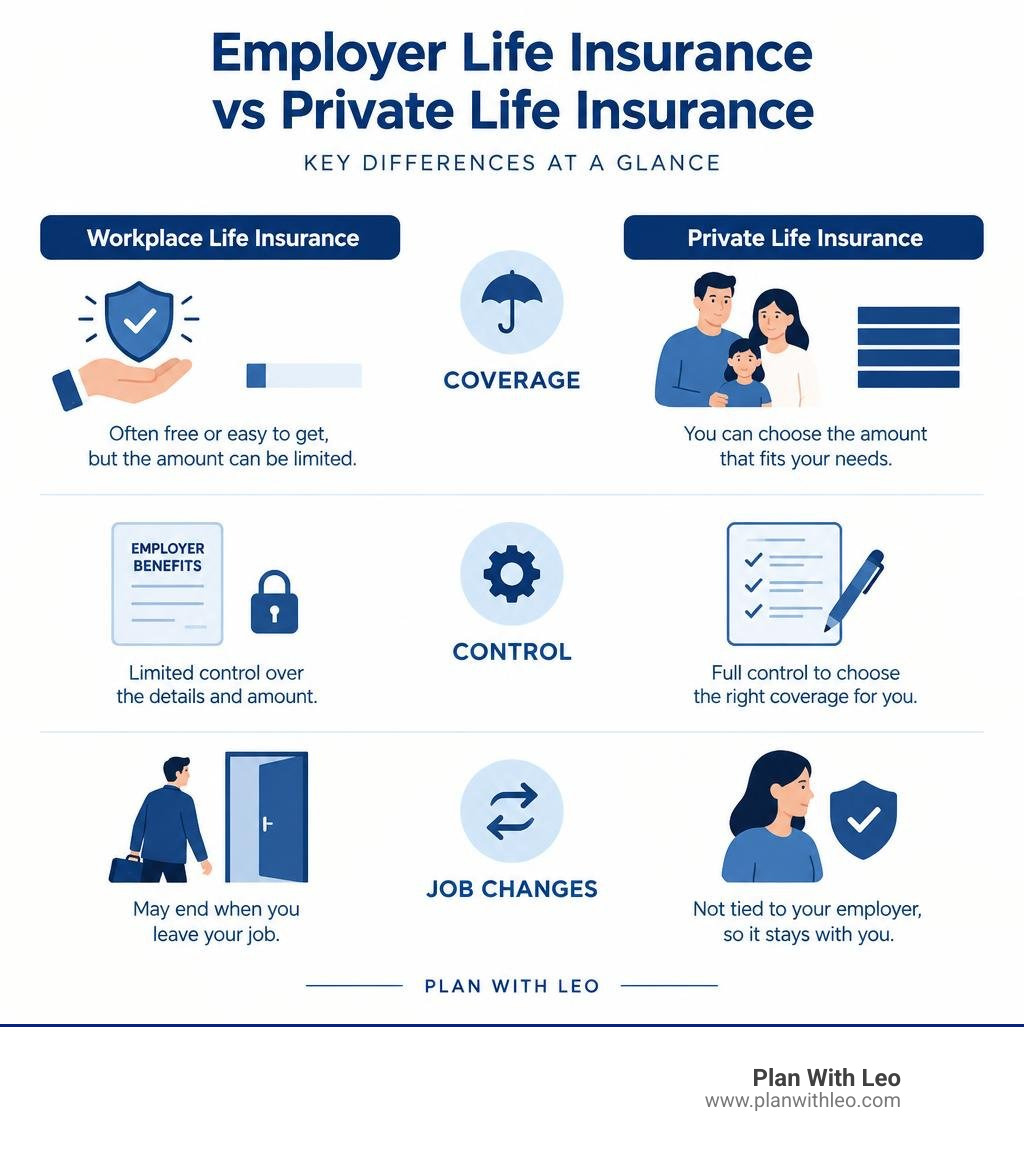
Simple guide to employer life insurance vs private life insurance terms:
- life insurance underwriting
- how much life insurance does a family need
- when is the best time to buy life insurance
Employer Life Insurance vs Private Life Insurance: Fundamental Differences
When you start a new job, enrolling in benefits can feel like a standard part of onboarding. Basic group life insurance may be one of the available benefits. The details of employer coverage can vary considerably by employer and group plan, while individual policy terms can vary by insurer and product.
Workplace group coverage is generally issued under a master policy held by the employer or plan sponsor. An individual policy is separately owned outside the employer group plan, with ownership determined by the policy arrangement and applicable requirements. The policy owner and insured person may be the same person, but they are not always the same. Neither arrangement is automatically better for every household.
| Feature | Employer Group Life Insurance | Private Individual Life Insurance |
|---|---|---|
| Policy Owner | The employer or plan sponsor generally holds the master contract | Separately owned outside the employer group plan; ownership depends on the policy arrangement and applicable requirements |
| Coverage Amount | May be a flat amount, a multiple of salary, or an employee-selected amount, depending on the plan | May be selected based on available products, underwriting, and the applicant’s needs |
| Portability | Coverage may end, change, be portable, or offer conversion when employment changes, depending on the plan | Coverage may remain in force while required premiums are paid, subject to the policy terms |
| Medical Underwriting | Basic coverage may have simplified enrollment or guaranteed-issue features under some plans; supplemental coverage may have health questions or evidence-of-insurability requirements | Underwriting requirements vary by insurer, product, coverage amount, and applicant health |
| Policy Options | Options are limited to those offered through the employer plan | Available term and permanent policy options vary by insurer and product |
Understanding these structural differences is the first step when exploring available life insurance options for your family.
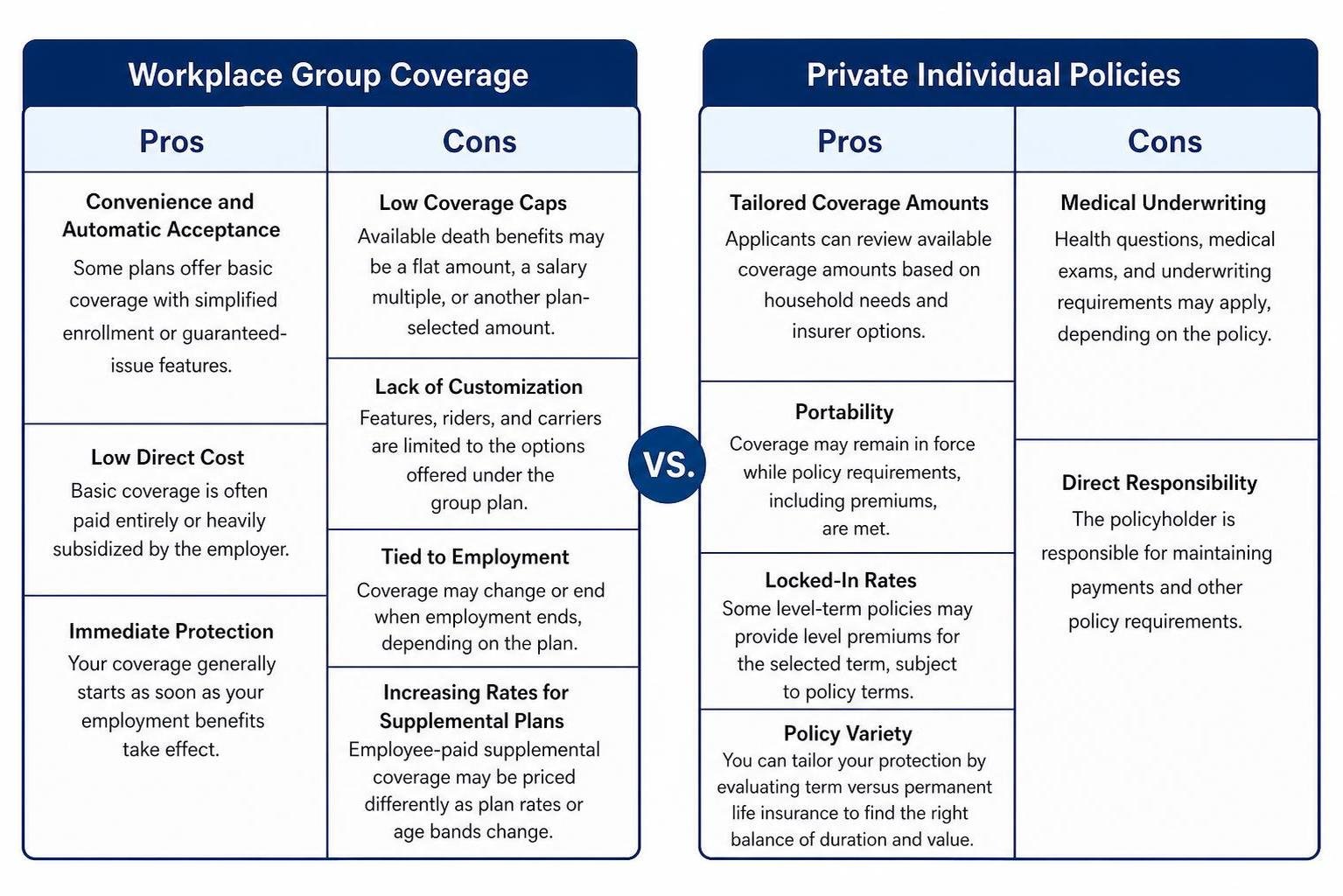
Pros and Cons of Workplace Group Coverage
Workplace group policies can offer meaningful benefits, but the available features and limits depend on the employer and plan.
Potential Benefits:
- Convenient Enrollment: Some plans make basic group life insurance easy to enroll in and may not require a medical exam for certain coverage amounts.
- Employer Contribution: An employer may pay or subsidize part of the premium under some plans.
- Access to Coverage: Group coverage may be helpful for employees who want workplace-based life insurance as part of their benefits package.
Possible Limits to Review:
- Coverage Amount: Available death benefits may be limited, tied to salary, or subject to plan maximums.
- Plan Design: Riders, beneficiaries, and other features are limited to the options offered under the group plan.
- Employment Connection: Coverage may change or end when employment ends, although portability or conversion options may be available under some plans.
- Supplemental Premiums: Employee-paid supplemental coverage may be priced differently as employees move into new age bands or as plan rates change.
Pros and Cons of Private Individual Policies
An individual policy can provide separately owned coverage, though it requires an application and is subject to the insurer’s underwriting and policy terms.
Potential Benefits:
- Coverage Selection: Applicants can review available coverage amounts, terms, and policy types based on household needs and insurer options.
- Separate Ownership: An individual policy is not sponsored by an employer and may continue while policy requirements, including premiums, are met.
- Level-Term Options: Some level-term policies may provide level premiums for the selected term, subject to the policy terms.
- Policy Variety: Applicants can evaluate term versus permanent life insurance to review available durations and features.
Possible Limits to Review:
- Medical Underwriting: Health questions, medical exams, and underwriting requirements may apply, depending on the insurer, product, and requested coverage.
- Direct Responsibility: The policyholder is responsible for selecting, maintaining, and paying for the policy under its terms.
Why Workplace Coverage May Not Be Enough for Growing Families

For a growing family with young children, a basic workplace policy may not be enough to address longer-term obligations. Whether the available death benefit is sufficient depends on the household’s income-replacement needs, housing costs, childcare, education goals, debts, savings, and other resources.
If a primary earner dies, a surviving partner with young children may need income to help cover groceries, utility bills, education costs, and housing over time. When determining the right life insurance amount for your family, it can be helpful to review the gap between available workplace coverage and the household’s financial responsibilities.
Housing is often a significant long-term expense. For many homeowners, securing coverage for a home mortgage may help surviving family members address mortgage or other housing expenses, depending on the amount of coverage and the household’s circumstances.
Portability Risks and Career Transitions
One important consideration with workplace life insurance is what happens when employment changes. The answer can depend on the employer, group plan, and the employee’s circumstances.
When an employee leaves a company, group life insurance coverage may end, change, or continue for a limited period. Some plans may offer portability or conversion options, each with its own eligibility requirements, deadlines, pricing, and features. Employees should review their plan documents and contact the benefits administrator or insurer before making decisions about continuing coverage.
Relying on workplace benefits into later working years can also make it important to revisit coverage after a job change, health change, or retirement transition. Evaluating life insurance needs into retirement may be part of that review. If health has changed, individual coverage options and pricing may differ from those available earlier, depending on the insurer and underwriting.
Beneficiary Records and Tax Considerations
Workplace policies can also involve administrative and tax considerations that employees should review periodically:
- Beneficiary Designations: It can be helpful to review beneficiary designations after marriage, divorce, the birth or adoption of a child, or another major life event. The effect of an outdated designation can depend on the plan terms and applicable law.
- Taxable Imputed Income: Under current federal tax rules, the imputed cost of certain employer-provided group-term life insurance coverage above $50,000 may be included in taxable wages. IRS rules and individual circumstances matter, so this is general educational information rather than tax advice. Individuals with questions about their situation should consult a qualified professional for individualized tax advice.
How to Choose: Comparing Costs, Health, and Strategy

Choosing how to structure life insurance protection can involve cost stability, health status, available benefits, and household needs as part of comprehensive family protection planning.
Cost Comparison: Employer Life Insurance vs Private Life Insurance
Some employees consider supplemental coverage through an employer during open enrollment, while others explore individual policies. Convenience can be one factor, but it is important to compare the specific coverage amount, policy features, premiums, and continuation options available.
Workplace supplemental life insurance premiums may be age-banded, may change under the group plan, or may follow another pricing structure, depending on the employer plan. Individual-policy premiums also vary by insurer, product, term length, coverage amount, health, and underwriting. Some level-term policies may provide level premiums for the selected term, subject to the policy terms. Reviewing actual plan materials, term life insurance cost structures, and policy illustrations can help households compare the options available to them.
Underwriting and Health: Employer Life Insurance vs Private Life Insurance
Personal health history can be relevant when reviewing life insurance coverage, but the impact varies by plan and insurer:
- When Group Coverage May Be Helpful: If health conditions or medical history make individual underwriting more complex, available group coverage through an employer may be worth reviewing. Some plans offer basic coverage with simplified enrollment or guaranteed-issue features for eligible employees, while other coverage levels may require health information.
- When Individual Coverage May Be Worth Reviewing: Individuals can review the life insurance underwriting process and available policy options to see how a separately owned policy might fit their needs. Rate classes, coverage availability, and premiums depend on the insurer, product, and applicant’s health and other underwriting factors.
Frequently Asked Questions About Workplace and Private Life Insurance
How can a job change affect workplace life coverage?
What happens to workplace life insurance after employment ends depends on the employer and group plan. Coverage may end, change, continue for a limited period, or offer portability or conversion options. Any eligibility rules, deadlines, premiums, and required steps are set by the plan, so review the plan documents and contact the benefits administrator or insurer promptly when employment changes.
Can workplace and individual life coverage be reviewed together?
In many cases, it is possible to have workplace life insurance and an individual policy at the same time. Whether that combination is appropriate depends on the available coverage, household needs, budget, underwriting, and policy terms. A licensed life insurance agent can provide educational guidance while individuals and families review available options.
How can employer-provided life coverage affect federal taxes?
Life insurance death proceeds are generally excluded from federal gross income in many circumstances, although exceptions can apply. During employment, the imputed cost of certain employer-provided group-term life insurance coverage above $50,000 may be included in taxable wages under current IRS rules. Tax treatment depends on the facts and applicable rules, so individuals should consult a qualified professional for individualized tax advice.
Conclusion
Workplace life insurance can be a valuable employee benefit, but its amount, portability, pricing, and continuation rules depend on the employer and group plan. Families may want to review whether their workplace coverage, any individual policy, or a combination of both provides an amount and terms that fit their income-replacement, housing, childcare, education, and debt obligations.
To better understand your household’s coverage needs and review available life insurance options, reach out to licensed life insurance agent Leo Truong at Plan With Leo for educational guidance tailored to your family’s goals.