
Life Insurance for New Parents: Coverage Considerations for Growing Families
Life insurance for new parents can be one way to consider how a household would manage financial responsibilities if a parent dies while coverage is in force and a claim is payable.
Here are key issues to consider:
Life insurance considerations for new parents:
- Review household responsibilities. Consider ongoing expenses, debts, childcare needs, and the financial impact if either parent or caregiver were no longer present.
- Estimate coverage carefully. A coverage estimate can be an educational starting point, not an individualized recommendation. Avoid counting the same mortgage payment, household expense, or income-replacement need more than once.
- Compare policy types. Term and permanent life insurance have different durations, features, costs, and eligibility requirements that vary by insurer and policy.
- Consider each parent or caregiver separately. Whether coverage is appropriate, and how much, depends on the household’s responsibilities, budget, existing resources, and goals.
- Review beneficiaries and estate documents. Beneficiary choices involving minor children can have legal and policy-specific considerations.
- Ask about policy details. Premiums, underwriting, conversion options, portability, and claims requirements depend on the insurer and policy.
Becoming a parent can change a household’s financial responsibilities. Life insurance may be worth exploring alongside existing savings, employer benefits, debts, and caregiving arrangements.
New parents often have many immediate priorities. Reviewing life insurance can give a family time to compare available options without treating a policy as a guaranteed solution to every future need.
Leo Truong is a licensed life insurance agent who helps buyers understand and compare available life insurance options. This guide provides general educational information about life insurance for new parents and does not replace policy-specific or professional legal advice.
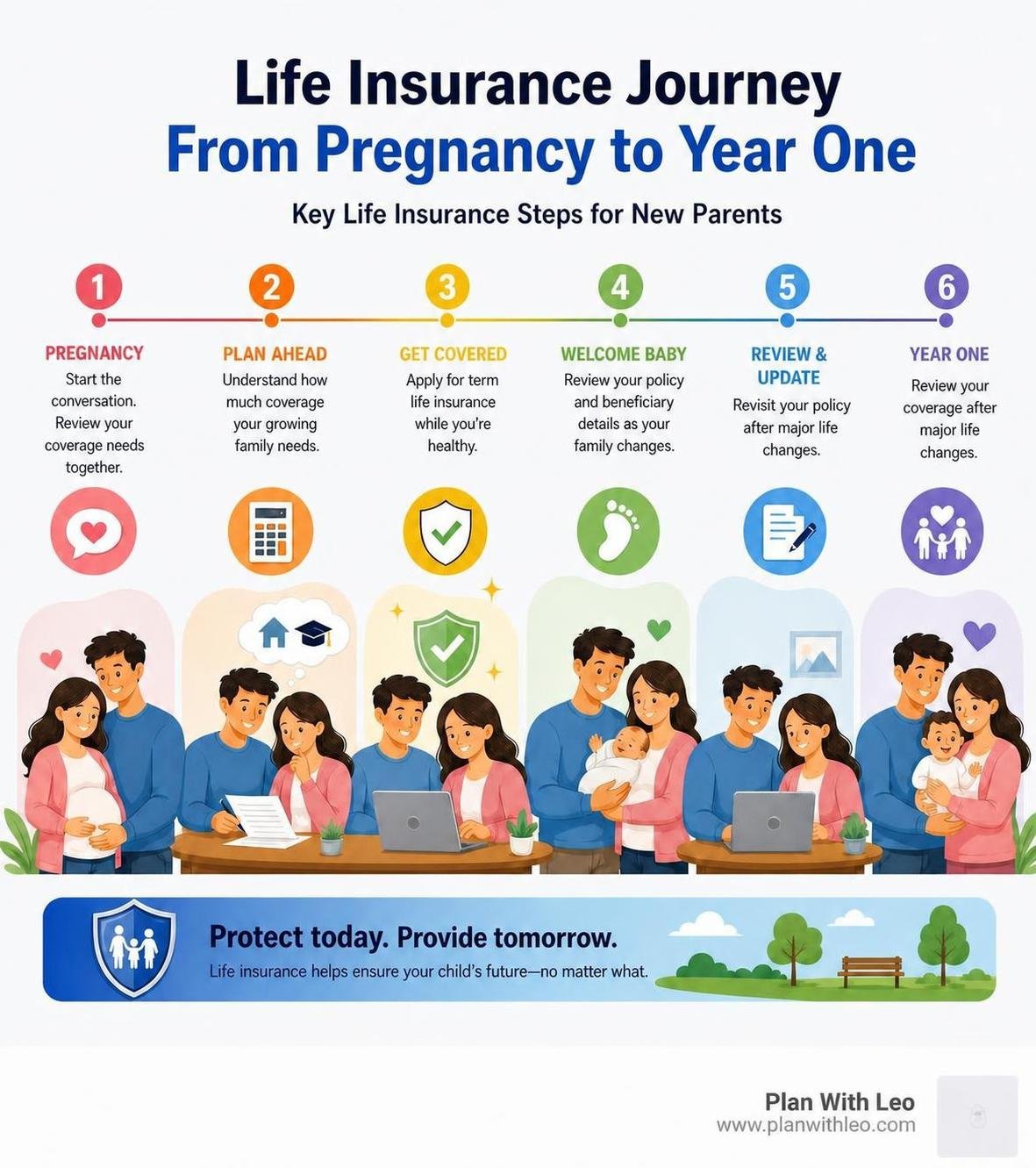
Why Life Insurance for New Parents Is a Financial Priority
A new child can increase a household’s financial responsibilities. Life insurance may help provide funds to designated beneficiaries if coverage remains in force and a claim is approved under the policy, but it does not guarantee a particular financial outcome.
When evaluating a policy, families may consider ongoing living expenses, debts, childcare, housing costs, and future goals. The amount and timing of any benefit depend on the policy terms, coverage status, beneficiary designation, and applicable claims requirements.
Household Costs to Consider
The cost of raising a child varies significantly by location, household size, childcare needs, health expenses, housing, and family choices. Rather than relying on a broad national estimate, review the expenses that apply to your household.
For a United States-based family, it is generally more useful to focus on local costs and the obligations already reflected in the household budget than on figures from other countries or school systems.
A practical review may include regular living expenses, debts, childcare arrangements, housing costs, and the financial value of unpaid caregiving. Those considerations can help frame questions for a licensed insurance agent.
Protecting Single-Income and Dual-Income Families
Whether a household relies on one income or two, its budget may depend on reliable monthly cash flow.
In a dual-income household, the loss of one income may affect the ability to meet ongoing expenses. In a single-income household, the household may be more dependent on one person’s earnings. The appropriate coverage approach varies with the household’s resources, obligations, and policy options.
A life insurance benefit may be used by beneficiaries for housing or other expenses, depending on the policy and their circumstances. It should not be presented as a guarantee that a family can keep a home or maintain a particular standard of living.
How to Calculate Your Family’s Coverage Needs

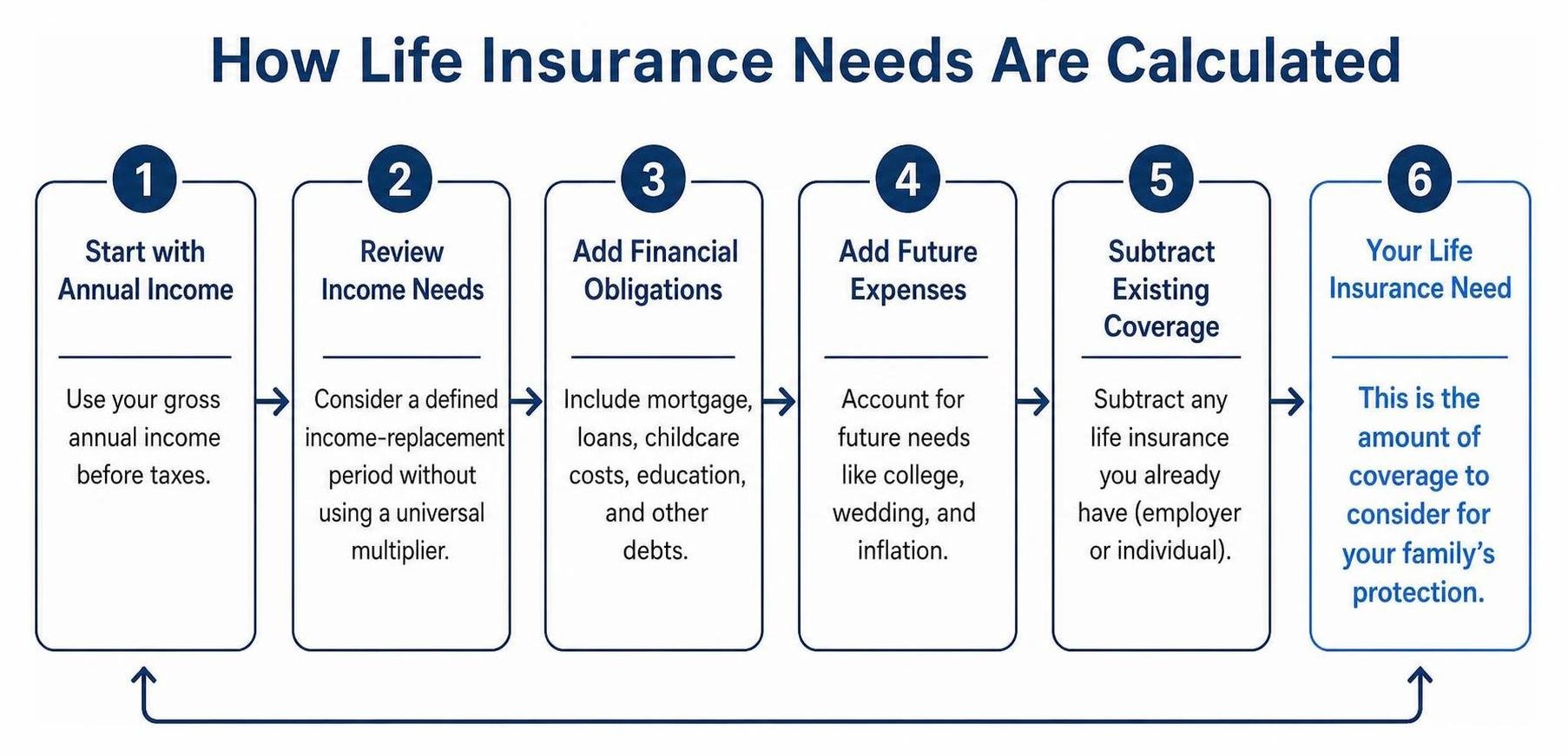
Determining how much coverage to consider can involve several household obligations. The DIME framework is one educational method for organizing the discussion, not an individualized recommendation or a substitute for reviewing policy terms.
- D – Debt: List debts that a family would want to address, such as credit cards, vehicle loans, or student loans.
- I – Income: Estimate income-replacement needs for a defined period, while avoiding overlap with expenses already included elsewhere.
- M – Mortgage: Consider the mortgage payoff amount or the portion of ongoing housing costs not already included in income-replacement estimates.
- E – Education: Consider whether future education costs are a household goal, without assuming a policy benefit will cover every education expense.
Use the categories to identify potential obligations, then remove duplicates before estimating a coverage amount. For example, do not count the same mortgage payments, household expenses, or income needs in more than one category. Existing savings, other coverage, and available employer benefits may also affect the discussion.
How Much Life Insurance for New Parents Is Actually Enough?
There is no universal coverage multiple that fits every new parent. A useful starting point is to list the household’s actual obligations, decide which needs would remain after a death, and discuss the results with a licensed insurance agent.
For example, a household might compare outstanding debts, an income-replacement period, and future goals. The calculation should separate mortgage costs and regular household expenses so the same need is not counted twice. Policy affordability, underwriting, and available options also affect what may be appropriate.
A written coverage worksheet can help a family compare obligations, existing resources, and questions to ask when reviewing available coverage options.
The Economic Value of Stay-at-Home Parents
One common oversight is failing to consider the work of a stay-at-home parent. A parent without a traditional paycheck may still provide childcare, household management, cooking, cleaning, and transportation.
Replacing a stay-at-home parent’s labor can create new childcare, household-management, transportation, and scheduling expenses. Whether coverage is appropriate and how much to consider depends on the household’s circumstances and available resources.
Integrating Education Savings Goals Into Your Policy Review
If a family contributes to an education savings plan, it may wish to consider how contributions would continue if a parent died. Future account values depend on contributions, investment performance, fees, and other factors.
This is one of several questions a family can include when reviewing longer-term household goals.
Education goals can be considered as part of a broader coverage discussion, but no fixed education buffer fits every family. A life insurance benefit, if payable, may provide beneficiaries flexibility; it does not assure that education costs will be paid in full.
Comparing Your Policy Options
When shopping for life insurance for new parents, families may compare term life insurance and permanent life insurance. Features, costs, eligibility, and guarantees vary by insurer and policy.
| Feature | Term Life Insurance | Permanent Life Insurance |
|---|---|---|
| Coverage Duration | Coverage for a stated period, subject to policy terms | Coverage designed to last longer, subject to policy terms and required premiums |
| Premium Structure | May offer a level premium period, depending on the policy | Premiums and funding features vary by product and insurer |
| Cash Value | Generally does not include cash value | Some products may include cash-value features, subject to policy terms |
| Potential Fit | May suit some temporary protection needs | May suit some long-term goals or circumstances |
Choosing Between Term and Permanent Life Insurance
Term life insurance may be one option for families seeking coverage for a defined period, such as years when children are dependent or debts are higher. Permanent life insurance may be considered for different goals or circumstances. The appropriate choice depends on the policy, premium, underwriting, budget, and the family’s needs.
Premiums for any life insurance policy are determined by factors such as the insurer, coverage amount, policy type, age, health, location, and underwriting. Request policy-specific illustrations or quotes rather than relying on broad price examples.
Permanent life insurance can include features that term insurance does not, but costs, cash-value treatment, guarantees, and policy obligations vary. Comparing the full policy illustration and contract details can help a family understand the tradeoffs. For general new-parent coverage questions, see the Progressive Guide on Life Insurance for New Parents.
Some families compare a combination of policy types, while others choose one type of coverage. Any decision should be based on the available policy terms, eligibility, budget, and household priorities.
Why Employer Life Insurance May Need a Separate Review
Employer-sponsored life insurance can be a valuable benefit, but the amount of coverage, eligibility, cost, conversion rights, and portability vary by employer plan and insurer. For a general overview of considerations for new parents, see Northwestern Mutual’s guide to life insurance for new parents.
Before relying on group coverage, review the plan’s benefit amount, whether coverage ends or changes after employment, and any options to convert or continue coverage. Those rights are not the same for every plan or insurer.
Timing Your Purchase: Pregnancy and Beyond

When considering life insurance, age and health can affect premiums and eligibility, but the impact varies by insurer, policy type, coverage amount, and underwriting.
Can You Get Life Insurance While Pregnant?
It may be possible to apply for life insurance during pregnancy, but application requirements and underwriting decisions vary by insurer, policy, health history, and individual circumstances.
Insurers may review health information and application details during underwriting. The information requested and how it is evaluated are determined by the insurer and policy.
Pregnancy-related health conditions may affect underwriting for some applicants, while others may have different outcomes. A licensed agent can help explain the information an insurer may request, but cannot guarantee approval, timing, or any particular policy outcome.
When to Apply for Coverage
If life insurance is a household priority, starting the review process with enough time to compare options may be helpful. Application and underwriting timelines vary, so no single timing recommendation applies to every applicant.
Requesting current quotes is the most reliable way to compare available options.
Protecting Your Child’s Future
As a family builds its household plan, it may wonder whether it makes sense to purchase coverage directly for a child.
Should Parents Buy Life Insurance for Their Children?
Child life insurance is a specialized product that may be structured as permanent coverage. Features, premiums, future insurability provisions, and eligibility vary by insurer and policy, so families should review the contract carefully. For a general overview of life insurance considerations for new parents, see New York Life.
Because children generally do not have income or dependents, some families choose to prioritize coverage for parents or caregivers first. Whether a child policy is appropriate depends on the family’s goals, budget, and the available policy terms.
Common Mistakes and Legal Pitfalls to Avoid
Even with the best intentions, new parents can encounter legal and structural questions when setting up their policies.
Naming a Minor as a Beneficiary
Payment arrangements when a minor is named as a beneficiary can depend on applicable law, the policy, the insurer’s requirements, and the family’s estate-planning documents. A direct designation may create administrative or legal complications, so families should seek qualified legal guidance before making beneficiary or trust decisions.
Depending on the situation, families may consider naming an adult beneficiary, using a custodian arrangement, or establishing a trust. A qualified attorney can explain which approach is appropriate under applicable law.
Coordinating Wills, Guardians, and Death Benefits
A life insurance policy and estate documents can affect related decisions, but they serve different purposes. Beneficiary designations, guardianship choices, and trust arrangements should be reviewed with qualified legal professionals.
A will may address guardianship nominations, while a life insurance policy identifies beneficiaries. How funds are managed for a child depends on the applicable law, policy requirements, beneficiary designations, and any trust or custodial arrangement.
Families may wish to consult a qualified estate-planning attorney about wills, guardianship, trusts, and beneficiary designations. Plan With Leo provides life insurance education and information about available policy options, not legal or estate-planning services.
Frequently Asked Questions About Family Coverage
Does life insurance cover death in childbirth?
Coverage for a death related to childbirth depends on the policy, underwriting, disclosures, exclusions, and applicable claims requirements. Applicants should answer application questions accurately and review the policy with the insurer or a licensed agent.
How does age affect life insurance premiums?
Age is one factor insurers may consider when setting premiums and evaluating eligibility. The effect of age varies by insurer, policy type, coverage amount, health information, and underwriting.
Can I convert a term policy to a permanent policy later?
Some term life policies offer conversion options, which may allow eligible policyholders to convert some or all coverage to a permanent policy under stated conditions. Conversion periods, eligible products, premiums, and requirements vary by policy and insurer. Conversion options are separate from other policy riders and features.
Conclusion
Reviewing life insurance can help a growing family understand available options, household responsibilities, and beneficiary considerations. A policy benefit may provide funds if coverage remains in force and a claim is payable, but it does not guarantee a particular outcome.
At Plan With Leo, Leo Truong provides educational guidance to help buyers understand and compare available life insurance options.
Ready to review available life insurance options? Talk with Plan With Leo about life insurance and discuss policy questions with a licensed life insurance agent.