Smart Policy Timing: Choosing the Right Age to Secure Coverage

Smart Policy Timing: Choosing the Right Age to Secure Coverage
When Is the Best Time to Buy Life Insurance?
The best time to buy life insurance is when someone would face financial strain if you died. That may be when you have a child, share a mortgage, care for a family member, or take on business obligations. Age and health may affect premiums and eligibility, although rates and available coverage vary by insurer, policy, underwriting, coverage amount, and individual circumstances. There is no single best age for everyone.
I’m Leo Truong, a licensed life insurance agent who helps individuals and families understand and review available life insurance options. When people ask me “when is the best time to buy life insurance,” I start with a simpler question: who or what depends on them?

Similar topics to when is the best time to buy life insurance:
When Is the Best Time to Buy Life Insurance? Age and Cost Dynamics
Life insurance costs reflect the insurer’s assessment of risk. Age and current health may be considered alongside other factors when an application is reviewed. Premiums and eligibility vary by insurer, policy, underwriting, coverage amount, and individual circumstances.
A policy’s premium structure and duration depend on its terms. Underwriters may use risk classes or similar categories based on factors such as medical history, family history, build, lifestyle habits, and the insurer’s underwriting guidelines. Learning about the step-by-step guide to life insurance underwriting can help you understand how carriers assess these factors to set your rates.
| Factor | How It May Affect an Application | What Can Vary by Policy and Insurer |
|---|---|---|
| Age | Insurers may consider age when setting premiums and reviewing eligibility. | Rates, available terms, and coverage amounts. |
| Current health | Health information may affect underwriting results. | Medical requirements, risk class, premiums, and available products. |
| Coverage amount and term | Larger amounts or longer terms may change the premium and underwriting review. | Product availability, policy features, and cost. |
| Application timing | Applying before a major life change may give a household time to review available options. | Whether coverage is issued and the terms offered. |
Assessing When Is the Best Time to Buy Life Insurance for Young Adults
In your twenties, life insurance is rarely top of mind. Many young adults are focused on building careers, managing rent, or paying down student loans. A policy may be worth reviewing when someone has debts, dependents, or other obligations that could affect others.
Applying while healthy may affect the options and terms available at that time, and a later application for new coverage is reviewed under the insurer’s then-current underwriting requirements. An existing policy may remain valuable if health changes later, subject to its terms and premiums. If private student loans or personal debts have a cosigner, life insurance may help provide funds for obligations that could otherwise affect a parent, partner, or other cosigner.
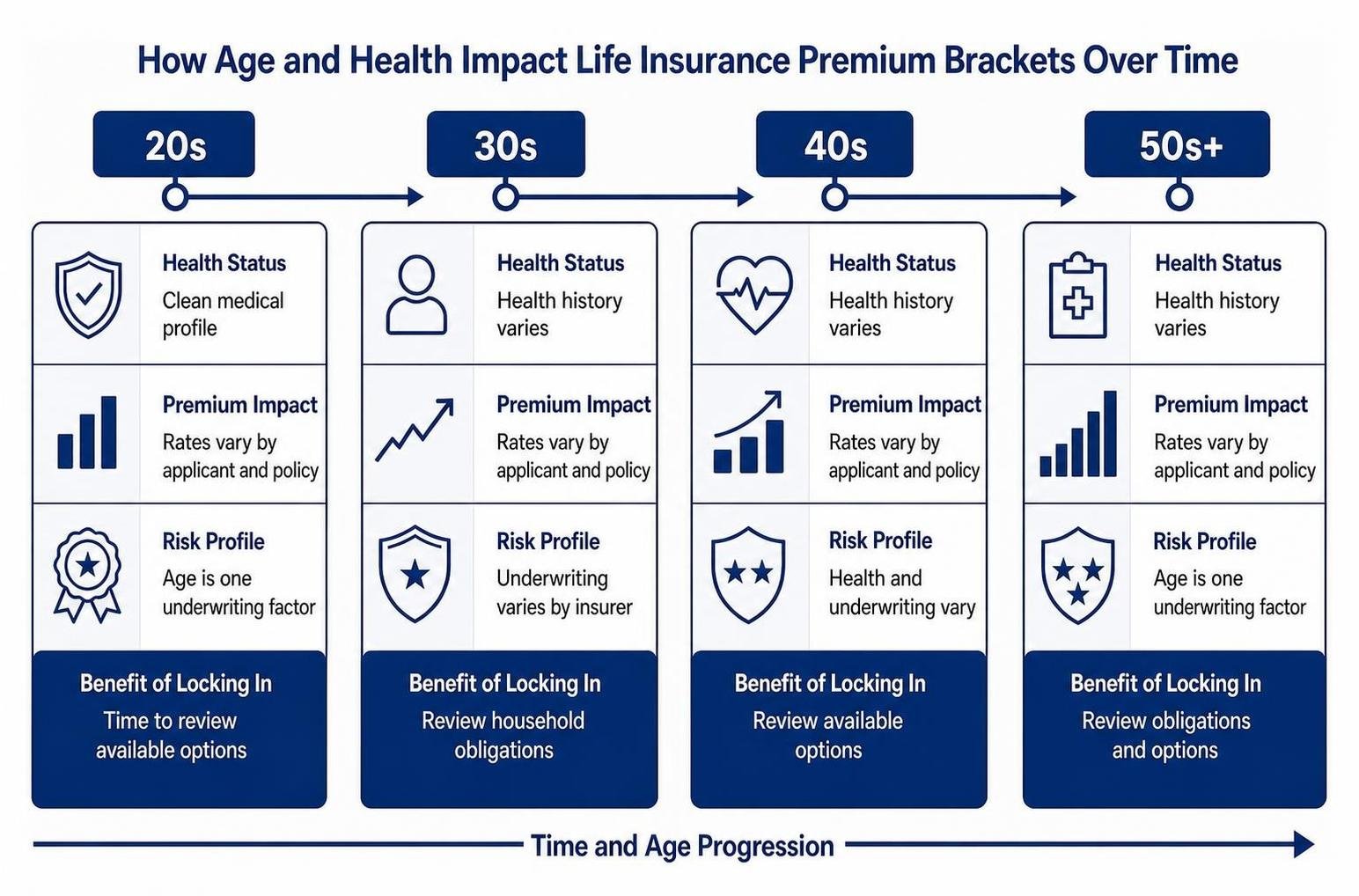
Waiting Costs: Premium Increases in Your 30s, 40s, and Beyond
Waiting to apply can mean that age, health, or other circumstances are different when an insurer reviews the application. The effect on cost, eligibility, and available products varies by insurer and policy.
A health change may affect a later application, but the outcome depends on the condition, insurer, policy, coverage amount, and underwriting. Reviewing coverage when circumstances change can help a household understand the options available at that time.
Critical Life Milestones That Trigger Coverage Needs
Age may be one factor in the cost of insurance, while personal milestones can be useful times to review whether coverage is appropriate. Life insurance may help provide funds when someone else relies on a covered person’s income or caregiving contributions.

How Major Life Milestones Determine When Is the Best Time to Buy Life Insurance
The arrival of a child is a common reason people explore life insurance. For new parents, coverage may help provide funds for household expenses, childcare, housing, and education if a covered parent dies.
Equally important is coverage for stay-at-home parents or primary caregivers. While a stay-at-home parent may not earn a traditional salary, replacing their daily contributions—such as childcare, household management, transportation, and eldercare coordination—can require substantial economic resources. Exploring life insurance for new parents may help working and caregiving partners review coverage options for their household.
Homeownership, Marriage, and Business Partnerships
Major financial commitments can also be useful times to review life insurance needs.
- Homeownership: Purchasing a home often involves a 30-year mortgage. Securing life insurance for first-time homeowners may help provide funds that a surviving spouse or co-borrower could use toward housing costs, subject to the policy terms.
- Marriage and Joint Debts: When couples combine finances, share auto loans, or cosign credit agreements, the loss of one income can disrupt joint obligations.
- Business Partnerships: Business owners frequently use life insurance to fund buy-sell agreements. If a business partner passes away, a policy may be used as part of a buy-sell arrangement, subject to the agreement and policy terms. Key-person coverage may also help a business manage some financial effects of losing a critical executive or specialist.
Calculating Coverage Needs and Policy Gaps
Determining how much life insurance you need involves examining your family’s specific financial structure rather than relying on arbitrary figures. A comprehensive approach looks at four main categories: Debt, Income replacement, Mortgage obligations, and Education or dependent care needs.

Our guide on knowing if you have enough life insurance for your family outlines how to balance immediate expenses—such as final arrangements and outstanding debts—against long-term income replacement needs.
Reviewing Employer-Provided Group Life Insurance
Some working professionals rely on group life insurance through an employer benefits package. Employer-sponsored coverage can be valuable, but its amount, portability, conversion options, and other features vary by plan and employer.
- Benefit amount: The amount of group coverage available may or may not align with a household’s debts, income needs, or caregiving responsibilities.
- Portability and conversion: Some plans offer portability or conversion options, while others may end or change when employment changes. The plan documents control.
- Available features: Group coverage may include different options, limits, beneficiaries, or enrollment rules than an individual policy. Reviewing both can clarify how they work together.
Individual coverage is generally not tied to an employer and may remain in force if policy requirements are met and premiums are paid.
Evaluating Coverage for Children and Stay-at-Home Spouses
Parents sometimes consider buying individual policies for their minor children. While some parents consider these policies for final expenses or because certain policies or riders may offer future purchase options subject to their terms, many families choose to first review coverage for the adults whose income or daily caregiving supports the household.
For stay-at-home parents, a coverage review may consider the potential cost of replacing childcare and household operations. If a stay-at-home spouse passes away, the surviving working parent often needs additional support to balance work demands and family care.
Choosing the Right Policy Structure for Your Stage
Selecting between term and permanent coverage depends on your budget, the duration of your financial obligations, and your long-term goals.
| Policy Type | Coverage Duration | Premium Structure | Cash Value Features |
|---|---|---|---|
| Term Life | Coverage generally lasts for a selected term, such as 10 to 30 years. | Premiums may be level for the term, depending on the policy. | Typically does not build cash value. |
| Whole Life | Coverage may remain in force for life if policy requirements are met. | Premiums and guarantees depend on the contract. | May include cash value features and guarantees described in the policy. |
| Universal Life | Coverage may remain in force for life if policy requirements are met. | Premium flexibility and funding requirements depend on the policy. | May include cash value features whose performance and guarantees depend on the contract. |
To better understand how internal policy accounts function alongside pure insurance protection, review our comprehensive guide to cash value vs term life insurance.
Term Life Insurance and Budget Considerations
A term policy generally provides a stated death benefit for a selected period, subject to the contract terms. For a comparable death benefit, its initial premiums may be lower than those of some permanent policies. Insurers determine available terms and costs based on the policy, coverage amount, underwriting, and individual circumstances.
For young families balancing mortgage payments and early childcare expenses, term coverage may be considered for temporary needs such as mortgage payments, income replacement, or childcare responsibilities. You can read our term life vs whole life insurance quick start guide to compare how these structures perform side by side.
Permanent Life Policies and Long-Term Protection
Permanent life insurance, including whole life and universal life, may remain in force for life if policy requirements are met. Some permanent policies may build cash value, but features, guarantees, costs, and performance depend on the specific policy and contract.
Some households review permanent coverage for long-term considerations, including a buy-sell arrangement or support for a dependent with lifelong needs. Tax treatment depends on the policy and a person’s circumstances, so personal tax questions call for appropriately qualified advice. For a side-by-side overview of policy features and costs, see the definitive guide to term vs permanent life insurance costs and benefits.
When Can You Postpone or Drop Life Insurance?
Life insurance needs may change as dependents, debts, assets, and other obligations change. A policy review can help a policy owner consider whether existing coverage still fits their circumstances.
Circumstances that may prompt a coverage review include:
- Children becoming financially independent.
- A mortgage or major debts being reduced or paid off.
- Changes in savings, retirement assets, or household income.
- A change in the resources available for final expenses or family support.
Before changing or ending coverage, policy owners should review the policy terms, current obligations, and the potential effect on the people who rely on them. A licensed life insurance agent can help individuals and families understand and review available life insurance options.
Frequently Asked Questions About Life Insurance Timing
Can I get affordable life insurance if I already have a pre-existing condition?
Some applicants with pre-existing conditions may still qualify for life insurance. Eligibility, cost, and available products vary by insurer, policy, underwriting, coverage amount, and the individual’s health history.
For more complex medical histories, options such as simplified-issue or guaranteed-issue policies provide paths to coverage without comprehensive clinical exams. Reviewing life insurance options with a licensed life insurance agent can help individuals and families understand the available options and policy requirements.
Is it better to buy life insurance before or after getting married?
Marriage can be a useful time to review whether shared debts, income, or future plans create a need for coverage. Applying before or after marriage does not guarantee a particular rate or eligibility outcome, since those depend on the insurer, policy, underwriting, coverage amount, and individual circumstances.
At what age does life insurance become too expensive to purchase?
Life insurance may be available to older adults, depending on age, health, policy type, coverage amount, and insurer underwriting. Policy options and terms can vary, so reviewing the policy terms and available options can help clarify what may fit their circumstances. You can find more answers to common timing and policy questions on our FAQ page.
Conclusion
A life insurance review may be worthwhile when another person could be affected by the loss of your income, caregiving, or business contribution. Marriage, a home purchase, parenthood, caregiving responsibilities, and business commitments can be practical times to examine current obligations and available coverage. Age, health, policy design, and underwriting may influence the terms offered, and results vary by insurer, coverage amount, and individual circumstances.
Plan With Leo offers educational guidance for individuals and families who want to understand and review available life insurance options. To discuss coverage considerations for your household, explore your life insurance options with Leo Truong, a licensed life insurance agent.