What Is Family Protection Planning and Why Do You Need It?

What Is Family Protection Planning and Why Do You Need It?
Start Family Protection Planning Before a Crisis
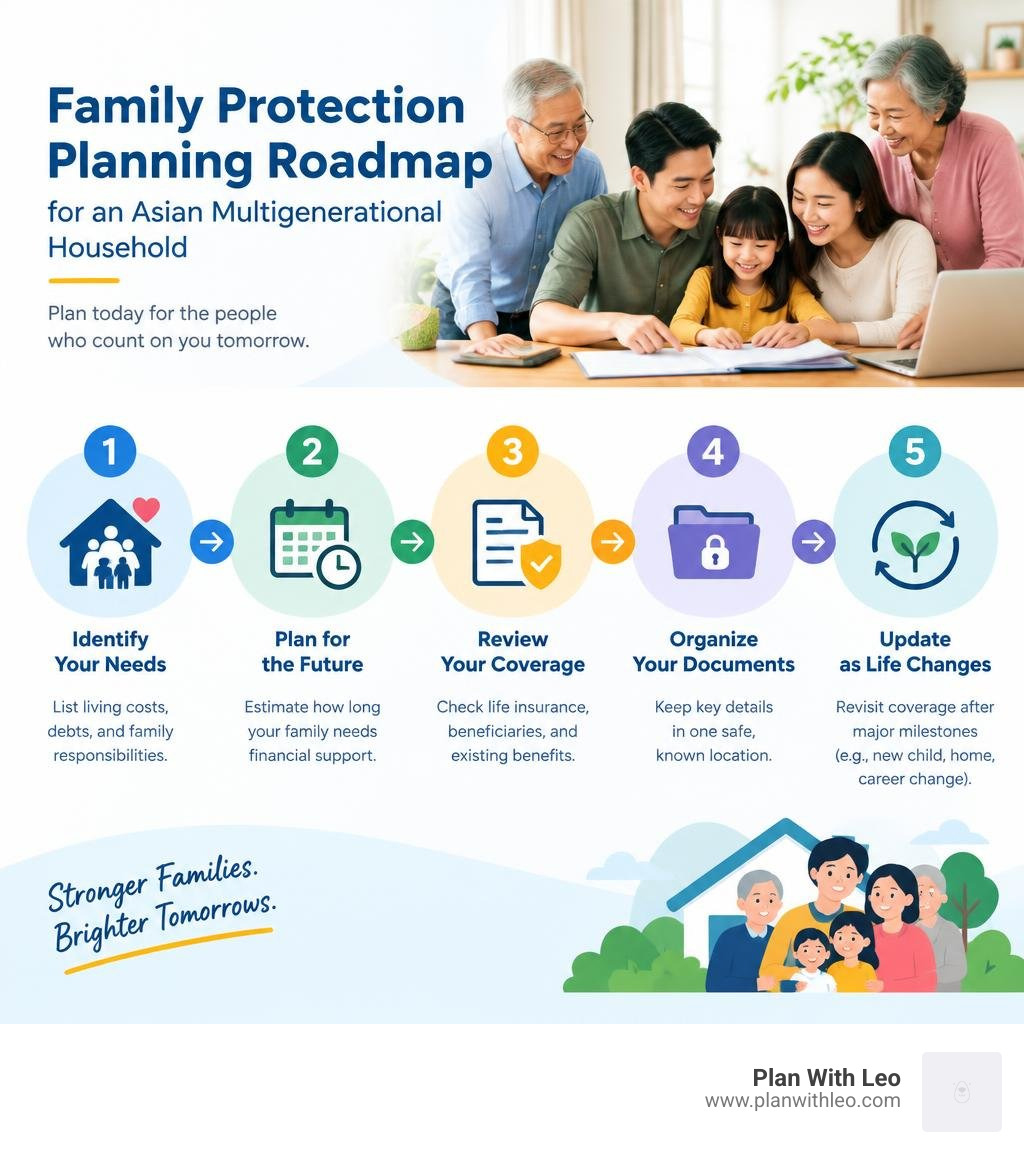
Family protection planning means preparing for a loss of income, serious illness, disability, or death before your household is under pressure. For new and growing families, this often starts with a conversation about what would happen if an income earner or caregiver could no longer work, manage household responsibilities, or provide financial support. Begin by listing the people who depend on household income and the recurring bills that would continue without that support. Then review savings, employer benefits, existing life insurance, and beneficiary details to identify potential protection gaps.
A simple starting checklist:
- Identify essential monthly living costs, debts, mortgage obligations, and child-related expenses.
- Estimate how long surviving family members and dependents would need income replacement or financial support.
- Review life insurance coverage, policy owners, and beneficiaries on any existing policies.
- Keep key policy details and important documents in one secure, known location.
- Revisit coverage after major life milestones, such as welcoming a new child, buying a home, or changing careers.
Life insurance is one part of the picture, but it can be an important one. A death benefit may help surviving family members handle final expenses, outstanding mortgage debt, living costs, or future education goals. The right amount and type depend on your family’s household structure, goals, health, budget, and the protection already available through work or personal policies.
I am Leo Truong, a licensed life insurance agent who helps individuals and families understand and review available life insurance options. Through Plan With Leo, I focus on making family protection planning easier to understand for parents exploring coverage solutions, income replacement, and the family responsibilities that matter most.
The Core Pillars of Comprehensive Family Protection Planning
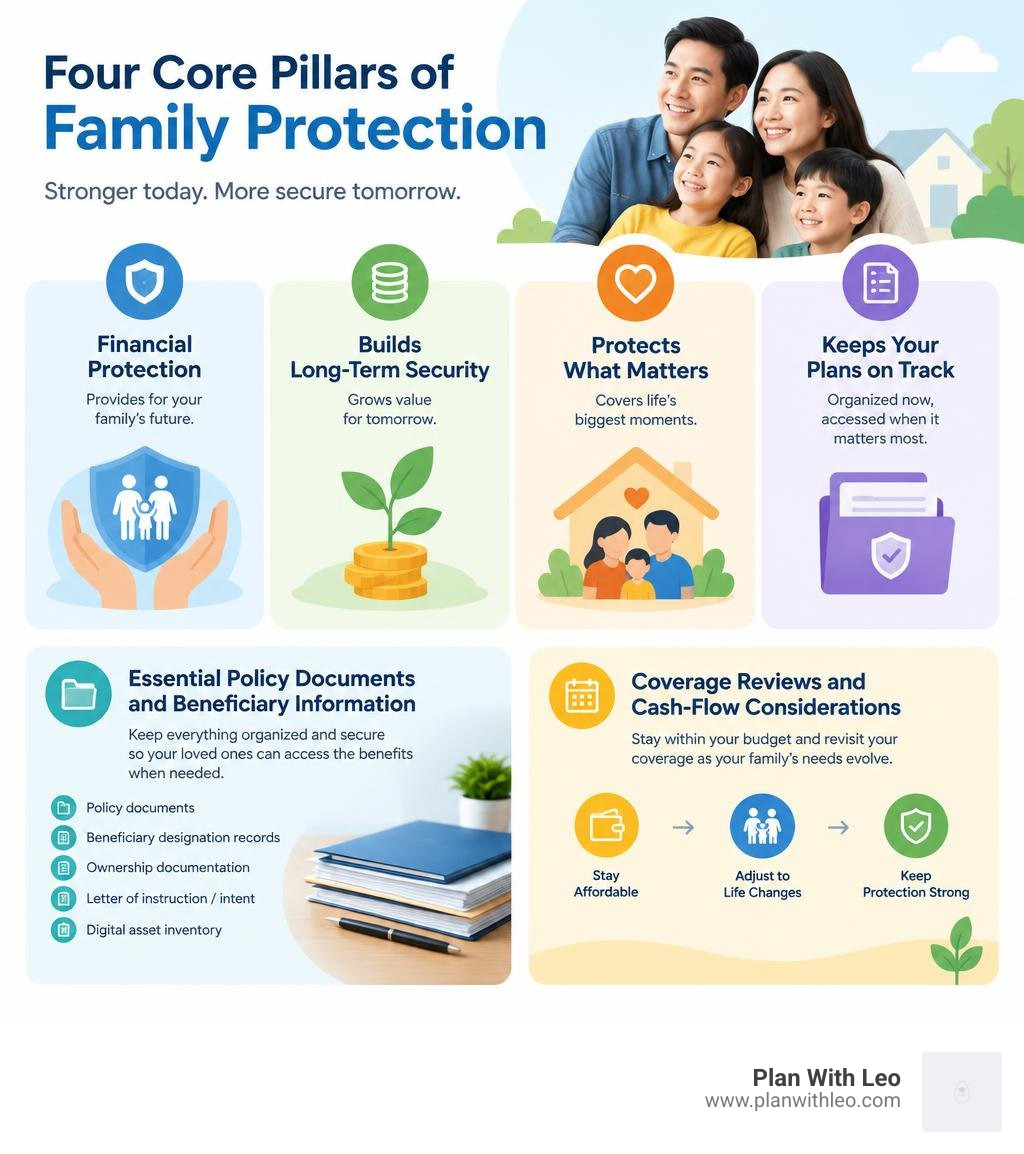
Building a resilient household defense means thinking about what happens if the unexpected occurs. Many families and parents exploring coverage solutions realize that risk mitigation involves balancing multiple layers of security. For parents and growing households, a structured plan coordinates cash reserves, income safeguards, life insurance policies, and clear legal instructions to help preserve a family’s standard of living and reduce the burden on surviving dependents.
Structuring Insurance Coverage in Family Protection Planning
Insurance can serve as a primary financial backstop in a household protection strategy. When structuring life insurance for a growing household, policies are generally categorized into term life and permanent life options.
- Term Life Insurance: Provides coverage for a specified timeframe (such as 10, 20, or 30 years). It is often selected by parents who want coverage during critical child-rearing years, while paying off a mortgage, or during peak earning decades.
- Permanent Life Insurance: Provides lifelong protection as long as required premiums are paid, and it often includes a cash-value component that grows over time. This may be considered when parents want coverage for lifelong dependents or to leave an enduring financial legacy regardless of when they pass away.
When comparing family life insurance options, consider how different policy types address income replacement, mortgage protection, and long-term legacy goals. Many parents start by evaluating if you have enough life insurance for your family across both earners and caregivers. You can also look into optional policy riders, such as child term rider benefits, which may provide small death benefit amounts for children alongside a parent’s primary policy, depending on the insurer and underwriting guidelines.
Life Insurance and Income Protection Considerations
Choosing the right policy structure requires comparing how coverage types align with your family’s timeline, budget, and responsibilities.
| Feature / Consideration | Term Life Insurance | Permanent Life Insurance (Whole / Universal) |
|---|---|---|
| Coverage Duration | Set period (typically 10–30 years) | Lifelong (as long as premiums are maintained) |
| Premium Structure | Level, predictable premiums during the initial term | Typically higher initial premiums; may be fixed or flexible |
| Cash Value Component | None | Yes, builds cash value over time depending on the policy |
| Primary Purpose | High coverage for critical years (debt payoff, income replacement) | Lifelong protection, final expenses, permanent legacy |
| Flexibility | Can often convert to permanent coverage depending on terms | May offer options to borrow against cash value or adjust premiums |
| Beneficiary Payout | Death benefits may generally be received free of federal income tax depending on the circumstances. | Death benefits may generally be received free of federal income tax depending on the circumstances. |
Essential Policy Documents and Beneficiary Information
Having appropriate insurance policies is only effective if your loved ones can access and claim the benefits when needed. Maintaining an organized record of all vital household protection documents can help reduce confusion during difficult moments.

Core items to organize and store securely include:
- Life Insurance Policy Documents: Policy numbers, carrier names, coverage amounts, and contact details for claims.
- Beneficiary Designation Records: Copies of primary and contingent beneficiary forms for all individual and employer-provided policies.
- Ownership Documentation: Records showing whether policies are owned individually, jointly, or by a trust entity.
- Letter of Instruction / Intent: An informal roadmap outlining where accounts are located, key contacts, and practical guidance for survivors.
- Digital Asset Inventory: A securely organized record of important digital accounts and instructions for accessing them, using a password manager or other protected access method.
Coverage Reviews and Cash-Flow Considerations
A protection strategy must remain realistic within your household budget. Selecting a policy with premiums that strain monthly cash flow can lead to missed payments and policy lapses, leaving the family with less protection.
As your family’s financial circumstances evolve—such as welcoming a new baby, purchasing a home, or experiencing career changes—review coverage periodically and after major life events to help keep premium commitments sustainable and coverage limits aligned with current obligations.
How to Build and Calculate Your Family Protection Framework
Mapping out your family’s protection needs requires assessing liabilities, daily living expenses, and long-term family goals.
Assessing Income Replacement and Debt Obligations
There is no universal coverage multiplier that is right for every household. A more individualized assessment considers your household’s actual obligations, income needs, existing resources, budget, health, underwriting, and available policy options, including:
- Immediate Debts: Outstanding mortgage balances, auto loans, personal loans, and credit card balances.
- Ongoing Living Expenses: Annual household operational costs multiplied by the number of years a surviving spouse or growing children may need support.
- Future Milestones: Anticipated college tuition, child-rearing costs, or reserves for long-term family security.
- Existing Resources: Current savings, investment balances, and existing group life insurance.
Special consideration is vital for households welcoming a child. Looking into coverage considerations for new parents can help growing responsibilities be addressed early.
It is also important to consider evaluating whether both parents need life insurance. Households often overlook the financial contribution of a non-earning parent. Reviewing life insurance needs for stay-at-home parents can help quantify the significant cost of replacing childcare, household management, transportation, and home educational support if that parent passes away.
Reviewing Beneficiary and Policy Ownership Considerations

How you structure beneficiary designations can influence how quickly and cleanly policy proceeds are distributed.
- Primary Beneficiaries: The first in line to receive policy proceeds, often a surviving spouse or partner.
- Contingent Beneficiaries: Backup recipients who may receive proceeds if the primary beneficiary has passed away.
- Minor Children: Naming a minor directly as a beneficiary can create complications depending on the circumstances. Families may want to coordinate beneficiary decisions involving minors with a qualified estate planning attorney.
- Public Benefit Eligibility: Life insurance proceeds may affect eligibility for certain means-tested programs depending on the beneficiary’s circumstances. Families with special-needs dependents should consult an appropriate legal or benefits professional before making beneficiary decisions.
Special Scenarios and Common Mistakes to Avoid
Every household has unique dynamics that may require tailored life insurance arrangements.
Special Household Considerations for Family Protection Planning
- Single Parents: When one adult manages all household income and parenting responsibilities, sufficient life insurance can be especially important. Exploring tailored life insurance strategies for single parents can help families consider guardianship funding, living costs, and educational support for minor dependents.
- Blended Families: In households with children from prior relationships, clear beneficiary structuring can help reduce the risk of unintended disinheritance and support children according to your wishes.
- Self-Employed Individuals: Freelancers, contractors, and business owners may have variable income and may not have employer-sponsored group life benefits. Individual life insurance may help keep coverage separate from employment or business arrangements.
- Diverse and Multi-Generational Households: Cultural preferences and multi-generational living arrangements may call for flexible coverage structures. For instance, exploring culturally tailored options for Vietnamese families can help families consider supporting multi-generational households, funding children’s futures, and preserving long-term family stability.
Pitfalls: Employer-Only Coverage, Outdated Beneficiaries, and Review Gaps
Avoiding frequent planning missteps can help keep your protection plan intact:
- Relying Solely on Group Life Insurance: Employer-provided life insurance varies by plan and may not fully match a household’s long-term coverage needs. Availability, portability, conversion options, and coverage amounts can also change when employment ends.
- Failing to Update Beneficiary Designations: Life insurance payouts generally follow the named beneficiary on file with the insurance company rather than directions in a will. If you do not update designations following a divorce, remarriage, or birth of a child, benefits could be paid to an ex-spouse or exclude younger children.
- Underinsuring the Non-Working Spouse: Overlooking the replacement cost of domestic work, childcare, and household administration can leave a surviving earner financially stressed.
- Letting Policies Lapse Due to Lack of Review: As life circumstances shift, review coverage periodically and after major life events to help identify whether coverage still reflects current obligations.
Frequently Asked Questions about Family Protection
What is the main difference between primary and contingent life insurance beneficiaries?
A primary beneficiary is the designated first choice to receive the life insurance death benefit upon the insured’s passing. A contingent beneficiary serves as a secondary or backup recipient. The contingent beneficiary may receive the proceeds only if all named primary beneficiaries pass away before or at the same time as the insured person. Naming both primary and contingent beneficiaries may reduce the chance that proceeds become payable to the estate, depending on the circumstances and policy.
Why is employer-provided life insurance sometimes not enough for a family?
Employer-provided life insurance varies by plan and may not fully meet a family’s coverage needs. Coverage amounts, eligibility, portability, and conversion options can differ, and coverage may not remain available after a job change. Reviewing both employer-provided benefits and individual policy options can help families understand their available protection.
How often should a family protection plan be reviewed?
Review coverage periodically and after major life events. Key triggering events include:
- Marriage, divorce, or changes in relationship status
- Welcoming a new child through birth or adoption
- Purchasing a home or taking on major debt
- Starting a business or transitioning into self-employment
- Significant increases or decreases in annual household income
Conclusion
Proactive family protection planning can help your family prepare for changing circumstances. By evaluating essential expenses, structuring appropriate life insurance coverage, and keeping policy details organized, you can build a more stable foundation for your loved ones.
Leo Truong is a licensed life insurance agent who helps individuals and families understand and review available life insurance options. If you are ready to evaluate your family’s needs and review current policies, explore our life insurance options or reach out to contact Plan With Leo today.