A Practical Guide: Understanding Insurance Based Financial Strategies for Families

A Practical Guide: Understanding Insurance Based Financial Strategies for Families
Why Insurance Based Financial Strategies Matter for Families
Insurance based financial strategies are best understood here as ways life insurance may support family protection. A policy may help provide funds for income needs, household obligations, final expenses, business responsibilities, or certain legacy goals, depending on the policy and circumstances.
Start by reviewing the needs life insurance may address:
- Income needs while others depend on an earner.
- Costs that may arise from unpaid balances, final arrangements, or ongoing household responsibilities.
- Business continuity or legacy considerations.
- Changes in family, health, income, and responsibilities.
A policy can include more than the benefit paid after the insured’s death. Depending on the policy and its features, it may include living-benefit riders for qualifying illnesses, cash value in certain permanent policies, or funds that may help beneficiaries manage immediate obligations. These uses have limits, costs, policy requirements, and possible tax or legal considerations.
The goal is not to make one policy serve every purpose. Families can review what life insurance may and may not do, understand available options, and speak with qualified legal or tax professionals when a situation calls for their guidance.
As a licensed life insurance agent, Leo Truong explains available coverage choices to individuals, families, and business owners. Through Plan With Leo, he explains insurance based financial strategies in plain language for people considering family protection, household obligations, final expenses, and business responsibilities.

Core Pillars of Insurance Based Financial Strategies
For new parents, life insurance may be one part of a broader family-protection conversation. Rather than viewing coverage only as an expense, it can help families consider how a policy may fit their current responsibilities and future changes.
Common areas to review include:
- Income needs: A death benefit may provide funds for household expenses after an income earner dies. Learn more about family protection planning.
- Living benefits: Some policies offer riders that may allow access to part of the death benefit during a qualifying illness.
- Cash value: Some permanent policies may build cash value over time, subject to policy terms and performance. See comparing term vs permanent costs and benefits.
- Legacy and business needs: Coverage may be considered when families want funds available for certain legacy goals or business obligations.
Living Benefits and Protection Planning Options
Some life insurance policies include living-benefit riders, often called accelerated death benefit riders. If the insured has a qualifying terminal, chronic, or critical illness, a rider may allow access to part of the death benefit while the insured is living.
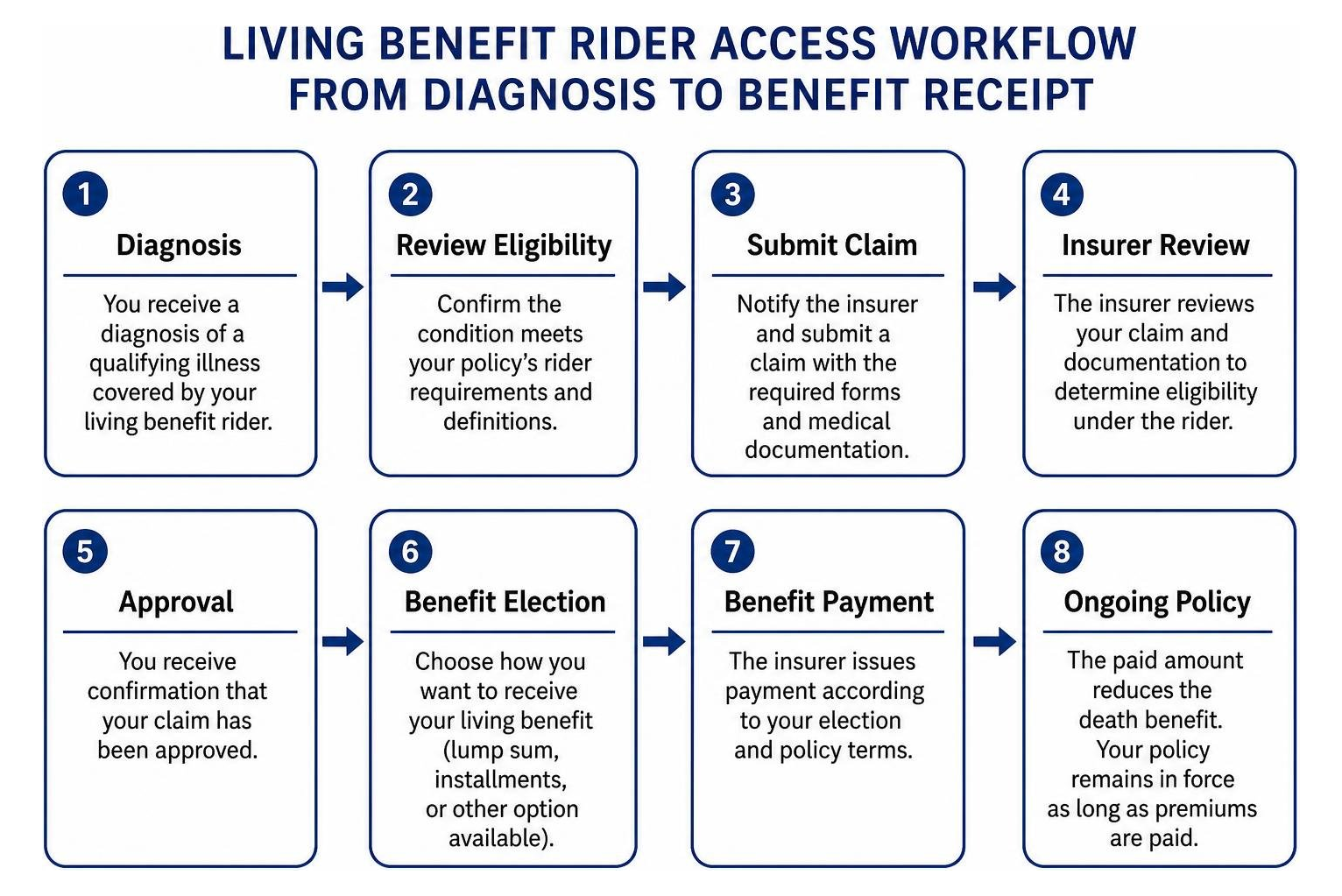
Terminal, chronic, and critical illness rider definitions, eligibility, available benefit amounts, and other terms vary by insurer, state, policy, and rider. Before relying on a rider, review the policy details and ask how a claim could affect the remaining death benefit, policy values, and future coverage.
Chronic illness and critical illness riders may be worth reviewing for families who want to understand available living-benefit features. Using an accelerated death benefit can reduce the amount later paid to beneficiaries and may involve fees or other policy effects.
Cash Value Accumulation and Permanent Policy Structures
Some permanent life insurance policies may build cash value over time. Depending on policy terms, the owner may be able to take withdrawals or policy loans from available cash value.
Cash-value access is not automatic and can involve charges, interest, reduced benefits, a risk of lapse, and possible tax consequences. Individual tax questions should be discussed with a qualified tax adviser. Reviewing cash value and term life insurance can help families understand the features and tradeoffs of available policy types.
Understanding Carrier Financial Strength
A life insurance policy is a long-term contract, so families may want to learn about the insurer behind it. Company structure and independent financial-strength ratings are two consumer-focused details that can be useful during a coverage review.
Stock Insurers and Mutual Insurers
Insurance companies can operate under different ownership structures. Those differences may affect how the company is governed and how any eligible policyholder dividends are handled, but they do not determine whether one insurer is right for every family.
| Feature | Stock Insurers | Mutual Insurers |
|---|---|---|
| Ownership | Shareholders | Policyholders who may have ownership rights |
| General focus | Operate as shareholder-owned companies | Operate for policyholders under their governing structure |
| Possible policyholder dividends | Not typical | May be available on eligible participating policies and are not guaranteed |
For families considering a participating policy, it is important to review the policy illustration and understand that dividends, when available, are not guaranteed.
Carrier Financial Strength and Consumer Review
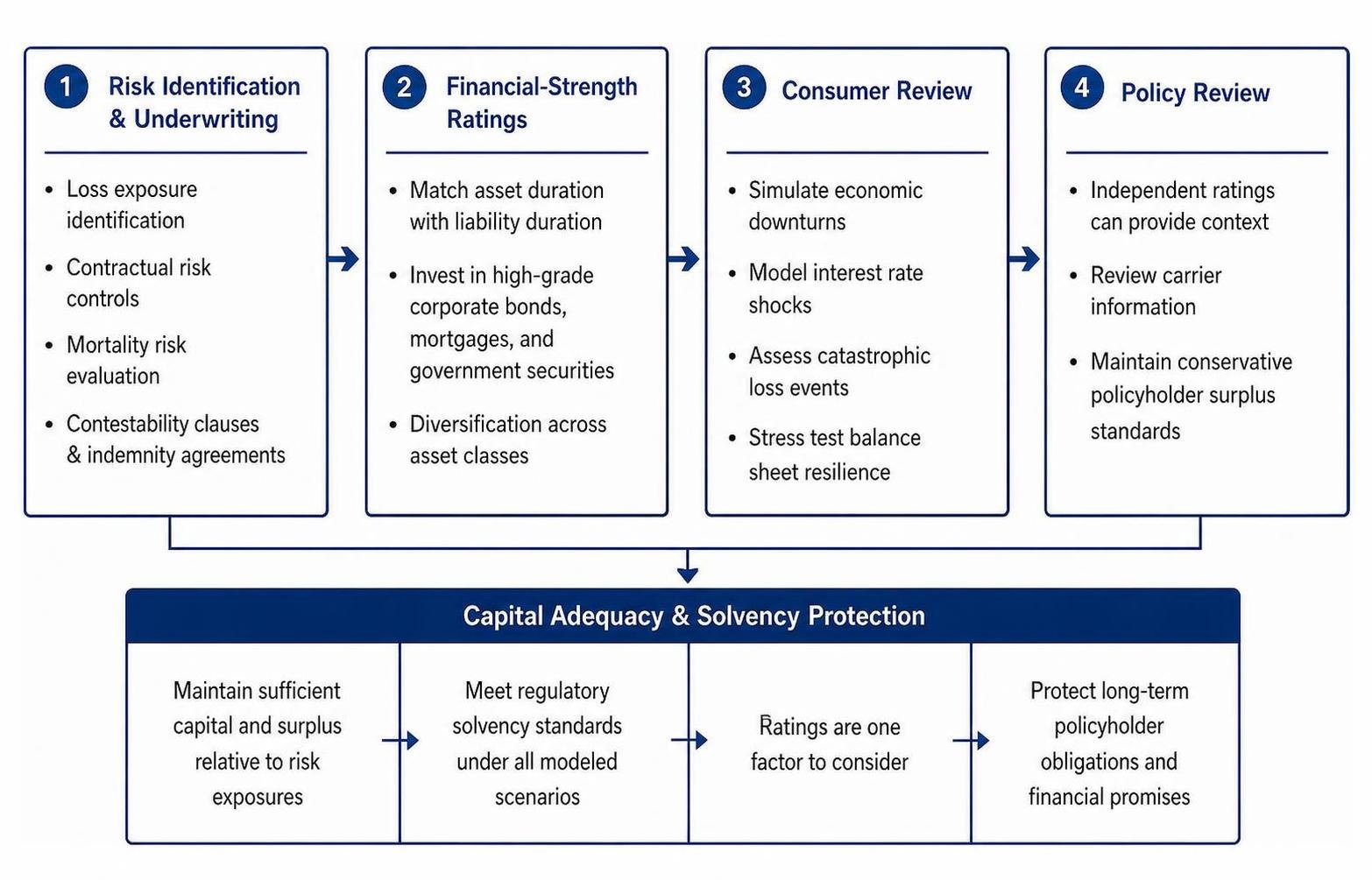
Families may consider independent financial-strength ratings from agencies such as A.M. Best, Standard & Poor’s, Moody’s, and Fitch when evaluating an insurer. A rating is one factor to review alongside the policy’s benefits, costs, service, and suitability for the family’s needs.
Ratings may change, and they do not guarantee that a policy will meet every future need or that a claim will be paid. A licensed life insurance agent can help explain where to find insurer information and how to review policy terms.
Estate Liquidity and Business Succession Applications
For families with assets that may take time to sell, such as a family business, real estate, or a closely held partnership, life insurance may provide funds that can help beneficiaries address certain immediate obligations. Whether coverage fits a legacy need depends on the policy, ownership, beneficiaries, and the family’s circumstances.

Considering Life Insurance for Estate Liquidity
A death benefit may provide beneficiaries with funds they can consider using for debts, final expenses, or other estate-related needs. It does not resolve every estate issue, and the timing and use of proceeds depend on policy terms and the circumstances involved.
Life insurance may also be discussed as a general way to provide value to different heirs when one person expects to receive a family property or business interest. It does not guarantee equal distributions or avoid estate complications. Trust, estate, and tax decisions should be handled with qualified attorneys and tax professionals.
Reviewing how life insurance fits into broader financial strategies and estate planning can help families identify questions to bring to the appropriate professionals. Families can also review estate planning considerations for multicultural families when considering multigenerational family goals.
Business Succession and Key Person Continuity
For family business owners, life insurance may be considered as part of a business-continuity discussion. Depending on the agreements, ownership structure, lender requirements, and policy terms, common examples include:
- Buy-sell agreements: Life insurance may provide funds that surviving owners could use toward a purchase of a deceased owner’s interest.
- Key person insurance: A business-owned policy may provide funds after the death of a key employee or owner, which the business may use while managing the disruption.
- Collateral assignment: A policy may be assigned as collateral when a lender requires it, subject to the loan and policy terms. See insurance in business succession planning for a high-level overview.
Life Insurance and Long-Term Protection Considerations
Life insurance needs can change as mortgages are paid down, children become financially independent, health changes, or a family approaches retirement. Periodic reviews may help policy owners understand whether their current coverage and beneficiaries still reflect their circumstances.
Coordinating Life Insurance with Changing Needs
As retirement approaches, a life insurance review may focus less on income needs and more on whether current coverage, beneficiaries, and policy features still make sense for the household. The right questions depend on the policy and the family’s goals.
Key items to review may include:
- Term policy expirations: Term coverage has a defined duration. Policy owners can review the expiration date and any available conversion option before a deadline, subject to policy terms.
- Permanent-policy performance: Owners of permanent coverage may want to review current policy values, charges, loan balances, and in-force illustrations.
- Beneficiary information: Beneficiary designations may need updates after changes such as a marriage, divorce, birth, or a change in family responsibilities. For more context, see evaluating life insurance need in retirement.
Practical Steps to Reviewing Life Insurance Strategies
A clear review can help families understand their existing coverage and the options available to them:
- Review current responsibilities: Consider household expenses, debts, dependents, final expenses, and other obligations that may be relevant.
- Check coverage duration: Review when term coverage ends and whether the policy includes conversion options or other features.
- Read the policy terms: For permanent coverage, request an updated in-force illustration and review current values, charges, and any outstanding loans.
- Confirm beneficiary designations: Check that primary and contingent beneficiaries reflect current wishes and family circumstances.
- Discuss available options: A licensed life insurance agent can help explain policy features and available coverage options, while legal and tax questions should go to qualified professionals.
Frequently Asked Questions About Insurance Based Strategies
Can life insurance provide funds when an estate includes property or a family business?
A life insurance death benefit may provide beneficiaries with funds after the insured’s death. When an estate includes assets such as real estate, land, or a family business, those funds may help with debts, final expenses, or other immediate obligations. The use of proceeds and the overall estate process depend on the policy, beneficiary designations, and the family’s circumstances.
Conclusion
Insurance based financial strategies can help families understand the ways life insurance may support income needs, household obligations, living-benefit features, business responsibilities, and certain legacy goals. The value of a policy depends on its terms, costs, features, and the family’s circumstances.
Plan With Leo provides educational life insurance guidance. Leo Truong is a licensed life insurance agent who helps individuals, families, and business owners understand and review available life insurance options.
For a closer look at coverage features and questions to consider, visit our guide to life insurance options for your family or reach out to Leo Truong today.