Step-by-Step Guide to Life Insurance Underwriting

Step-by-Step Guide to Life Insurance Underwriting
What Is Life Insurance Underwriting?
Life insurance underwriting is the process an insurer uses to decide whether to offer coverage and, if so, what the policy may cost.
In simple terms, an underwriter looks at information about you to understand the level of risk involved. That may include your age, health, lifestyle, and other details. Requirements vary by insurer, policy, state, age, health, and underwriting.
The review may include:
- Your application and health history
- Prescription or medical records in some cases
- Driving records or other background checks in some cases
- A medical exam for some policies
- Financial information for certain coverage amounts
Some people receive a decision quickly, while others may need more review before a final answer is given.
Leo Truong is a licensed life insurance agent who helps people understand and compare available life insurance options.
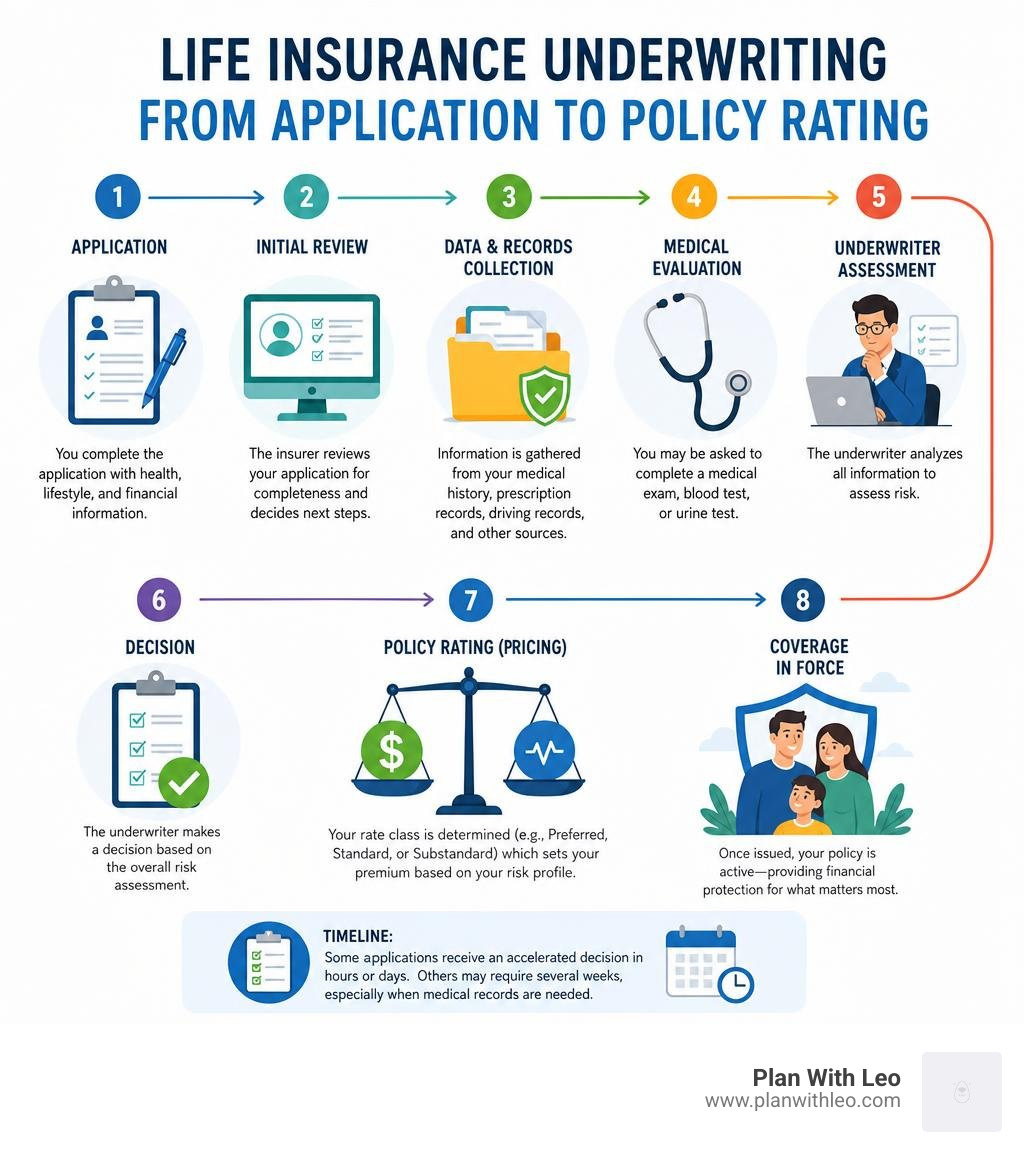
Understanding Life Insurance Underwriting and Its Purpose
Life insurance underwriting helps an insurer decide whether an application fits its guidelines and how to price the policy.
At a basic level, insurance works by pooling risk across many people. Underwriting helps the insurer balance that risk in a way that is fair and sustainable.
To explore general policy structures before diving into underwriting, you can review our core guide on Life Insurance.
What Is Medical Underwriting?
Medical underwriting looks at health-related information to help the insurer understand risk. Depending on the policy, that may include:
- Personal health history
- Current conditions or past diagnoses
- Prescription medication history
- Height, weight, blood pressure, and lab results in some cases
- Family medical history in some cases
A managed health condition does not always prevent approval. The result depends on the insurer and the full application.
What Is Financial Underwriting?
Financial underwriting looks at whether the amount of coverage requested seems appropriate for the applicant’s situation.
Insurers may review things like:
- Income or employment information
- Existing coverage
- The amount of coverage requested
- The reason for the coverage amount
The exact requirements vary by insurer and policy type.
Types of Life Insurance Underwriting Processes
Different policies use different underwriting methods. The right option often depends on how much information the insurer needs and how quickly a decision is needed.

Traditional Underwriting
Traditional underwriting usually involves a detailed application and may include a medical exam and review of medical records. It is often used when the insurer wants a fuller picture before making a decision.
Accelerated Underwriting
Accelerated underwriting uses more automated data checks and may offer a faster decision for some applicants. It may skip some steps used in traditional underwriting, but eligibility varies by insurer.
Simplified Issue and Guaranteed Issue
Simplified issue policies usually ask fewer health questions and may not require a medical exam. Guaranteed issue policies generally ask no health questions, but they may have lower coverage amounts or different pricing. Availability and terms vary by insurer.
Step-by-Step Breakdown of the Underwriting Journey
The underwriting process usually follows a few basic steps.
Step 1: Apply
The process starts when you submit an application. You may be asked about your health, lifestyle, occupation, and the coverage you want.
Step 2: Review
The insurer may review your answers and request additional information. That can include medical records, a driving record, or a medical exam, depending on the policy.
Step 3: Decision
After the review, the insurer may approve the application, offer different terms, or ask for more information. In some cases, the application may be declined.
Step 4: Policy Issuance
If approved, the policy is issued with the terms the insurer offered. After that, the coverage begins according to the policy rules.
Factors Underwriters May Consider
Underwriters may look at several factors when reviewing an application.
| Risk Category | Examples of Information Reviewed | Possible Effect |
|---|---|---|
| Health | Current health, medical history, prescriptions | May affect eligibility or pricing |
| Lifestyle | Hobbies, travel, and other activities | May affect eligibility or pricing |
| Driving history | Serious violations or repeated incidents | May affect eligibility or pricing |
| Occupation | Jobs with added risk | May affect eligibility or pricing |
| Coverage amount | How much coverage is requested | May affect how closely the application is reviewed |
Common Factors That Can Affect Eligibility or Pricing
- Health conditions
- Age
- Tobacco or nicotine use
- Occupation
- Hobbies or activities with added risk
- Driving history
- Coverage amount requested
Not every insurer weighs these factors the same way.
Timeline and What to Expect
The underwriting timeline can vary widely. Some applications are reviewed quickly, while others take longer if the insurer needs more information.
What Happens After You Apply?
After you apply, the insurer may:
- Review your application
- Request records or an exam
- Ask follow-up questions
- Make an approval, offer, or decline decision
If the application is approved, the insurer sends the policy terms and coverage details. If more information is needed, the process may take longer.
Planning ahead can help make the process smoother, especially if you are applying for coverage for your family. You can also explore our guides on Life Insurance for New Parents and The Ultimate Guide to Life Insurance for First Time Homeowners.
Frequently Asked Questions About Life Insurance Underwriting
How does underwriting work?
Underwriting is the insurer’s review of your application and other information to decide whether to offer coverage and on what terms.
Do all policies require a medical exam?
No. Some policies may require one, while others may not.
Can I get coverage if I have health issues?
Possibly. It depends on the insurer, the policy, and the details of your health history.
Why was I offered different terms than someone else?
Insurance decisions are individualized. Different health, age, lifestyle, and coverage details can lead to different results.
What if the insurer asks for more information?
That usually means the review is still in progress. Providing the requested information as soon as possible may help avoid delays.
Conclusion
Life insurance underwriting is simply the review process insurers use to decide whether to offer coverage and how to price it.
If you understand what information may be reviewed and what can affect the decision, it becomes easier to apply with confidence and know what to expect. Requirements vary by insurer, policy, state, age, health, and underwriting.
Leo Truong is a licensed life insurance agent who helps people understand and compare available life insurance options.