A Comprehensive Guide to Cash Value vs. Term Life Insurance

A Comprehensive Guide to Cash Value vs. Term Life Insurance
What Cash Value Life Insurance Means for Your Coverage
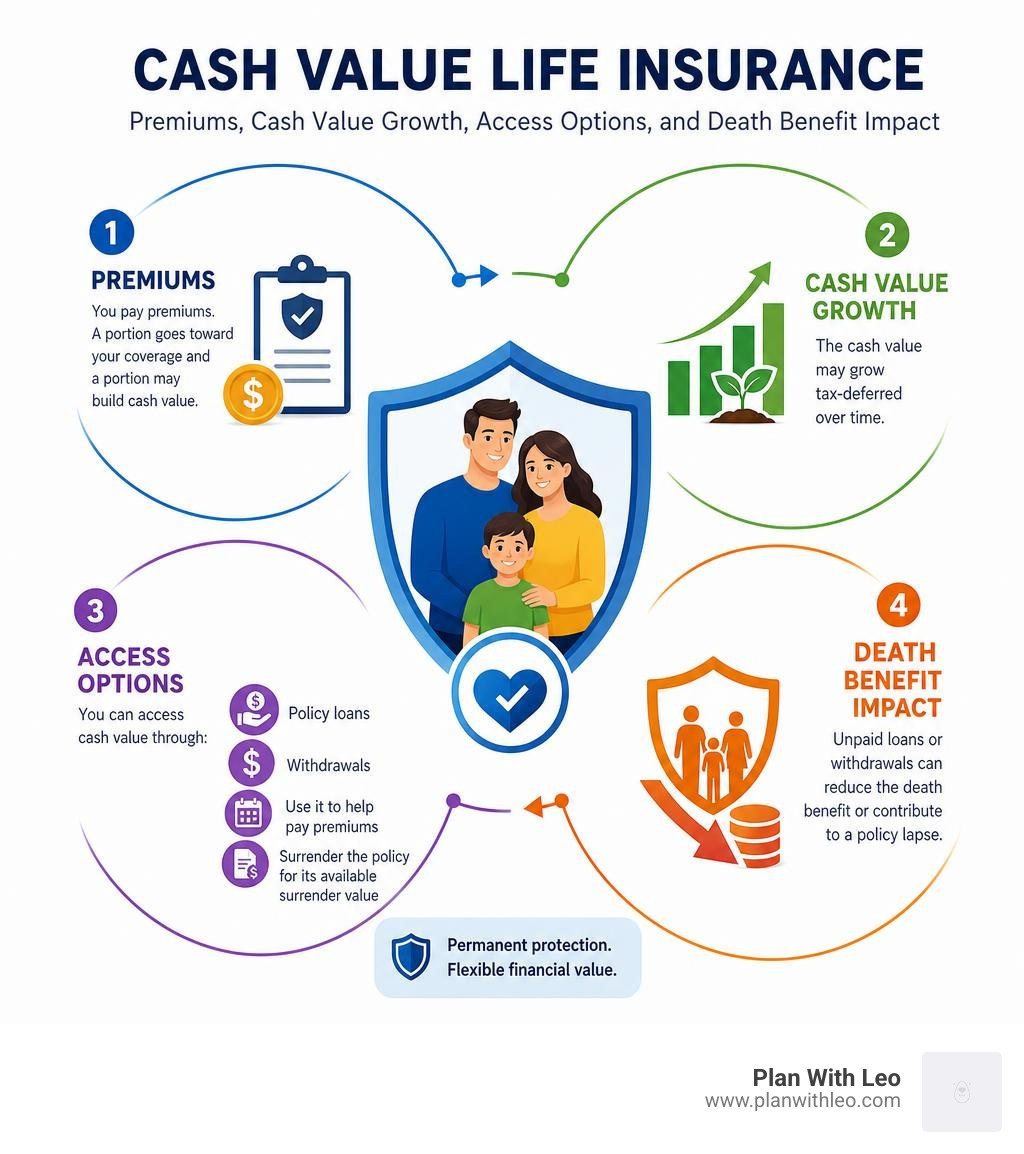
Cash value life insurance is permanent life insurance that combines a death benefit with a cash-value account. Part of your premium supports the coverage, while cash value may build over time depending on the policy type, contract terms, charges, and funding. Unlike term life insurance, which covers you for a set period and generally has no cash value, permanent coverage can last for life as long as policy requirements are met.
The cash value may grow tax-deferred and can often be accessed through:
- Policy loans
- Withdrawals
- Using it to help pay premiums
- Surrendering the policy for its available surrender value
That flexibility comes with trade-offs. Cash-value policies usually cost more than term coverage, growth may be slow in the early years, and unpaid loans or withdrawals can reduce the death benefit or contribute to a policy lapse. The right choice depends first on how long you need coverage, what you can comfortably pay, and whether building cash value is a real priority.
I’m Leo Truong, a licensed life insurance agent who helps individuals, families, and business owners understand and review available life insurance options. In this guide, I will break down how cash value life insurance works and how it compares with term coverage for protecting the people and responsibilities that matter to you.
Basic cash value life insurance glossary:
- chronic illness life insurance rider
- how does permanent life insurance work
- term vs whole life insurance
How Cash Value Life Insurance Works
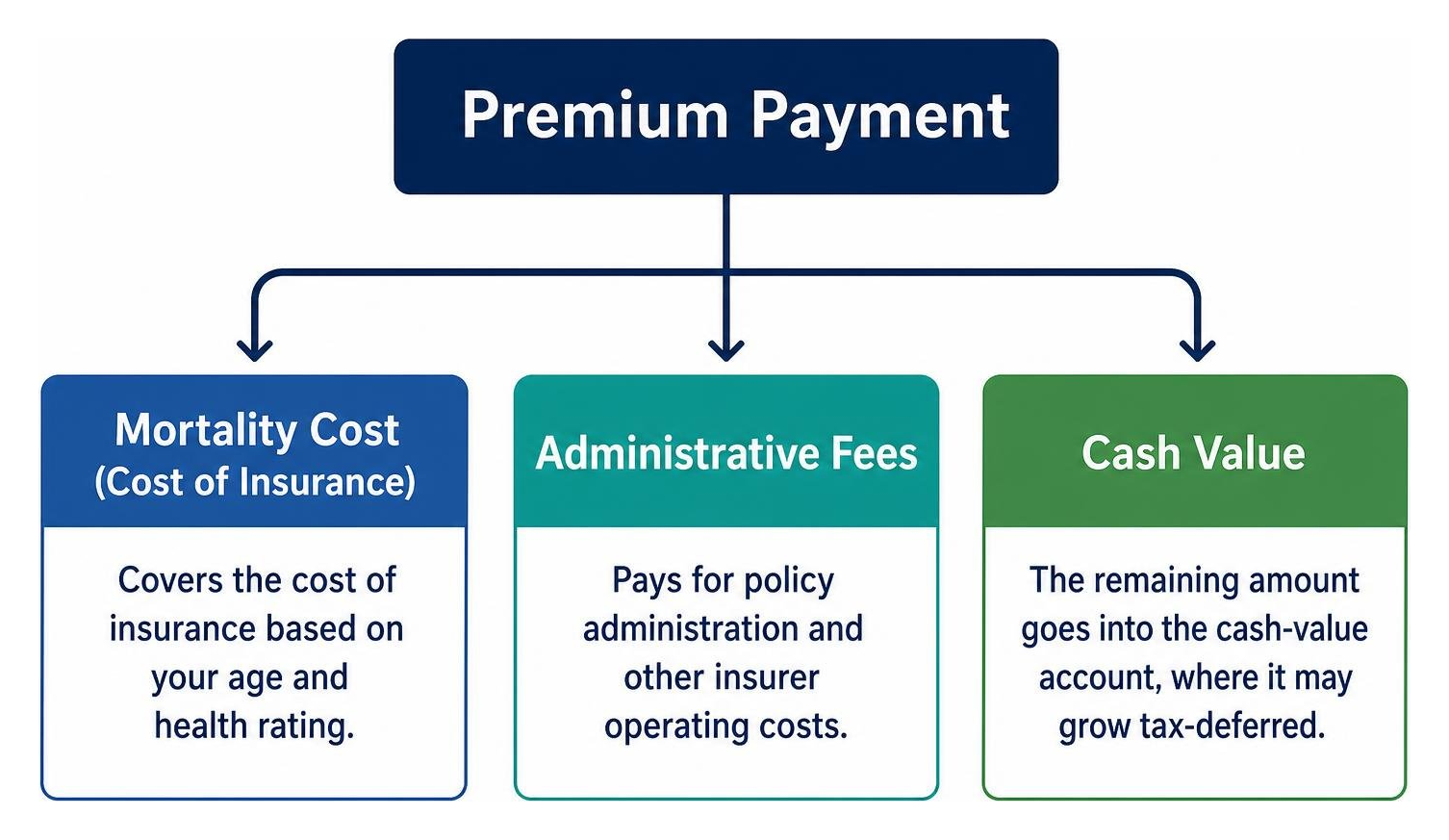
When you pay a premium on a permanent policy, the premium helps support the policy’s death benefit, charges, and potential cash value accumulation. How those amounts are allocated depends on the type of policy, its contract terms, the insurer’s charges, and how the policy is funded. Understanding these differences is central to understanding how permanent life insurance works.

Depending on the contract, premiums may be used to cover insurance costs and administrative charges, with cash value credited or accumulated according to the policy’s design. Cash value may grow on a tax-deferred basis while it remains in the policy, but growth, guarantees, and available values vary by contract.
As cash value accumulates, it can affect the policy’s net amount at risk and the values available to the policyholder. If you terminate the contract early, the insurer may pay the available surrender value after deducting applicable loans, charges, or surrender fees. If premiums are not paid or available cash value is insufficient to cover required charges, a policy may lapse depending on its terms.
Types of Cash Value Life Insurance Policies
Permanent coverage comes in several structures, each designed with different growth mechanisms and management flexibility:
- Whole Life Insurance: Whole life typically offers level premiums, a stated death benefit, and cash value accumulation based on the insurer’s contract guarantees. Some mutual insurers may also pay non-guaranteed annual dividends, which may be used in different ways under the policy.
- Universal Life (UL): Universal life may offer flexible premiums and adjustable death benefits. Whether and how premiums may be adjusted depends on the policy, available cash value, monthly charges, and other contract requirements. Some universal life policies include a no-lapse guarantee if specified minimum premium payments are met.
- Indexed Universal Life (IUL): These contracts may credit interest based in part on the performance of an external market index, subject to caps, participation rates, floors, policy charges, and other contract terms. Index-linked crediting does not mean the policy directly owns the index, and cash value can still decline depending on policy performance and charges.
- Variable Life (VL) and Variable Universal Life (VUL): These policies allow policyholders to allocate cash values across separate investment accounts similar to mutual funds. Because values fluctuate directly with market performance, cash value growth is not guaranteed and carries investment risk.
How Cash Value Accumulates Over Time
Cash value accumulation varies widely by policy design, premium funding, charges, guarantees, and performance. In many policies, early available cash value may be limited because of policy costs and applicable surrender charges.
Over time, cash value may increase through guaranteed interest, non-guaranteed dividends, or market-linked or investment performance, depending on the contract. Review the policy illustration and contract details carefully to understand how values may change under different assumptions.
Cash Value vs. Term Life: Key Differences and Trade-offs
Choosing between term and permanent coverage requires balancing immediate budget constraints against long-term protection goals. While term insurance provides pure protection for a specified period, such as 10, 20, or 30 years, cash-value policies are designed to provide permanent coverage if policy requirements are met.
For a deeper dive into policy costs, explore The Definitive Guide to Term vs Permanent Life Insurance Costs Benefits.
| Feature | Term Life Insurance | Cash Value (Permanent) Life Insurance |
|---|---|---|
| Coverage Duration | Temporary, typically 10 to 30 years | May last for life if policy requirements are met |
| Cash Value Component | None | May accumulate based on the policy’s terms |
| Initial Premium Cost | Often lower for high coverage amounts | Often higher because coverage and cash value features are funded together |
| Premium Flexibility | Fixed level premiums for the chosen term are common | Varies; whole life may use level premiums, while universal life may offer flexibility under contract terms |
| Living Benefits | May be available through certain riders | May include loans, withdrawals, premium payments from policy value, or surrender, subject to the contract |
| Primary Purpose | Income replacement or other temporary coverage needs | Lifelong coverage needs and potential cash value features |
Weighing the Pros and Cons of Permanent Coverage
Permanent life insurance can offer lifelong coverage and access to policy value, but it also requires careful review of costs, features, and ongoing policy requirements.
Potential advantages:
- Long-Term Coverage: The death benefit may remain in force for life when policy requirements are met.
- Cash Value Feature: Some policies may build value that can be accessed during the policyholder’s lifetime, subject to contract terms.
- Tax Treatment: Cash value may grow tax-deferred, though accessing policy value can have tax consequences depending on the policy and circumstances.
- Estate Liquidity: A death benefit may provide beneficiaries with funds that can be used for a range of needs, depending on the policyholder’s overall situation.
Potential drawbacks:
- Higher Costs: Ongoing premiums can be significantly higher than term insurance for the same face amount.
- Early Illiquidity: High early surrender charges can mean limited accessible cash value in the first few years.
- Complexity and Risk: Variable and non-guaranteed universal policies require ongoing monitoring to help avoid an unexpected policy lapse.
For those evaluating retirement assets, The Ins and Outs of Life Insurance vs Annuities for Retirement provides additional perspective on long-term tax-deferred tools.
Methods for Accessing Your Policy Cash Value

Permanent policies may provide several ways for policyholders to access accumulated cash value while still alive, subject to the insurer’s rules and the policy contract:
- Policy Loans: Many policies allow loans against available cash value. Loan availability, limits, interest rates, repayment terms, and the effect of an unpaid balance vary by insurer and contract. Outstanding loans and accrued interest may reduce policy values or the death benefit and can contribute to a lapse if not managed.
- Direct Cash Withdrawals: Some policies allow partial withdrawals or surrenders. A withdrawal may reduce cash value and can reduce the death benefit or affect policy performance, depending on the contract.
- Premium Offset: If sufficient value is available, some policies may allow cash value credits or dividends to help pay premiums. Availability and results depend on the policy’s terms.
- Full Surrender: If coverage is no longer needed, you may be able to surrender the contract for its available cash surrender value after applicable loans, charges, and surrender fees.
For severe health events, you may also have the option to Tap Into Your Death Benefit Early with Critical and Chronic Illness Riders independently of your accumulated cash value.
Tax Implications of Cash Value Life Insurance
Cash value may grow tax-deferred while it remains in a life insurance policy. Accessing policy value through withdrawals, loans, or surrender can have tax consequences depending on the policy, how it has been funded, and the circumstances. Because tax treatment can be complex and individual, policyholders should consult a qualified tax professional with questions about their specific situation.
What Happens to the Cash Value at Death?
Beneficiaries generally receive the policy’s stated death benefit when the insured dies and the policy is in force. Whether accumulated cash value increases that amount depends on the policy design, death benefit option, and contract terms. Review the policy illustration and contract documents to understand how death benefits and cash value are treated.
Frequently Asked Questions About Life Insurance Policies
How long does it take for cash value to build up?
Cash value accumulation varies by policy design, funding level, charges, guarantees, and performance. Some policies may show limited available value early on, especially when surrender charges or other policy costs apply. Reviewing the policy illustration can help clarify how values may change over time.
Can you borrow the full cash value of your policy?
Loan availability and limits vary by insurer and contract. A policy may require a remaining cash value balance or have other conditions, and outstanding loans and interest can affect cash value, policy performance, and the death benefit. Review your policy before taking a loan.
When might someone consider cash value life insurance?
Someone may consider cash value life insurance when they have a long-term need for life insurance and are comfortable reviewing the policy’s costs, features, funding requirements, and potential cash value. The appropriate coverage depends on individual goals, budget, health, and the specific policy being considered.
Conclusion
Understanding cash value life insurance comes down to evaluating whether your financial situation calls for temporary protection or a long-term, permanent policy with potential cash value features. While term coverage remains a popular choice for straightforward income replacement, permanent life insurance may provide lifelong coverage along with cash accumulation features, depending on the policy.
Because permanent policies involve variable features, surrender schedules, and specific funding requirements, taking the time to review illustrations carefully is an important step. To review available life insurance options that fit your goals, reach out to Leo Truong at Plan With Leo. As a licensed life insurance agent, Leo helps buyers understand and review available life insurance options.