The Complete Guide to Comparing Family Life Insurance Options

The Complete Guide to Comparing Family Life Insurance Options
Choosing the Right Life Insurance for Families
When families explore life insurance for families, the main goal is to protect loved ones from financial hardship if a family member passes away unexpectedly. Whether you are a parent protecting young dependents, a spouse helping replace household income, or a family member planning around shared obligations, comparing options usually comes down to four key steps:
- Estimate family protection needs – Consider income replacement, housing costs, caregiving expenses, future obligations, and any debts that may need to be covered.
- Identify who may need coverage – Review the financial and caregiving roles of each adult in the household, including working parents, stay-at-home parents, single parents, and other family members whose loss would create a financial gap.
- Compare policy structures and duration – Evaluate term life, whole life, final expense, or other permanent options based on your family’s budget, coverage goals, and underwriting situation.
- Coordinate ownership, beneficiaries, and policy reviews – Choose who owns the policy, name appropriate beneficiaries, and revisit coverage after major family or financial changes.
Taking action early can help families at every stage create a financial safety net for the people who depend on them.
I’m Leo Truong, a licensed life insurance agent dedicated to helping families understand and compare their choices for life insurance. My goal is to simplify these coverage decisions so you can confidently protect the people who matter most.

Helpful family insurance resources:
- Life Insurance for New Parents
- The Complete Guide to Whether Both Parents Need Life Insurance
- Detailed Guide to Life Insurance for Stay-at-Home Parents
Essential Types of Life Insurance for Families
When families compare coverage, understanding the fundamental differences between policy formats helps ensure the household selects an appropriate policy design. Factors such as income, debts, caregiving needs, health history, and long-term goals often influence which structure fits best.
| Policy Feature | Term Life Insurance | Permanent Life Insurance (Whole / Final Expense) |
|---|---|---|
| Duration | Fixed period, often selected to cover child-rearing years, a mortgage, or other temporary obligations | Lifelong coverage, as long as required premiums are paid |
| Premium Stability | Level premiums during the selected term period, depending on the policy | Generally fixed or structured according to policy terms, depending on the product |
| Underwriting Leniency | Often requires health questions and may require a medical exam, depending on the insurer and applicant | Options may include simplified issue or other underwriting approaches, depending on the insurer |
| Primary Purpose | Replacing income, covering childcare, protecting a mortgage, or supporting dependents during a defined period | Providing lifelong protection, cash value features, or legacy-oriented coverage, depending on the policy |
Evaluating Term vs. Permanent Life Insurance for Families
Term life insurance provides temporary coverage for a designated window, which may be suitable for parents who want protection while children are young, while a mortgage remains, or while one income would be difficult to replace. Adult children helping aging parents may also consider term coverage for specific financial obligations. Term coverage is often more affordable than permanent coverage at the start, but costs and availability vary by age, health, insurer, and policy design.
Permanent life insurance, including traditional whole life and guaranteed universal life, can provide lifelong coverage as long as required premiums are paid. Some policies may build cash value, but features, costs, and guarantees vary by product. For aging parents, permanent coverage such as final expense insurance may help address end-of-life costs. Reviewing The Definitive Guide to Term vs Permanent Life Insurance Costs Benefits can help families determine whether lifelong protection or shorter-term coverage aligns best with their goals.
Specialized Coverage Strategies for Different Family Situations

When parents welcome a child, they often reassess how much coverage is needed to support a surviving spouse, maintain housing, and fund childcare. Comparing resources such as Life Insurance for New Parents can help families understand how coverage choices may change after having a baby.
Adult children may also find themselves evaluating coverage for aging parents who lack adequate protection. In these situations, understanding policy ownership, insurability, and beneficiary designations is important for ensuring the right person is protected and the right person receives the benefit.
If family members recently bought a home or plan to do so, reviewing The Ultimate Guide to Life Insurance for First-Time Homeowners provides helpful context on how mortgage obligations can factor into total death benefit decisions.
Assessing Coverage Needs Across Family Roles
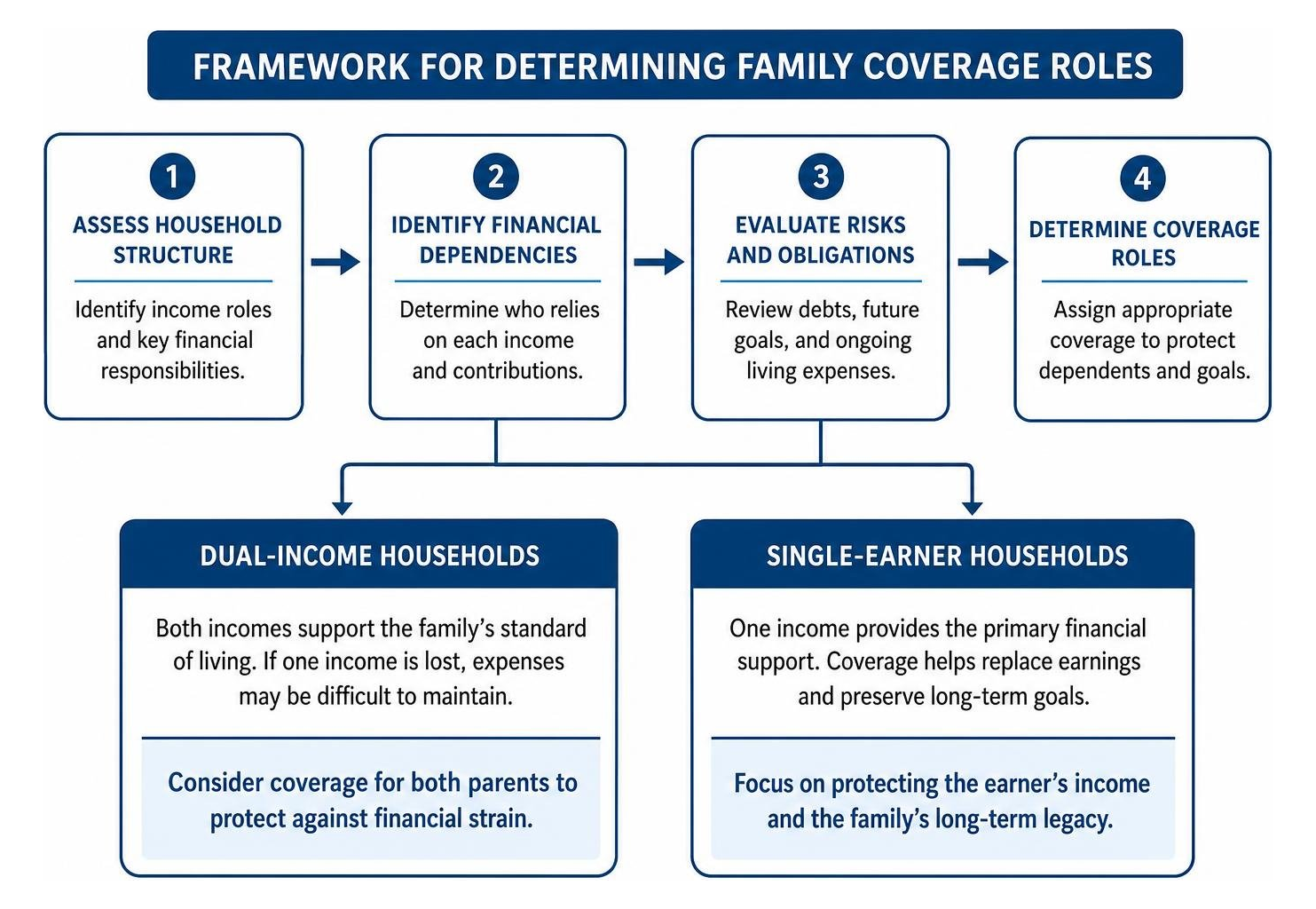
When families choose life insurance, assessing the entire household’s responsibilities helps reduce gaps. Exploring Families and Parents resources helps clarify how income replacement, caregiving, household labor, and dependent support can intersect across different family situations.
Cultural dynamics and shared households may also play an important role. For families in immigrant or multi-generational households, reviewing options such as Best Life Insurance for Vietnamese Families Compare Options Costs offers insight into aligning traditional family values with practical financial protection.
Coordinating Coverage for Parents With Young Children
When two parents share financial and caregiving responsibilities, evaluating whether each parent requires an individual policy is essential. Reviewing The Complete Guide to Whether Both Parents Need Life Insurance illustrates how dual coverage may help prevent financial strain if either parent passes away while children are still dependent.
Coverage decisions often consider each parent’s income, debt obligations, childcare role, and the cost of replacing daily household contributions. Even if one parent earns more, both parents may provide value that would be expensive or difficult to replace.
Coverage for Single Parents and Dependent Care
When a single mother or father is the primary caregiver or income provider, life insurance can be especially important because children may depend on one parent for housing, care, and daily support. Reviewing The Best Life Insurance Strategies for Single Mothers and Fathers highlights strategies for structuring beneficiary designations and considering a trusted adult or appropriate arrangement for minor children.
Furthermore, if one parent stays home or provides most daily caregiving, consulting a Detailed Guide to Life Insurance for Stay-at-Home Parents helps families appreciate the economic contributions of non-earning family members and consider appropriate coverage amounts.
Helping Aging Parents Evaluate Coverage
Some families also review life insurance options for aging parents, especially when there are final expenses, shared debts, or other family obligations to consider. As parents age, coverage options may narrow and premiums may increase, so exploring available policies sooner rather than later may be beneficial.
Guaranteed-issue or simplified-issue policies may be available for some older applicants, but eligibility, waiting periods, benefit limits, and pricing vary by insurer, product, state, age, and underwriting approach. Families should review policy details carefully before assuming a specific approval outcome or benefit amount.
Key considerations when helping aging parents evaluate coverage include:
- Confirming the parent understands and consents to the application
- Understanding who will own the policy and who will be named as beneficiary
- Evaluating whether simplified issue, guaranteed issue, final expense, or other policy types may fit the parent’s health and coverage goals
- Reviewing how coverage amounts align with end-of-life expenses, outstanding debts, or legacy goals
Deciding Which Household Members May Need Coverage
Family life insurance planning usually starts by identifying whose death would create a financial strain. That may include a primary income earner, a stay-at-home parent, a single parent, a spouse who manages household responsibilities, or another family member whose caregiving or financial role supports the household.
For working parents, coverage often focuses on replacing income, helping a surviving spouse maintain housing, and supporting children through dependent years. For stay-at-home parents, coverage may help pay for childcare, transportation, household help, or other services that would otherwise need to be replaced. For single parents, the planning process may also include naming a trusted adult or appropriate arrangement to manage funds for minor children.
Families may also consider whether adult children, co-parents, or other relatives have shared financial obligations that should be protected. The right answer varies by household, so the goal is not to insure every person equally; it is to identify where a death would create costs, lost income, or caregiving gaps that the family could not comfortably absorb.
Choosing Coverage Duration and Beneficiaries
After identifying who may need coverage, families can compare how long protection should last and who should receive the policy benefit.
Choosing a Coverage Duration
Term life insurance may fit temporary needs, such as protecting children until adulthood, covering a mortgage period, or replacing income during peak earning years. Permanent life insurance may fit longer-term goals, such as lifelong coverage, final expense planning, or legacy-oriented protection, depending on the policy, budget, and underwriting.
Families often compare duration against milestones such as:
- The youngest child reaching adulthood or financial independence
- The end of a mortgage or major debt obligation
- A spouse reaching retirement age or another income transition point
- The expected length of caregiving or dependent-support responsibilities
Naming Beneficiaries Thoughtfully
Beneficiary decisions should match the family’s goals and legal circumstances. A spouse, adult child, trust, or other appropriate beneficiary may be considered depending on who needs financial protection and who can responsibly manage the proceeds.
When minor children are involved, naming them directly can create complications because insurers may not be able to release proceeds straight to a minor. Families may want to consider an appropriate adult, trust, or legal arrangement, depending on their situation. Policy ownership and beneficiary choices should also be reviewed after divorce, remarriage, births, deaths, or major financial changes.
Frequently Asked Questions About Family Life Insurance
How much life insurance do families need?
The amount varies by family, policy type, insurer, and underwriting. Families often consider income replacement, caregiving costs, housing expenses, debts, future education goals, and the financial impact of losing a provider or caregiver.
Should both parents have life insurance?
In many families, both parents should at least evaluate coverage. A working parent may need income replacement protection, while a stay-at-home parent may need coverage that helps pay for childcare, household support, and other services they provide.
Can adult children purchase life insurance for aging parents?
In many cases, adult children can own a life insurance policy on an aging parent, provided there is an insurable interest and the parent consents to the application and any required underwriting. Policy ownership, beneficiary designations, and premium responsibilities should be clearly established during the application process.
When should families review existing life insurance policies?
Families often review coverage after major life changes, such as marriage, divorce, the birth or adoption of a child, buying a home, a change in income, starting a business, taking on new debt, or becoming responsible for a dependent family member. Reviews can help confirm that coverage amounts, beneficiaries, and policy ownership still match the household’s needs.
What type of life insurance is most common for families?
Term life insurance is commonly considered by families with young dependents because it can provide coverage during the years children are financially dependent. Permanent life insurance, including final expense policies, may also be appropriate for aging parents or families seeking lifelong coverage, depending on goals, budget, underwriting, and policy design.
Conclusion
Helping families secure dependable coverage provides valuable peace of mind, whether the goal is protecting young children, supporting a surviving spouse, covering caregiving needs, or helping aging parents evaluate appropriate options. Reviewing available policy types, coverage duration, ownership, and beneficiary choices is an essential step for ensuring that loved ones have financial protection if the unexpected happens.
Leo Truong is a licensed life insurance agent who helps individuals, families, and business owners understand and compare available life insurance options. His guidance is educational and focused on helping families navigate policy features, rider selections, beneficiary considerations, and coverage decisions.
To review available coverage options and find the right fit for your household, explore our educational resources and Life Insurance guidance at Plan With Leo.