What Happens During a Life Insurance Medical Exam?

What Happens During a Life Insurance Medical Exam?
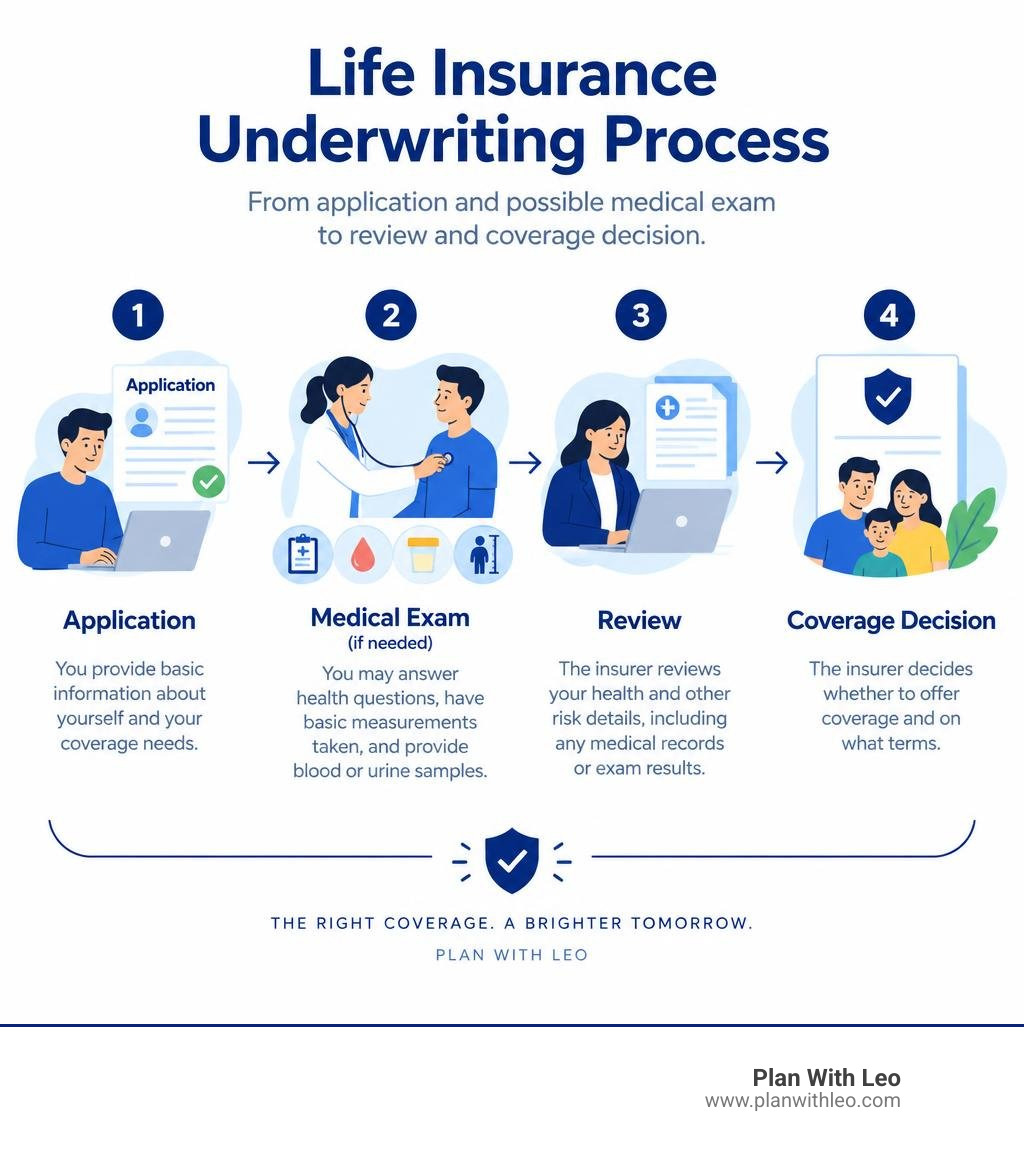
A life insurance medical exam is a routine health evaluation that helps an insurer understand your current physical condition before finalizing your policy terms. If required, a licensed medical professional typically meets with you to record basic measurements, ask questions about your health and medical history, and collect blood or urine samples for laboratory testing. What is required varies by insurer, product, underwriting pathway, age, coverage amount, and your specific circumstances.
Leo Truong is a licensed life insurance agent who provides educational guidance to individuals and families reviewing available life insurance options. This guide explains what to expect before, during, and after a life insurance medical exam so you feel prepared at every stage.
Helpful guides for growing families:
- life insurance for families
- how much life insurance does a family need
- should both parents have life insurance
Why Insurers Request a Medical Exam and What They Check
When securing financial protection for your growing family, understanding the evaluation process helps demystify why certain policies require a physical exam. Insurers use health evaluations to assess the likelihood of a claim being paid over the lifespan of the policy. By verifying health metrics directly, carriers can establish rates that reflect an applicant’s individual health profile.
The application and exam rely on the principle of utmost good faith (uberrima fides), requiring full honesty and disclosure from both the applicant and the insurer. When exploring different life insurance options, knowing what underwriters look for can help you navigate the process smoothly.
Key Areas Evaluated During the Health Review
During and following the exam, underwriters evaluate several medical and lifestyle factors, which may include:
- Physical Measurements: Height, weight, pulse, and blood pressure readings are taken to check for potential cardiovascular or metabolic risks.
- Lab Work Markers: Blood and urine samples screen for indicators such as cholesterol levels, blood glucose, liver and kidney enzymes, and specific antibodies.
- Tobacco and Nicotine Indicators: Lab tests may screen for cotinine, a byproduct of nicotine, depending on the insurer and exam requirements.
- Personal and Family Medical History: The examiner or application questionnaire may ask about chronic health conditions or family history of major illnesses.
- Prescription and Treatment Verification: Insurers review disclosed medications and may verify them against pharmacy databases or physician notes.
What to Expect Before, During, and After Your Life Insurance Medical Exam

The medical exam is a key component of traditional underwriting. For readers interested in the broader administrative steps from initial submission to final policy issuance, our step-by-step guide to life insurance underwriting offers a full overview.
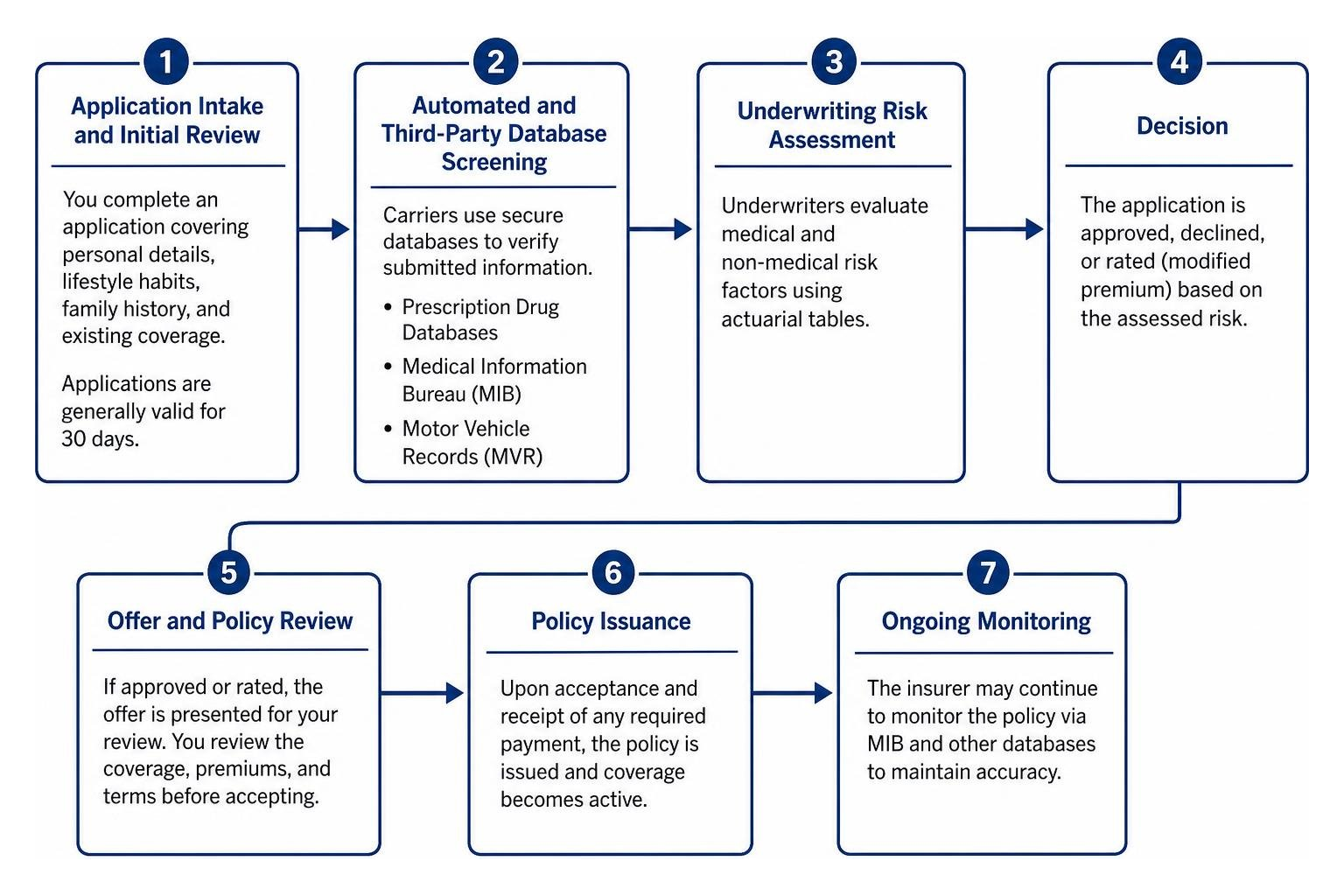
1. Before the Exam: Scheduling and Preparation
Depending on the insurer and underwriting requirements, you may be asked to schedule an exam with an approved exam provider or complete another form of health review. Whether an exam is required, who coordinates it, its location, and any associated arrangements vary by insurer, policy, and applicant circumstances.
2. During the Exam: What the Technician Does
When an in-person exam is required, the appointment may include some of the following steps, depending on the insurer and underwriting requirements:
- Health Questionnaire: The examiner may review your disclosed medical history, previous surgeries, current prescription medications, and physician contact details.
- Physical Measurements: Height, weight, pulse, and blood pressure may be recorded.
- Specimen Collection: The exam provider may collect blood or urine samples for laboratory testing when required.
- Additional Testing: Depending on the policy, requested coverage, age, and underwriting requirements, the insurer may request other tests, such as an electrocardiogram (EKG).
3. After the Exam: Lab Processing and Underwriter Review
If samples or other exam information are collected, they may be reviewed with the rest of your application by the carrier’s underwriting team. Depending on the insurer, policy, requested coverage, and applicant circumstances, the underwriter may also request additional information:
- Attending Physician Statements (APS): The underwriter may request clinical records from your doctor when additional medical information is needed.
- Additional Underwriting Requirements: Insurers may review other information related to the application and requested coverage. Requirements vary by insurer, policy, and underwriting guidelines. For general information about selecting an appropriate coverage amount, see determining the right life insurance amount for your growing family.
High-Level Risk Classifications
After reviewing the available information, an insurer may assign an underwriting classification. Carriers may use labels such as preferred, standard, or rated or substandard categories, but the terminology and qualification criteria vary by carrier and policy.
- Preferred Categories: Some insurers use preferred classifications for applicants who meet their criteria.
- Standard Categories: Standard classifications may apply under an insurer’s guidelines.
- Rated or Substandard Categories: Some insurers use rated or substandard categories when their underwriting review calls for different policy terms.
Underwriters may also issue alternative outcomes, such as a temporary postpone until a medical issue is evaluated, an exclusion for specific hazardous activities, or a decline if guidelines are not met.
Do All Life Insurance Policies Require a Medical Exam?
Not every life insurance policy requires a paramedical exam. Insurers offer several evaluation pathways depending on the product type, coverage amount, and applicant profile:
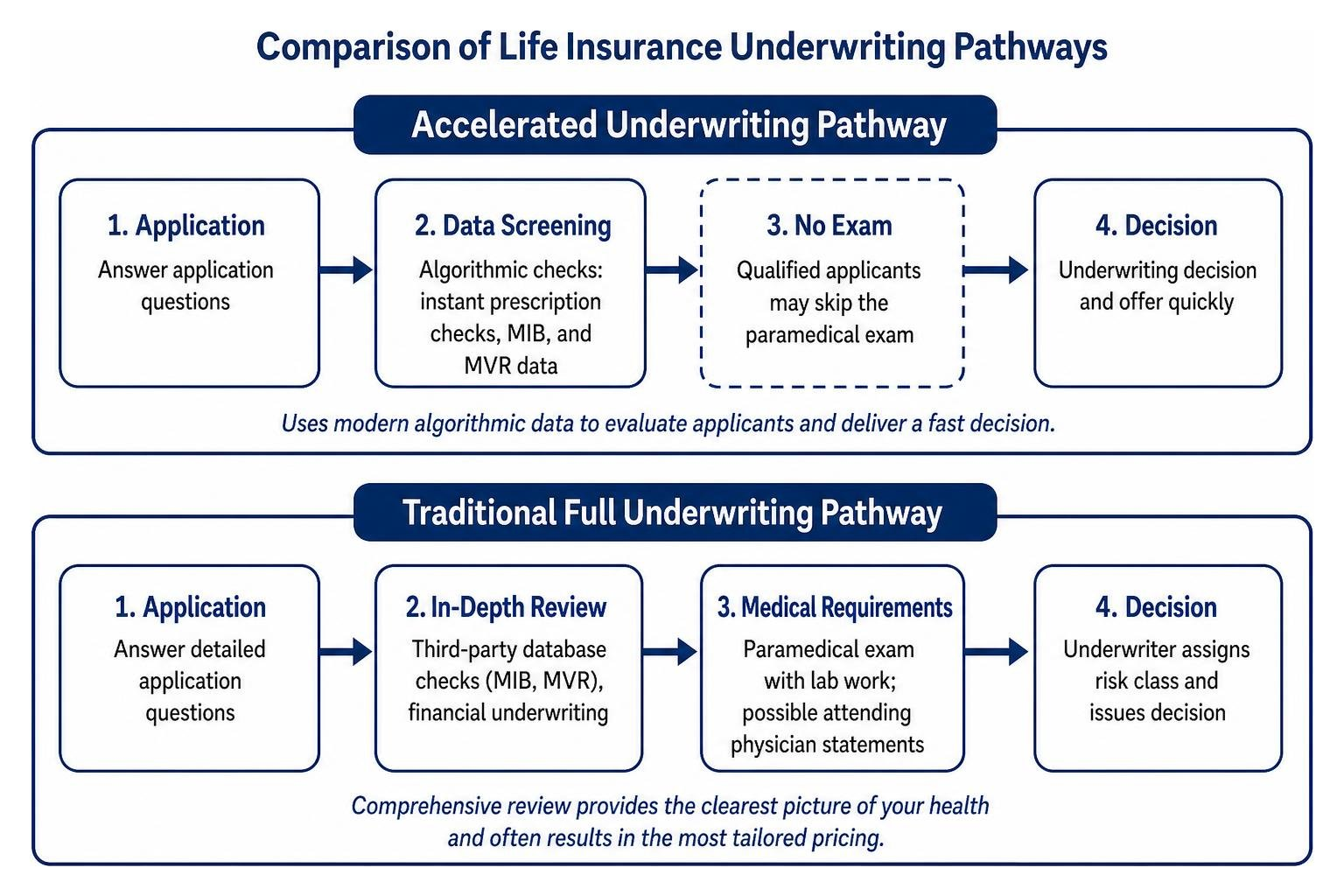
- Traditional Underwriting (Exam Required): Involves health questionnaires, lab tests, and possible physician records. It provides underwriters with a detailed health picture, though the time required depends on third-party records.
- Accelerated Underwriting: Evaluates applicants using electronic data sources, such as prescription databases and driving records. Qualified applicants who meet carrier health criteria may be approved without a physical exam, though eligibility varies by company.
- Simplified Issue: Involves answering health questions on the application without taking a medical exam. Available benefit amounts and eligibility criteria vary by insurer.
- Guaranteed Issue: Features no medical exam and no health questions. Coverage is typically subject to age limits and, depending on the policy, may have limited benefit provisions during an initial period.
When exploring policy formats, reviewing term vs whole life insurance features helps clarify how different coverage structures fit your household goals.
How Policy Type Influences Exam Requirements
- Term Life Insurance: May be considered for temporary needs such as income replacement, mortgage obligations, or child-rearing years, depending on the family and policy. When evaluating term and permanent coverage costs, applicants may encounter either accelerated or exam-based underwriting depending on the benefit amount requested.
- Permanent Life Insurance: Permanent coverage may remain in force for life if policy requirements are met and may include cash value features, depending on the policy. Medical, underwriting, and financial requirements vary by insurer, policy, and requested coverage.
Practical Steps to Prepare for Your Medical Exam

Taking organized steps in advance helps make your medical exam as smooth and accurate as possible:
- Prepare the Requested Details: Before the appointment, gather the medication list, physician information, health-history details, and identification requested by the insurer or exam provider.
- Confirm Appointment Requirements: Review any instructions sent with the appointment confirmation, including what to bring and whether an in-person exam is required.
- Follow Individual Preparation Guidance: Follow the fasting, hydration, or other preparation directions provided for your particular exam or laboratory work.
- Answer Consistently and Accurately: Provide complete, accurate information that matches your application and the information requested during the exam.
Frequently Asked Questions About the Medical Exam
How long does the life insurance medical exam take?
The physical appointment itself is generally brief—often taking less than an hour—depending on the specific tests requested by the insurer. The overall time required for full underwriting review varies widely by carrier, the need for doctor records, and individual circumstances.
Can I receive a copy of my exam results?
Applicants may be able to request a copy of laboratory results, depending on the insurer, laboratory, or exam provider and the applicable process.
What happens if the exam reveals an unexpected health issue?
If lab results or vitals show unexpected findings, such as elevated blood pressure or glucose, the underwriter may request an Attending Physician Statement or ask for additional clarification. Depending on the insurer’s guidelines, they may offer coverage with an adjusted rate classification, suggest a temporary postponement, or decline the application.
For more answers to common questions about life insurance, visit our life insurance FAQ page.
Can my rate class be reconsidered if my health improves later?
Some insurers and policies may allow policyholders to request reconsideration of a rating after health changes. Eligibility, documentation, timing, and other requirements vary by insurer and policy.
Conclusion
When required, a life insurance medical exam is a structured part of the underwriting process that helps insurers evaluate health information and determine available coverage terms. Understanding what to expect before, during, and after the exam helps remove uncertainty and can help you feel more prepared.
Leo Truong is a licensed life insurance agent who provides educational guidance to individuals and families reviewing available life insurance options. To understand and review available life insurance options with Leo, connect with Plan With Leo life insurance guidance today.