Beginner’s Guide to Estate Planning for Vietnamese Families

Beginner’s Guide to Estate Planning for Vietnamese Families
Estate Planning for Vietnamese Families: Key Foundations and Goals
An estate plan may include a will, revocable living trust, powers of attorney, healthcare directives, beneficiary designations, and life insurance, depending on the family’s circumstances. For households with property or accounts in Vietnam, cross-border asset management and jurisdiction-specific documents may also be needed. These tools can help support generational wealth, protect loved ones, and reduce certain delays and costs that may arise when state intestacy laws apply to an estate.
Orange County, California, is home to one of the largest Vietnamese American communities in the United States. Many households in this vibrant community include multiple generations under one roof or run family-owned businesses that represent decades of hard work. Without formal estate documents, some assets may pass through beneficiary designations, joint ownership, or other nonprobate arrangements, while other assets may be subject to California intestacy and probate rules depending on the circumstances. Understanding what is family protection planning can help new parents and heads of household consider clear directives. Depending on the assets and how they are titled, probate may apply to some property and can involve delays, legal fees, and emotional strain for surviving relatives.
Cultural Considerations in Estate Planning for Vietnamese Families
Some Vietnamese American families place a strong emphasis on family support, elder care, and multigenerational responsibilities. In many Vietnamese American homes, elder care and multigenerational support are central values. However, relying on verbal understandings or assuming the eldest child will manage everything can lead to misunderstandings.
Formal planning can provide a clear framework that honors family values while supporting legal enforceability. Documenting specific intentions in writing may help reduce potential disagreements among relatives and clarify how dependent family members should be cared for according to the parents’ wishes.
Common Misconceptions Around Asset Transfers
Several common myths can leave families vulnerable:
- “Holding property in joint tenancy eliminates the need for planning.” While joint tenancy allows property to pass to a surviving co-owner, it does not address what happens when the second owner passes away or if both owners pass away simultaneously.
- “Verbal family agreements are legally binding.” Courts may not be able to enforce informal promises regarding real estate or financial accounts without valid legal documentation.
- “Wills automatically bypass probate.” In California, assets passing through a will may need to go through probate before they are distributed to heirs, depending on the circumstances.
- “Estate plans are permanent.” Documents should be reviewed periodically and updated after major milestones, such as the birth of a child, marriage, divorce, or purchasing real estate.
Essential Legal Documents: Wills, Living Trusts, and Key Directives
A complete estate strategy combines legal instruments that operate during your lifetime and after death. Integrating these tools into broader financial strategies and estate planning can help families consider protection against incapacity and unexpected loss.
Understanding Wills and Revocable Living Trusts in California
A will outlines how personal property should be distributed and allows parents to nominate guardians for minor children. However, assets passing solely through a will in California may be subject to probate if the estate exceeds applicable statutory thresholds or no other nonprobate transfer applies.
A revocable living trust is a legal arrangement used to hold and manage certain assets during your lifetime. When assets such as real estate or financial accounts are properly retitled into the trust—a process known as trust funding—they may generally pass to named beneficiaries without probate when they are eligible for nonprobate transfer. Assets left outside the trust may still be subject to probate depending on their value, ownership, beneficiary designations, and other circumstances.
| Feature | Will | Revocable Living Trust |
|---|---|---|
| Probate Avoidance | Assets passing through a will may go through probate | Properly funded assets may generally avoid probate when eligible for nonprobate transfer |
| Privacy | May become part of the public court record if probate is required | Trust administration may offer more privacy, depending on the assets and circumstances |
| Incapacity Management | Does not itself manage assets during incapacity | A successor trustee may manage trust assets if incapacity occurs, subject to the trust terms |
| Guardian Nomination | Yes, nominates guardians for minor children | No, guardian nominations belong in a will |
| Court Oversight | Probate court may supervise asset distribution when probate is required | Properly funded trust assets may often be administered privately without ongoing court oversight |
Powers of Attorney and Healthcare Directives
Estate planning is not just about asset transfer after death; it also covers decision-making during incapacity.
- Durable Financial Power of Attorney: Designates a trusted individual to handle banking, bills, property management, and financial matters if you become incapacitated.
- Advance Health Care Directive: Appoints a healthcare proxy to make medical decisions on your behalf and outlines your treatment preferences if you are unable to speak for yourself.
Guardianship Nominations for Minor Children
For young parents, naming legal guardians for minor children is often an important reason to draft a will. A will allows parents to nominate trusted caregivers. While the probate court ultimately makes the formal legal appointment in the child’s best interest, a clear nomination can provide the judge with direct evidence of the parents’ wishes.

Cross-Border Considerations for Assets in the U.S. and Vietnam
Many Vietnamese American families maintain property, bank accounts, investments, or ancestral land in Vietnam. Coordinating assets across two legal jurisdictions requires careful attention to the rules that apply in each country.
Managing Inheritances and Real Estate in Vietnam
Property, inheritance, tax, and documentation rules may differ in Vietnam from those in the United States. The treatment of real estate, financial accounts, beneficiary rights, and inherited property can depend on the asset, the people involved, and the applicable local requirements.
Families with assets or inheritance interests in Vietnam should consult qualified legal and tax professionals in both jurisdictions before relying on general information or making decisions about ownership, transfers, or estate documents.
Coordinating International Estate Documents
Estate documents created in the United States may not address every issue involving property or inheritance interests in Vietnam. Translation, documentation, and local procedural requirements may affect how documents are reviewed or used across borders.
Families with significant assets or family interests in both countries can benefit from qualified legal and tax guidance in California and Vietnam so they can better understand the requirements that may apply to their circumstances.
Integrating Life Insurance into Estate Planning for Vietnamese Families
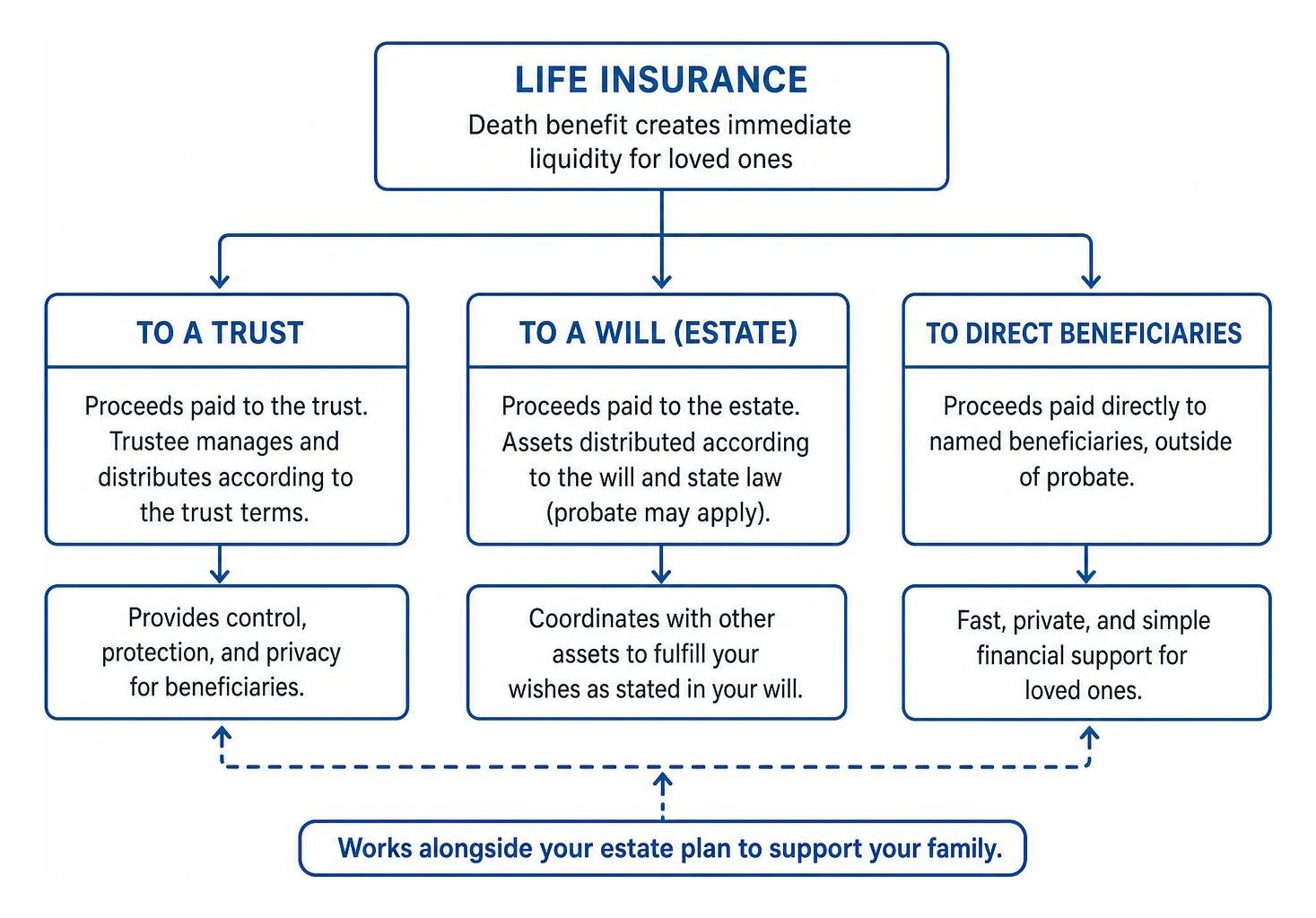
Life insurance serves a unique and vital function alongside legal documents. While wills and trusts address how certain assets are distributed, life insurance may provide accessible liquidity for surviving dependents. Exploring life insurance for Vietnamese families in California can help new parents consider a safety net tailored to their household responsibilities.
Beneficiary Designations and Direct Wealth Transfer
Life insurance policies are generally paid according to contractual beneficiary designations rather than through a will. When there is a valid named beneficiary, proceeds are often paid directly to that person; different treatment may apply depending on the beneficiary designation, policy terms, and circumstances.
- Primary Beneficiaries: May receive the policy death benefit directly upon the insured’s passing when the designation is valid.
- Contingent Beneficiaries: May receive the proceeds if the primary beneficiary passes away first or cannot receive them.
- Trusts as Beneficiaries: A revocable living trust may be named as a beneficiary to manage and distribute policy proceeds according to customized rules for minor children.
By understanding how to evaluate family life insurance coverage, parents can evaluate whether coverage may be sufficient for household needs such as mortgages, daily living expenses, and educational funds.
Protecting Family Businesses and Generational Continuity
Many Vietnamese families build lasting enterprises, ranging from local retail shops and professional practices to manufacturing firms. In family-owned businesses, the transition between generations carries operational risks.
Depending on the agreement and policy structure, life insurance may be used as a funding source for a buy-sell arrangement. This can help surviving business partners or family members plan for the purchase of ownership interests without unnecessarily disrupting daily operations. Using business succession insurance planning can help business owners understand how coverage may fit into continuity planning.
Supplementing Long-Term Legacy and Retirement Needs
Beyond term policies designed for pure income protection during child-rearing years, permanent life insurance products may offer cash value accumulation and living benefit options. Families can review family life insurance options and costs to better understand policies that may align with their overall protection goals.
When reviewing these tools alongside life insurance needs in retirement, parents can assess how policy benefits may provide liquidity for final expenses, help balance inheritances among children, or support a lasting legacy. Reviewing the family life insurance options available in the market can help families make informed, practical choices.
Frequently Asked Questions About Estate Planning
Does a living trust automatically protect all of our family’s assets from probate?
No. Creating a trust document is only the first step. For a revocable living trust to help assets avoid probate, those assets generally must be properly transferred into the trust and otherwise eligible for nonprobate transfer. Assets left outside of the trust may still be subject to California probate proceedings depending on their value, ownership, beneficiary designations, and other circumstances.
Can a U.S. will cover property and bank accounts located in Vietnam?
A U.S. will may state your intentions, but property and inheritance matters involving Vietnam can involve different documentation, tax, and local legal requirements. Families with property, accounts, or inheritance interests in Vietnam should seek qualified legal and tax guidance in both jurisdictions before relying on general information or making estate-planning decisions.
How does a life insurance payout differ from assets passed through a will?
Life insurance proceeds are generally paid according to the policy’s beneficiary designation rather than through a will. When there is a valid named beneficiary, proceeds may be paid directly and can be available sooner than assets that require probate. Different treatment may apply depending on the beneficiary designation, policy terms, and circumstances.
Conclusion
Protecting your family’s future can involve a coordinated approach that combines appropriate legal documents with suitable financial protections. Pairing wills, trusts, and directives prepared with qualified legal guidance with thoughtfully structured life insurance coverage can help provide financial protection and support for children and loved ones as circumstances change.
Plan With Leo helps individuals, families, and business owners understand and review available life insurance options. Leo Truong is a licensed life insurance agent who provides educational guidance on coverage for family income protection, business continuity, and legacy goals.
Explore family life insurance coverage options with Leo Truong today to review available life insurance coverage options. You can also visit Plan With Leo to learn more about how life insurance can support your family’s protection strategy.