A Comprehensive Guide to Business Succession Planning with Life Insurance

A Comprehensive Guide to Business Succession Planning with Life Insurance
Why Business Succession Planning with Life Insurance Matters
Business succession planning with life insurance can help create cash for an ownership transition if an owner dies. In simple terms, a properly structured policy may provide the money needed under a buy-sell agreement so the remaining owner, owners, or business can purchase the departing owner’s interest from their family or estate.
- A buy-sell agreement sets the rules for who may buy an owner’s share and when.
- Life insurance funding may provide cash when a covered owner dies.
- Key person insurance is different: it generally helps the business manage the loss of a vital employee or owner, rather than funding an ownership purchase.
- The agreement, business valuation, policy ownership, and beneficiary designations should work together.
Life insurance can support continuity, but it is not a complete succession plan by itself. Business owners should review buy-sell agreement, valuation, legal, and tax questions with qualified legal and tax professionals.
Leo Truong is a licensed life insurance agent who helps people understand and compare available life insurance options, including options considered for business succession planning with life insurance. This guide explains the basic moving parts so you can have clearer conversations with your attorney, tax professional, business partners, and insurance agent.
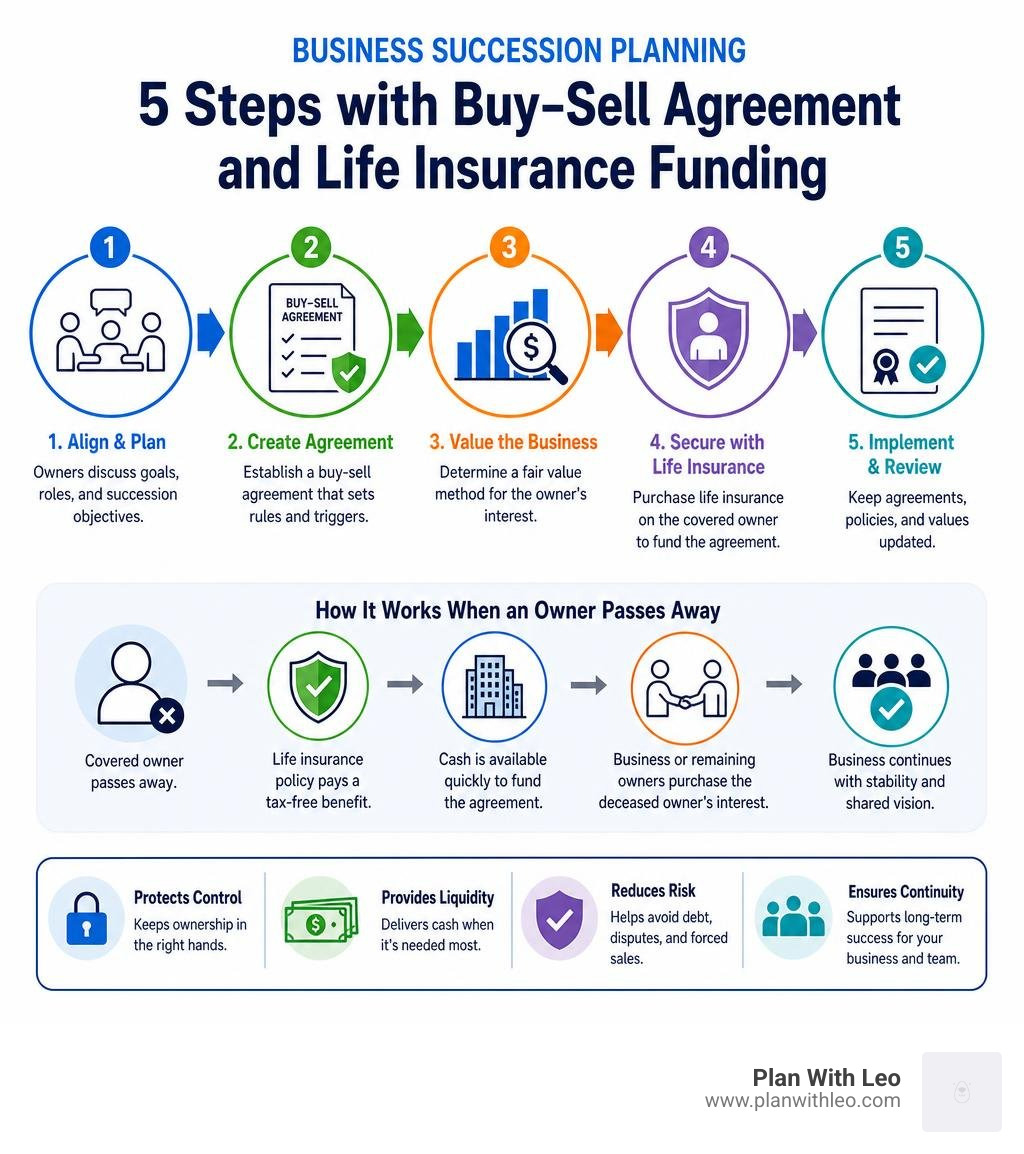
How Business Succession Planning with Life Insurance Works
When building a foundation for business continuity, Business Owners often rely on a buy-sell agreement coupled with life insurance. A buy-sell agreement is a legal contract between co-owners or between the business and its owners. It explains what happens to an owner’s share if certain events occur, such as death, disability, or retirement.
Without a funding mechanism, a buy-sell agreement may be difficult to carry out. If an owner unexpectedly passes away, the surviving owners or the company might not have enough available cash to buy the deceased owner’s interest from their family or estate.
Using business succession planning with life insurance can help address that cash need. When a covered owner dies, the policy pays a death benefit to the named beneficiary. Those funds may then be used to help complete the ownership purchase described in the buy-sell agreement. This can help provide financial support for the deceased owner’s family while helping the remaining owners keep the business stable.
Life insurance is only the funding tool. The buy-sell agreement, valuation method, policy ownership, and beneficiary designations should be reviewed with qualified legal and tax professionals.
Structuring the Policy Basics
For life insurance to support a buy-sell agreement, the basic policy setup should match the agreement. The main questions are:
- Who owns the policy?
- Whose life is insured?
- Who receives the death benefit?
- How will the business value be determined?
If these pieces do not line up, the plan may not work as intended. Regular reviews can help business owners keep coverage and agreement terms aligned as the business changes.
Cross-Purchase vs. Entity-Purchase Agreements
Two common ways to structure life insurance funding for a buy-sell agreement are cross-purchase and entity-purchase arrangements.
- Cross-Purchase Agreement: The owners generally own policies on each other. If one owner dies, the surviving owner or owners may use the death benefit to buy the deceased owner’s share.
- Entity-Purchase Agreement: The business generally owns policies on the owners. If one owner dies, the business may use the death benefit to buy back that owner’s share.
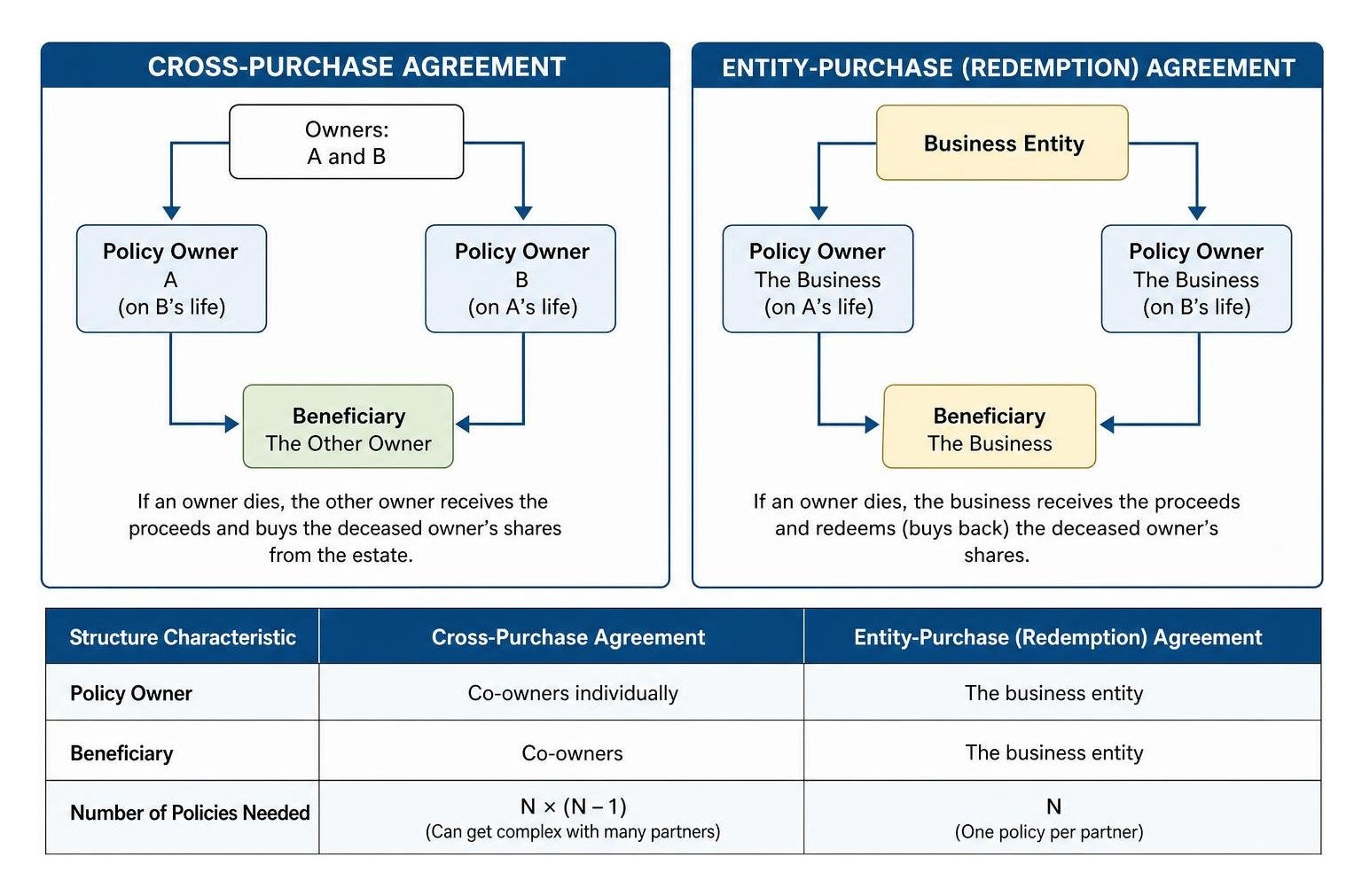
| Basic Question | Cross-Purchase Agreement | Entity-Purchase Agreement |
|---|---|---|
| Who usually owns the policy? | The other owner or owners | The business |
| Who usually receives the death benefit? | The other owner or owners | The business |
| Who usually buys the deceased owner’s share? | The surviving owner or owners | The business |
| Why business owners may consider it | Can be simple for a small number of owners | Can be easier to manage when the business wants one central structure |
The right structure depends on the business entity, number of owners, agreement terms, and professional legal and tax guidance.
Life Insurance Options for Ownership Transitions
Selecting the right type of Life Insurance is an important step when funding an ownership transition. Business owners usually compare coverage duration, premium affordability, and how long the buy-sell need may last.

Comparing Term and Permanent Options in Business Succession Planning with Life Insurance
When evaluating policy types, business owners often compare term life insurance and permanent life insurance.
- Term Life Insurance: Provides coverage for a set period, such as 10, 20, or 30 years. Term coverage may be useful when the business has a defined transition window or wants a lower initial premium.
- Permanent Life Insurance: Can remain in force for the insured’s lifetime if required premiums are paid and policy requirements are met. It may be considered when the buy-sell need is expected to last longer, though premiums are often higher than term coverage.
For a deeper exploration of coverage duration, cash value mechanics, and premium trade-offs, refer to The Definitive Guide to Term vs Permanent Life Insurance Costs Benefits.
Key Person Coverage vs. Buy-Sell Agreements
It is common for business owners to confuse key person insurance with buy-sell agreement insurance. Although both use life insurance, they serve different purposes:
- Buy-Sell Funding: Helps fund the transfer of ownership. The policy payout may provide money to buy the deceased owner’s business interest from their heirs or estate.
- Key Person Insurance: Helps the business manage the financial impact of losing an important owner, executive, or employee. The proceeds generally stay in the business to support operations, replacement costs, or cash flow needs.
To learn more about safeguarding operational capacity, explore our Beginners Guide to Key Person Life Insurance Basics.
Frequently Asked Questions About Business Succession
How does life insurance help fund a buy-sell agreement?
Life insurance may provide cash when a covered owner dies. Depending on how the agreement and policy are structured, the death benefit may help the surviving owner, owners, or business buy the deceased owner’s share from their family or estate.
How does key person insurance differ from funding a buy-sell agreement?
While both use life insurance, their purpose and structure are different:
- Buy-Sell Funding: Designed to help transfer ownership. The policy payout may provide funds to buy the deceased owner’s business interest from their heirs or estate.
- Key Person Coverage: Designed to help the business manage financial disruption after losing an important owner, executive, or employee. The proceeds generally stay in the business to support operations.
Do business owners need legal and tax advisors when setting up life insurance for succession?
Yes. Life insurance is simply the financial funding tool within a succession plan; the buy-sell agreement itself is a binding legal contract. Business owners should consult licensed legal professionals to draft or update their buy-sell documents, and tax professionals to clarify local, state, and federal tax implications. Plan With Leo helps clients compare life insurance policies, but does not offer legal, tax, or investment advice.
Conclusion
Implementing business succession planning with life insurance can help business owners prepare for an ownership transition if an owner dies. When paired with a clear buy-sell agreement, life insurance may provide cash to help complete the purchase of a departing owner’s share.
When designing your strategy, keep these core principles in mind:
- Match the policy structure to the buy-sell agreement.
- Keep cross-purchase and entity-purchase arrangements simple enough for the owners to understand.
- Review coverage as the business changes.
- Keep key person coverage separate from buy-sell funding.
- Work with qualified legal and tax professionals so the agreement, valuation method, and policy setup work together.
At Plan With Leo, Leo Truong is a licensed life insurance agent who helps buyers understand and compare available life insurance options.
To explore life insurance solutions for your business continuity strategy, learn more about our educational guidance for Business Owners today.