A Practical Guide to Chronic Illness Life Insurance Riders

A Practical Guide to Chronic Illness Life Insurance Riders
Why a Chronic Illness Life Insurance Rider Matters
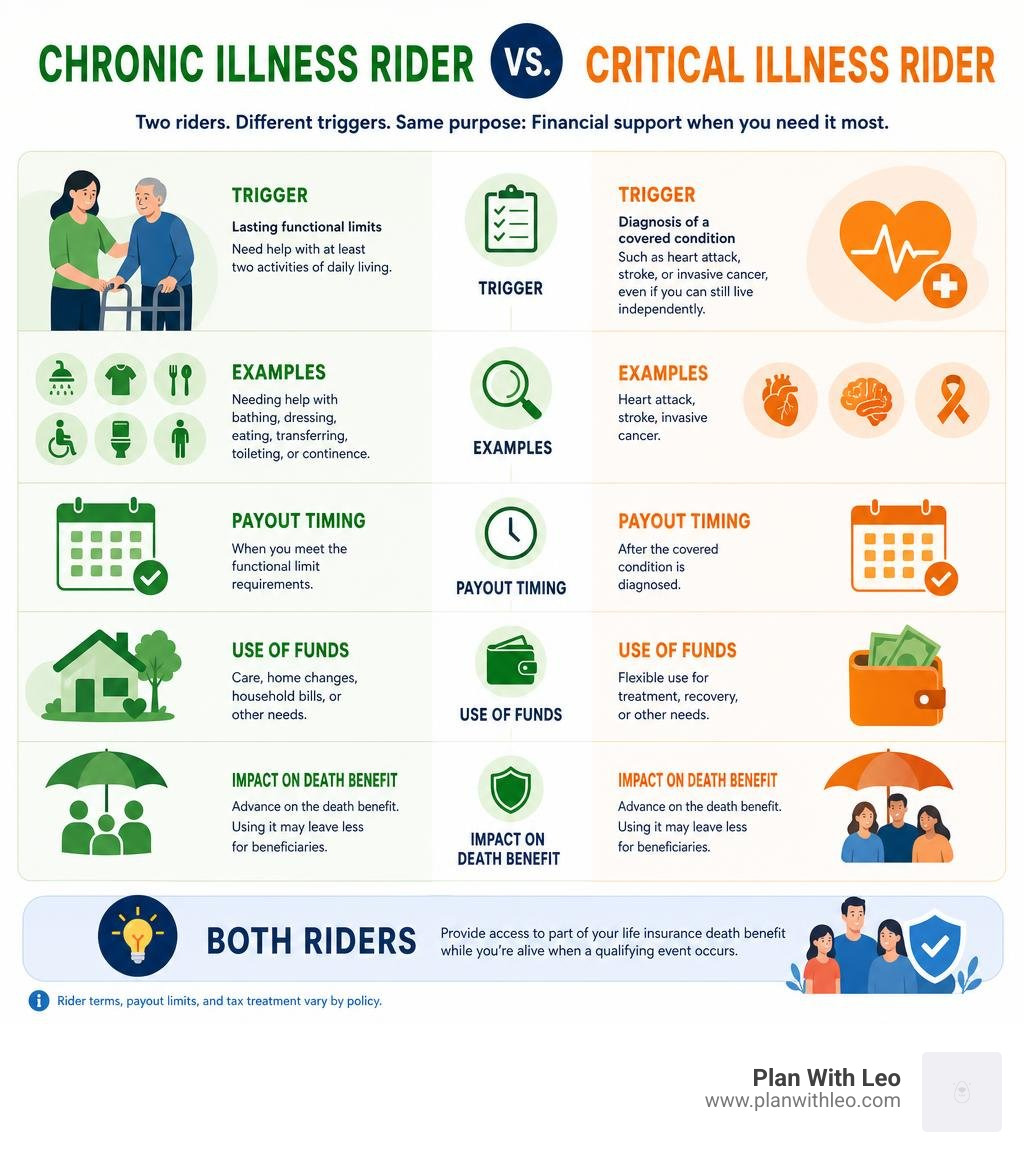
A chronic illness life insurance rider may let you access part of your policy’s death benefit while you are alive if a qualifying chronic condition leaves you unable to perform daily tasks or causes severe cognitive impairment, depending on the insurer, policy, and rider terms. It is different from a critical illness rider, which typically pays after a covered diagnosis, and from long-term care coverage, which may use reimbursement, indemnity, or other benefit structures depending on the contract.
In many policies, using this living benefit reduces the amount your beneficiaries receive after your death. The money may be available for needs like in-home help, home changes, lost income, or care costs, but permitted uses, documentation rules, and payment structure vary by insurer and policy. Qualification commonly involves medical certification that you cannot perform at least two activities of daily living or that you meet the policy’s cognitive-impairment criteria.
The right rider can add useful flexibility, but its definitions, benefit limits, cost structure, tax treatment, recertification rules, and effect on the remaining death benefit vary by insurer and policy.
I am Leo Truong, a licensed life insurance agent who helps buyers understand and compare available life insurance options. In this guide, I will explain how a chronic illness life insurance rider generally works so you can compare it clearly with critical illness and long-term care coverage.
Chronic illness life insurance rider further reading:
Understanding How a Chronic Illness Life Insurance Rider Works
A chronic illness rider is an optional endorsement or built-in accelerated death benefit feature attached to a life insurance policy. It may allow you to access a portion of the policy face amount during your lifetime if a qualified medical professional certifies that you meet the policy’s chronic illness definition.
To activate the benefit, insurance carriers often require several types of documentation, subject to the policy terms:
- Medical Certification: A licensed healthcare practitioner may need to certify that the insured meets the rider’s functional or cognitive impairment criteria.
- Waiting or Elimination Period: Some policies include a waiting or elimination period before benefits can begin, while others handle timing differently.
- Benefit Acceleration: If the claim is approved, the insurer may advance funds from the policy’s death benefit through the payment method described in the contract.

Qualifying Conditions and Activities of Daily Living (ADLs)
Eligibility for a chronic illness rider often focuses on functional impairment rather than a specific disease name. Many insurers evaluate whether the insured is unable to perform certain Activities of Daily Living (ADLs), such as:
- Bathing: The ability to clean oneself in a tub or shower, or by sponge bath.
- Dressing: The ability to put on and take off clothes and necessary braces or fasteners.
- Eating: The ability to feed oneself once food is prepared.
- Toileting: The ability to get to and from the toilet and perform associated personal hygiene.
- Transferring: The ability to move into or out of a bed, chair, or wheelchair.
- Continence: The ability to maintain control of bowel and bladder function.
Some policies may also allow severe cognitive impairment to trigger benefits when the insured meets the contract’s supervision or safety criteria. The number of ADLs required, the expected duration of impairment, documentation rules, and any recertification requirements vary by insurer and policy.
Benefit Payout Mechanics and Death Benefit Reductions
When benefits are accelerated, the policy death benefit is usually reduced. The exact reduction depends on the policy’s formula and may also affect cash value, premiums, loans, charges, or other policy features.
Insurers may use approaches such as:
- Lien Method: The insurer may treat the accelerated amount as a lien against the death benefit, subject to policy rules.
- Actuarial Discount Method: The insurer may discount the amount paid because the benefit is being accessed early, based on factors described in the contract.
Any remaining coverage for beneficiaries depends on the amount accelerated, the insurer’s calculation method, outstanding loans or charges, and the policy’s residual death benefit provisions.
Chronic Illness Rider vs. Critical Illness Rider and Long-Term Care Riders
| Feature | Chronic Illness Rider | Critical Illness Rider | Long-Term Care (LTC) Rider |
|---|---|---|---|
| Primary Trigger | Often based on inability to perform certain ADLs or severe cognitive impairment, as defined by the policy | Diagnosis of a covered condition listed in the policy | Often based on ADL limitations or cognitive impairment, as defined by the contract |
| Common Focus | Ongoing functional or cognitive impairment | Specific acute illnesses or events named in the rider | Care needs and covered long-term care services or benefit conditions |
| Payout Structure | May be lump sum, periodic, indemnity-style, reimbursement-like, or discounted accelerated benefit, depending on the policy | Often a lump-sum benefit, depending on the rider | May be reimbursement, indemnity, or another approved benefit structure |
| Expense Restrictions | Varies by policy; some provide flexible benefits while others include conditions or limits | Varies by policy | Varies by policy; some require proof of qualified care or covered services |
| Impact on Base Policy | Usually reduces the death benefit and may affect other policy values | May reduce the death benefit if structured as an accelerated benefit | May reduce the death benefit if attached to a life policy |
Chronic Illness Life Insurance Rider vs. Critical Illness Rider
While both serve as living benefits, the trigger mechanisms are different:
- Critical Illness Riders generally focus on specific medical diagnoses or events listed in the contract. Covered conditions vary by insurer and rider.
- Chronic Illness Riders generally focus on functional capacity or severe cognitive impairment. A diagnosis alone may not be enough unless the insured also meets the rider’s stated benefit trigger.
Chronic Illness Riders vs. Long-Term Care Riders
Chronic illness riders and long-term care coverage can overlap because both may involve ADLs, cognitive impairment, or care needs. However, they are not the same product.
Standalone long-term care insurance and formal LTC riders are designed around long-term care benefits, but their payment structures vary. Some policies use reimbursement and require proof of covered services, while others may use indemnity or cash-style benefits. Chronic illness riders are typically tied to a life insurance policy’s death benefit and may use different acceleration, discount, documentation, and benefit-use rules depending on the contract. To explore broader foundational coverage types, review The Definitive Guide to Term vs Permanent Life Insurance Costs & Benefits.
Costs, Payout Limits, and Policy Mechanics

Costs and Underwriting for a Chronic Illness Life Insurance Rider
The cost structure of a chronic illness rider varies by carrier, policy type, state, age, underwriting class, and rider design:
- Explicit Premium Charge: Some carriers charge a separate rider premium or include an added cost in the base policy premium.
- Cost at Claim or Discounted Benefit: Other policies may not show a separate upfront charge but may apply an actuarial discount, administrative charge, interest adjustment, or other formula if benefits are claimed.
Underwriting for the rider often occurs with the base policy review. Depending on the insurer and coverage requested, this may involve health questions, medical records, prescription history, or other underwriting steps. To learn more about how carrier approvals work, read our Step-by-Step Guide to Life Insurance Underwriting.
Payout Caps and Accelerated Death Benefit Limits
Carriers place policy-specific limits on how much death benefit may be accessed. These limits may be based on a percentage of the policy face amount, a maximum benefit amount, a monthly or annual cap, tax-related limits, or other contract provisions.
Before choosing a rider, review:
- how much of the death benefit may be accelerated;
- whether any residual death benefit must remain;
- how the insurer calculates reductions;
- whether benefits affect cash value, loans, or premiums; and
- whether charges, discounts, or administrative fees apply.
If you want to understand how living benefits interact with permanent coverage, compare the rider language with the policy’s cash value, loan, premium, and death benefit provisions.
Pros, Drawbacks, and Tax Considerations
Tax Considerations for Chronic Illness Benefits
Accelerated death benefits paid because of chronic illness may receive favorable tax treatment, but the exact tax result can depend on the policy design, benefit amount, claim circumstances, applicable limits, and the policyholder’s overall situation. Plan With Leo does not provide tax advice, so policyholders should consult a qualified tax professional before relying on any tax treatment.
Key Advantages and Potential Limitations
Advantages:
- Financial Flexibility: Benefits may help with formal care, informal caregiving, home modifications, medical equipment, household bills, or other needs, depending on the policy’s rules.
- Living Benefit Access: A chronic illness rider may provide access to part of the death benefit during life if the insured meets the rider’s requirements.
Limitations:
- Death Benefit Reduction: Accelerating benefits usually reduces the amount available to beneficiaries.
- Policy-Specific Limits: Waiting periods, exclusions, benefit amounts, recertification rules, and claim requirements vary by insurer and policy.
- Public-Benefit Considerations: Receiving benefits may affect eligibility for needs-based programs depending on the program rules and the policyholder’s circumstances. Consult appropriate legal, tax, or benefits professionals before relying on benefits for public-assistance planning.
Frequently Asked Questions about Chronic Illness Riders
Explore answers to common policyholder questions below or visit our comprehensive FAQ page for additional life insurance details.
How does exercising the rider affect what beneficiaries receive?
Accelerating benefits usually reduces the base death benefit. The remaining benefit paid to beneficiaries depends on the amount accelerated, the insurer’s reduction formula, any outstanding policy loans or charges, and the policy’s residual death benefit terms.
Can you add this living benefit to term and permanent policies?
Yes, depending on the carrier and product. Chronic illness riders may be available on some permanent life insurance policies and some term life insurance policies, but availability, duration, cost, and claim rules vary. Adding a rider after policy issue may require supplemental underwriting and is not guaranteed.
Does filing a chronic illness claim disqualify you from Medicaid?
Not automatically in every situation. Accelerated benefit payments may affect needs-based public benefits depending on the program rules, state requirements, timing of receipt, asset treatment, and the policyholder’s circumstances. Readers should consult appropriate legal, tax, or benefits professionals before making decisions that could affect eligibility.
Conclusion
Understanding how living benefits work allows you to structure life insurance protection that supports your family both during your life and after. Plan With Leo helps individuals, families, and business owners understand and compare available life insurance options. Leo Truong is a licensed life insurance agent who provides educational guidance on life insurance, including coverage for families, income protection, business protection, and related insurance needs.
To evaluate which policies and riders match your coverage goals, explore our educational resources on Life Insurance today.