
How Vietnamese-American Families Can Compare Life Insurance
For life insurance for Vietnamese families, evaluating coverage begins with identifying the people who depend on each parent’s income, daily presence, or direct caregiving. Parents often compare temporary term life insurance for protection during child-rearing years with permanent life insurance for lifelong financial security. Key contract variables typically include the total death benefit, duration of the term, optional riders, and designated beneficiary structures. In many multigenerational households, grandparents provide essential child care or household assistance, making it beneficial to factor their daily contributions into overall family protection considerations.
Health insurance covers qualifying medical care expenses, whereas life insurance provides financial support to designated beneficiaries if an insured person passes away. Certain life policies also offer living benefits or riders for qualifying severe illnesses, though availability and terms vary by state and carrier.
I’m Leo Truong, a licensed life insurance agent who helps buyers understand and compare available options for life insurance for vietnamese families. Below, I explain the key factors parents should consider when choosing appropriate coverage.

Helpful guides on family protection and legacy options:
- Estate Planning for Vietnamese Families
- Estate Planning for Vietnamese Families: Life Insurance, Legacy & Family Protection
When parents review life insurance for Vietnamese families, they often begin by estimating how much income would need to be replaced if a primary earner were no longer there. A policy that looks affordable at first may not provide enough protection if it only covers short-term needs. Comparing the length of coverage, the amount of the death benefit, and the flexibility of the policy can help parents avoid gaps during the years when children are most dependent on household income and caregiving support.
Key Financial Challenges and Protection Needs for Young Parents

Welcoming a baby brings great joy, but it also creates substantial new financial responsibilities. For young Vietnamese-American parents, early childhood development represents a critical stage where household expenses often increase significantly. Between infant care, healthcare deductibles, housing costs, and daily essentials, family budgets can become stretched.
When both parents earn income, or when one parent stays home to provide full-time child care, the household relies on uninterrupted stability. If a breadwinner passes away unexpectedly, the surviving parent could struggle to pay mortgage or rent, maintain consistent child care, or fund future educational goals. Similarly, if a stay-at-home parent passes away, the surviving earner often faces immediate expenses to replace necessary household management and caregiving services.
Beyond premature death, serious medical events such as critical illnesses, disabling injuries, or chronic health conditions can disrupt family earnings. Evaluating these potential vulnerabilities allows young parents to structure appropriate life insurance safeguards that support their children’s standard of living through every developmental stage.
Many parents also think about long-term education goals when reviewing life insurance for Vietnamese families. While life insurance is not a college savings plan, the death benefit can help a surviving parent continue setting aside money for tuition, tutoring, or vocational training. This is one reason parents often choose coverage amounts that extend beyond immediate debts and include future expenses that would be harder to manage on a single income.
Comparing Key Types of Life Insurance for Vietnamese Families
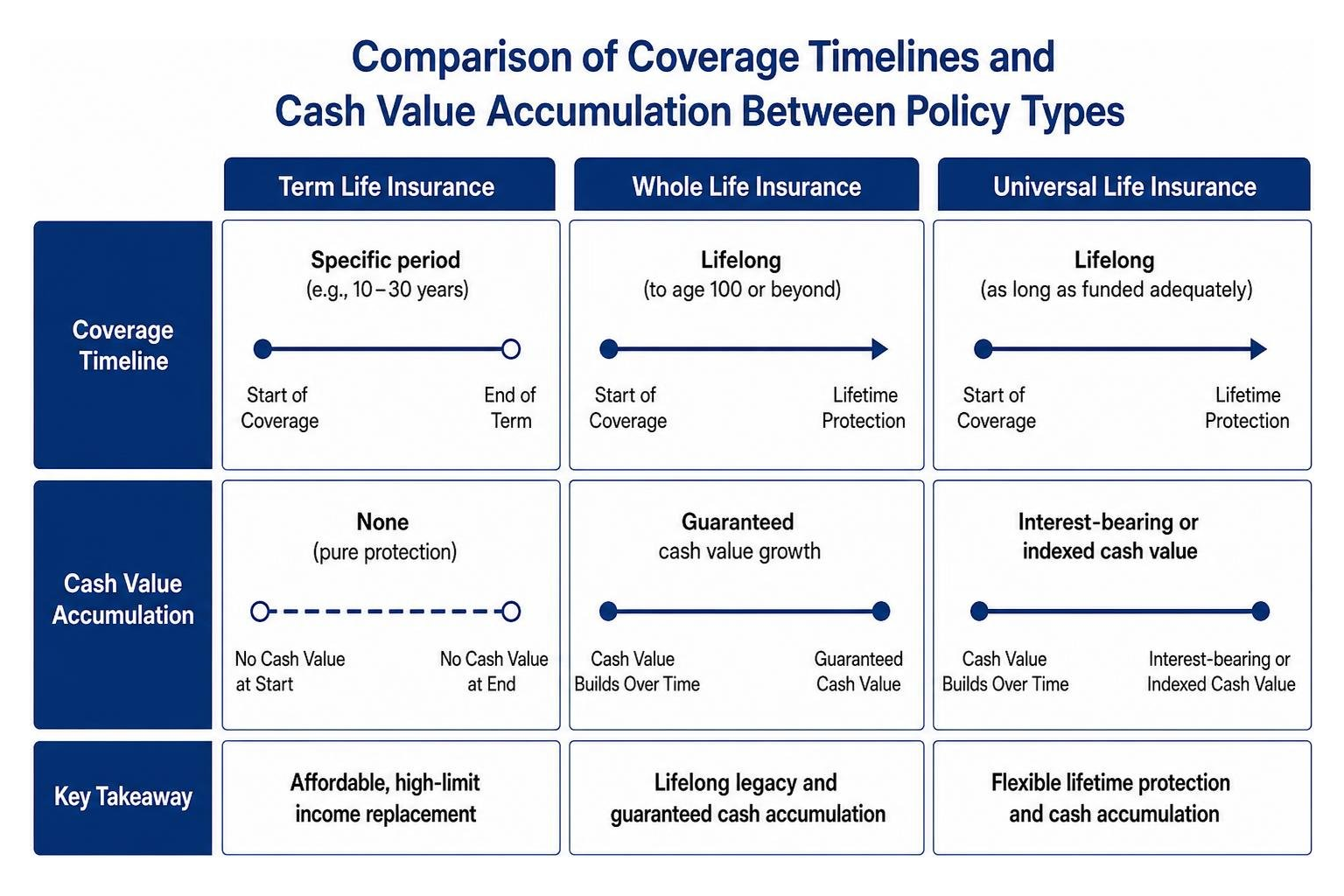
Choosing an appropriate policy structure involves reviewing your household budget, the length of your financial obligations, and your long-term goals. Parents typically evaluate term and permanent options when comparing family life insurance options.
| Feature | Term Life Insurance | Whole Life Insurance | Universal Life Insurance |
|---|---|---|---|
| Coverage Duration | Specific period (e.g., 10–30 years) | Lifelong (to age 100 or beyond) | Lifelong (as long as funded adequately) |
| Cash Value Growth | None (pure protection) | Guaranteed cash value growth | Interest-bearing or indexed cash value |
| Premium Structure | Level, fixed premiums for term | Level, guaranteed fixed premiums | Flexible premiums (typically after early years) |
| Primary Goal | Affordable, high-limit income replacement | Lifelong legacy and guaranteed cash accumulation | Flexible lifetime protection and cash accumulation |
| Cost Profile | Lowest initial cost | Higher initial cost | Moderate to higher initial cost |
Evaluating Term Life Insurance for Vietnamese Families
Term life insurance provides pure death benefit protection over a specified duration, commonly ranging from 10 to 30 years. If the insured passes away during the active term, the insurance carrier pays a death benefit to designated beneficiaries, generally free from federal income taxes.
For young parents, term policies often present a practical way to obtain substantial death benefit coverage at an accessible premium. By selecting a 20- or 30-year term that spans the years children grow up, finish school, and reach financial independence, parents can maintain level premiums during their peak earning years. You can review resources for comparing life insurance options and costs to see how specific term lengths align with family milestones.
A term policy may be especially useful when a family has a clear timeline for major obligations, such as a mortgage that will be paid off in 20 years or children who will finish college within a set period. Because term life insurance does not build cash value, the premium typically goes toward the cost of protection, which can make it easier for young parents to secure a higher death benefit without overextending the household budget.
Permanent Life Insurance for Vietnamese Families and Long-Term Coverage Goals
Permanent life insurance—such as whole life and universal life—combines lifetime death benefit protection with an internal cash value component. When premium payments are made, a portion covers policy expenses and the cost of insurance, while the remaining balance accumulates cash value according to policy terms.
Universal life policies often provide flexibility by allowing policyholders to adjust premium amounts and death benefit sizes over time, depending on policy performance and cash value adequacy. Some contracts offer milestone options that permit coverage increases during events like marriage or childbirth without requiring new medical exams.
For Vietnamese-American families who want coverage that lasts beyond the child-rearing years, permanent insurance may serve as a tool for leaving a legacy or providing funds for final expenses. The cash value component can also become a source of policy value later in life, although accessing it may reduce the death benefit and may have tax consequences depending on the situation.
Policy Riders, Waiting Periods, and Critical Protections to Consider

Modern life insurance policies frequently offer optional riders that enhance protection beyond the basic death benefit payout:
- Accelerated Death Benefit Riders: These riders often allow policyholders to access a portion of the death benefit early if diagnosed with a qualifying terminal illness, subject to policy guidelines.
- Critical Illness Riders: May provide cash payments upon the diagnosis of specified conditions, such as invasive cancer, stroke, or heart attack, depending on carrier definitions.
- Chronic Illness Riders: Often permit policyholders to access benefit funds if they become unable to perform standard activities of daily living, such as bathing, dressing, or eating without assistance.
Parents should examine policy exclusions, contestability clauses, and waiting periods. Standard policies typically feature a two-year contestability and suicide clause from the issue date. Specific health riders may also include waiting periods, often 30 to 90 days or more depending on the carrier, before benefits become payable for newly diagnosed medical conditions.
Underwriting methods differ across carriers. While traditional underwriting involves a paramedical exam with fluid samples, many insurers offer accelerated or simplified issue underwriting using digital health records, prescription databases, and driving histories to expedite approvals for eligible applicants. For regional details, review our updated 2026 life insurance guide for Vietnamese parents and our comprehensive guide for families in California.
When comparing life insurance for Vietnamese families, it is important to ask how a rider affects the remaining death benefit. Some living benefit payments reduce the amount beneficiaries receive later, while others may be structured as an additional benefit for an extra premium. Reviewing the policy illustration and asking the insurer for written definitions can help parents understand what triggers a benefit and what limitations apply.
How to Structure Family Coverage for Intergenerational Peace of Mind
Properly structuring policy ownership and beneficiary designations helps ensure that life insurance proceeds are distributed smoothly without administrative delays. Parents commonly designate primary beneficiaries, such as a spouse, along with contingent beneficiaries, such as adult guardians or legal trust arrangements, to receive funds if the primary beneficiary passes away first.
Insuring both parents is an important step in comprehensive family protection. While replacing the primary income earner’s wages is a standard priority, insuring a stay-at-home or caregiving parent is equally vital. If a caregiving parent passes away, the surviving family may face substantial costs for professional child care, transportation, meal preparation, and household management. Reviewing educational resources for families and parents can help couples evaluate both earning and caregiving replacement needs when selecting appropriate coverage.
In multigenerational households, grandparents may also provide regular child care or help with school pickups and meal preparation. While life insurance is typically purchased on parents, families may want to consider how the loss of a grandparent’s daily support could affect the household routine. Some parents address this by maintaining an emergency fund or by reviewing whether additional coverage on a caregiving relative is appropriate for their situation.
Beneficiary designations should be reviewed after major life events such as marriage, divorce, the birth of a child, or a move to another state. Keeping beneficiary information current can help prevent delays and reduce the chance that proceeds are paid to an outdated or unintended recipient.
Frequently Asked Questions About Family Life Insurance
How much coverage should new Vietnamese-American parents consider?
Coverage amounts depend on individual household obligations, debts, lifestyle, and long-term goals. A common general guideline is to evaluate 10 to 15 times the primary earner’s annual gross income, while also accounting for outstanding mortgage balances, personal loans, and estimated college expenses for dependent children. Exact amounts vary based on each family’s specific circumstances.
Parents may also want to consider the cost of child care if a stay-at-home parent were no longer available. Even without a formal salary, a caregiving parent provides services that would be expensive to replace. Adding a separate policy on that parent can help the surviving spouse manage those new costs without disrupting the family’s daily routine.
What is the difference between living benefits and critical illness riders?
Living benefits is an umbrella term describing policy provisions that permit policyholders to access a portion of their death benefit while still living if qualifying health events occur. Critical illness riders are a specific type of living benefit triggered by defined, severe medical diagnoses. Payout structures, reduction of the remaining death benefit, and qualifying criteria vary significantly by insurer, product, and state regulations.
Some policies include living benefits automatically, while others offer them as optional riders for an additional cost. Parents should ask whether a benefit is built into the base policy or added separately, because this can affect both the premium and the amount available if a qualifying event occurs.
Are medical exams always required when applying for family life insurance?
Not necessarily. Many insurance companies offer accelerated underwriting or simplified issue policies that waive in-person paramedical exams for qualifying applicants who meet specific age, health, and coverage amount criteria. Eligibility for no-exam coverage depends on individual health history and specific carrier underwriting guidelines.
Even when an exam is not required, applicants may still need to answer detailed health questions and authorize the insurer to review medical or prescription records. The underwriting process can vary widely, so parents should compare how different carriers evaluate applicants before choosing a policy.
Conclusion
Protecting your children begins with identifying potential family risks and choosing a life insurance policy designed to safeguard their future standard of living. Whether you select an affordable term policy to cover your core parenting years or permanent coverage with lifelong features, comparing available options helps you make an informed decision for your household.
Plan With Leo is committed to helping families understand and compare available life insurance policies in an informative, pressure-free environment. Leo Truong is a licensed life insurance agent who provides clear, objective education tailored to your family’s protection needs. To review available coverage options and compare quotes for your family, visit Plan With Leo to explore tailored life insurance coverage options today.