
Life insurance after divorce: what to check first
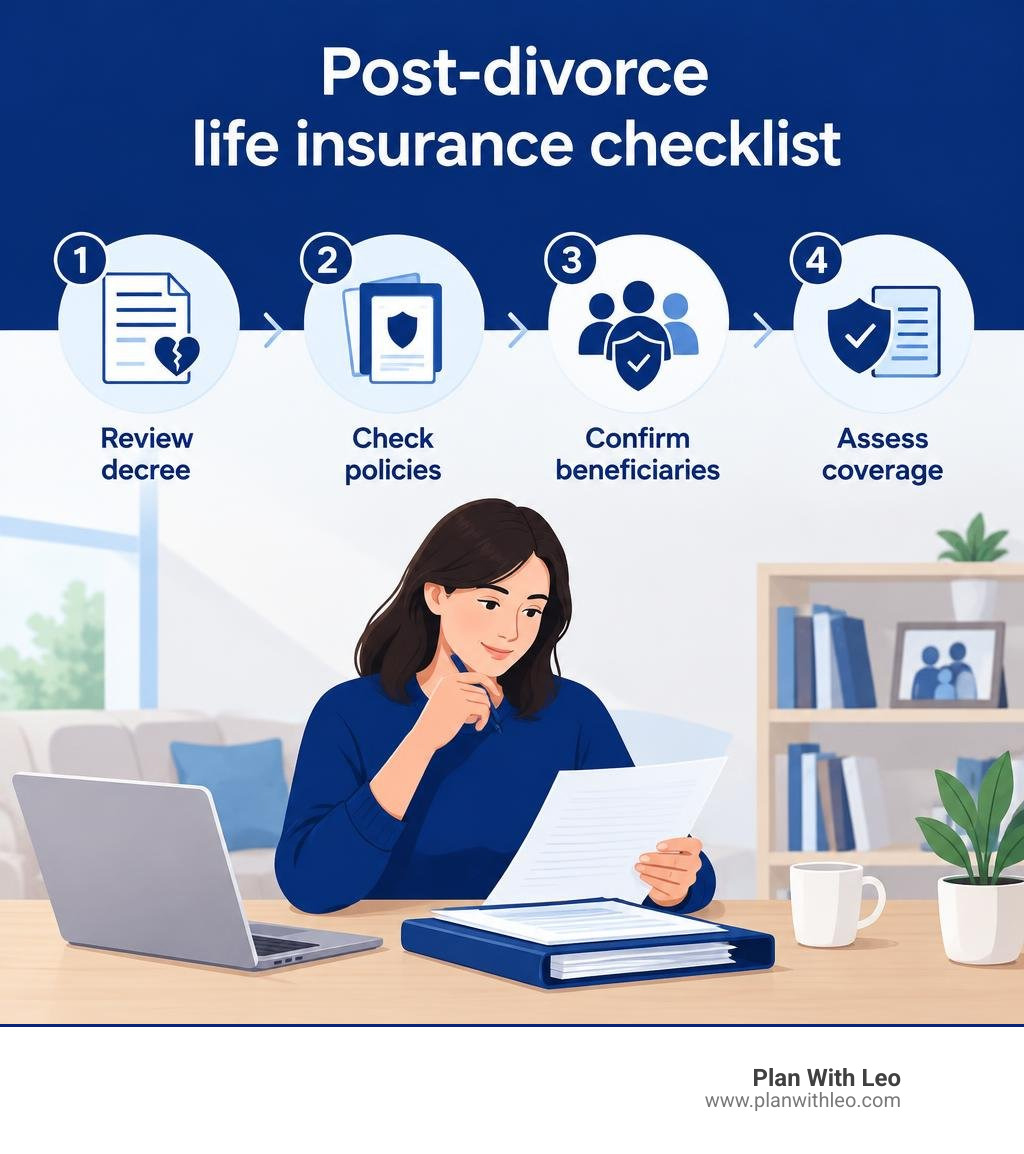
To manage life insurance after divorce, start with your divorce decree and a list of every policy you own, including coverage through work. Check who owns each policy, who receives the payout, and whether you must keep coverage for child support or alimony. Then submit any needed beneficiary changes to the insurer and confirm they took effect. Do not assume divorce changed the beneficiary for you; the rules vary by state and policy type.
If children depend on your income, review whether your coverage would help meet their needs. Before changing a policy named in a court order, check with your family-law attorney.
Leo Truong is a licensed life insurance agent who helps individuals and families understand and review available life insurance options. This guide offers general life insurance education for people reviewing coverage after divorce.
Terms related to life insurance after divorce:
- cash value life insurance
- convert term life to permanent life insurance
- term vs whole life insurance
How Life Insurance Policies Are Treated During Divorce Proceedings

Going through a separation reshapes nearly every corner of your financial life. When untangling shared assets, insurance policies often require careful evaluation. While most people remember joint bank accounts, vehicles, and real estate, life insurance policies can easily be overlooked during early negotiations.
How a policy is handled depends largely on who owns it, who pays the premiums, and whether it has accumulated monetary value over time.
Is Life Insurance a Marital Asset in Divorce?
A common question during property division is whether a policy counts as a marital asset:
- Term Life Insurance: Term coverage generally provides protection for a stated period and typically does not build cash value.
- Permanent Life Insurance: Whole life and universal life policies may include cash value features, depending on the policy.
How ownership, policy value, and premium payments are handled in a divorce can depend on state law, when and how the policy was funded, the divorce agreement, and other circumstances. A family-law attorney can explain how those factors apply to a specific policy.
Insurable Interest and Keeping a Policy on an Ex-Spouse
Ownership of or an application for coverage on another person can involve consent, insurable-interest, insurer, and state-law requirements.
Those requirements can vary based on the policy, the people involved, and applicable law. Divorce documents may also affect what changes are appropriate or permitted.
Before changing ownership or applying for coverage involving a former spouse, review the policy and any court documents, ask the insurer about its requirements, and consult qualified legal counsel about your circumstances.
Managing Beneficiary Designations and Life Insurance After Divorce
One of the most critical post-divorce administrative tasks is reviewing designated beneficiaries. A divorce decree does not automatically notify insurance carriers of your changed circumstances.
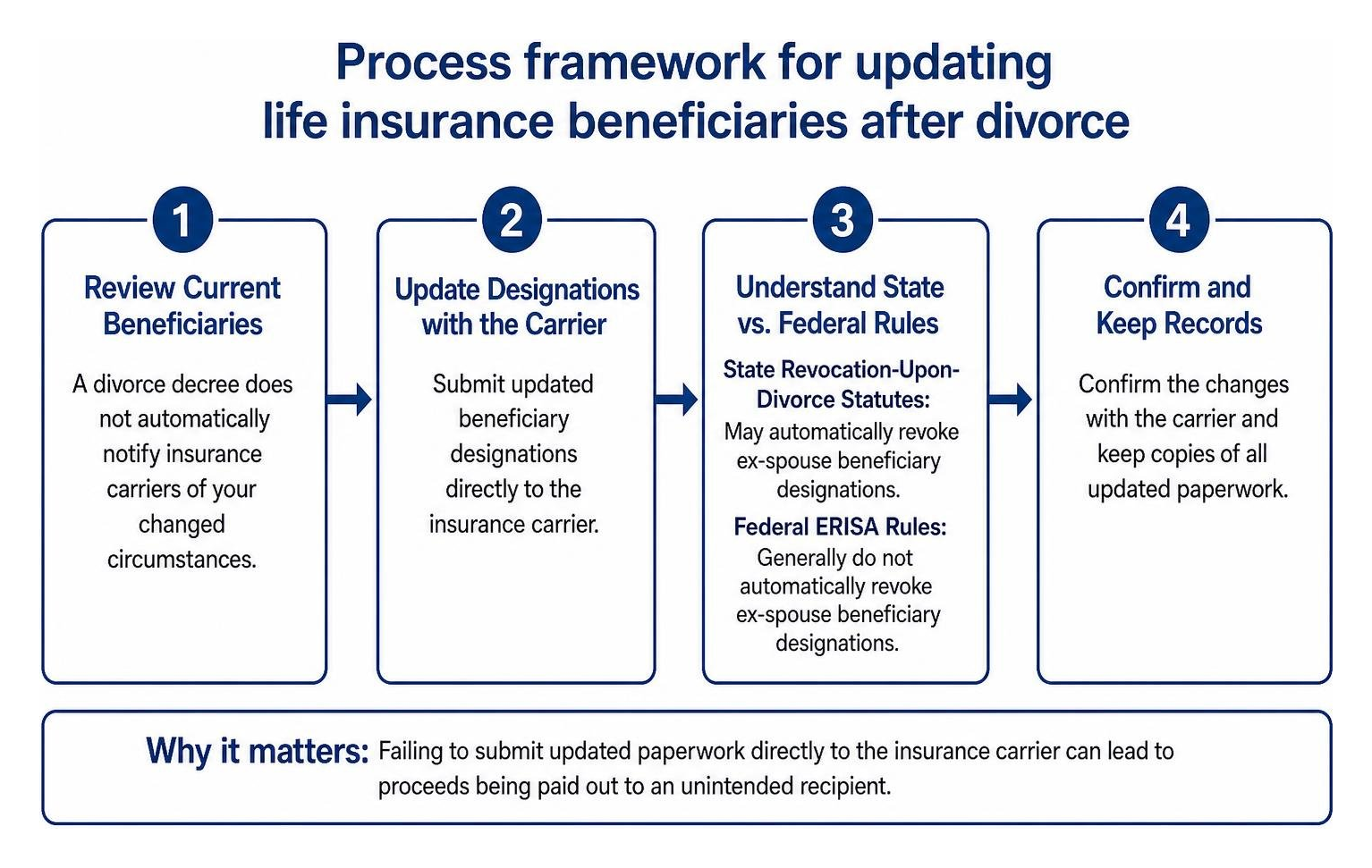
Failing to submit updated paperwork directly to the insurance carrier can lead to proceeds being paid out to an unintended recipient.
Beneficiary Rules and Employer-Sponsored Plans
State laws and federal regulations treat post-divorce beneficiary designations differently:
Divorce does not always automatically change a life insurance beneficiary designation. The outcome can vary by policy type, plan documents, applicable federal or state law, and court orders.
Employer-sponsored plans may be subject to federal ERISA rules, which can affect how beneficiary designations are administered and may preempt some state automatic-revocation laws.
Review the beneficiary designation on each employer-sponsored plan and submit any permitted updates directly to the plan administrator. For divorce-specific rights or obligations, consult qualified legal counsel.
Naming Minor Children as Beneficiaries
Directly naming a minor child as a beneficiary can create legal and administrative issues, depending on applicable law and the insurer’s procedures.
Before naming a minor child, ask the insurer how it handles beneficiary payments and speak with a qualified attorney about the options available in your situation.
Court-Mandated Coverage: Securing Child Support and Alimony

Some divorce decrees or support agreements may require life insurance to remain in force, depending on state law and the specific order or agreement.
Protecting Court-Ordered Support Payments
Some divorce decrees or support arrangements may require life insurance to remain in force, depending on state law and the specific order or agreement. Review the documents carefully, confirm any required coverage with the insurer, and consult a family-law attorney before making a change that could affect those requirements.
Military Life Insurance Considerations
Military service members and their spouses encounter unique rules regarding federal benefits:
- SGLI: Beneficiary designations are governed by federal program rules. Divorce documents do not themselves change the SGLI beneficiary designation, so service members should review their designation and current VA guidance.
- FSGLI: VA guidance indicates that spouse coverage generally continues for 120 days after divorce. Conversion may be available during that period, subject to VA requirements and deadlines.
- VGLI: Service members leaving the military may have options to apply for VGLI within VA timeframes. Review current VA guidance and seek legal advice for circumstances connected to divorce.
Determining the Right Life Insurance After Divorce for Your Family
Following a divorce, household dynamics and financial responsibilities shift significantly. Reviewing coverage needs can help a parent understand whether existing insurance may be sufficient for the household’s ongoing needs.
Calculating Coverage Needs for Single Parents
When determining coverage amounts as a single parent, consider your ongoing financial contributions:
- Income Replacement: Consider the income your household would need to replace.
- Housing and Debts: Review mortgage or rent costs, auto loans, and other debts.
- Family Expenses: Consider childcare, education goals, and other ongoing needs.
- Existing Resources: Review savings, existing insurance, and any support obligations.
- Final Expenses: Consider funeral and administrative costs.
Choosing Between Term and Permanent Life Insurance After Divorce
Selecting between policy types comes down to your protection timeframe and long-term objectives:
- Term Life Insurance: Term policies generally provide coverage for a selected duration and typically do not build cash value.
- Permanent Life Insurance: Permanent policies may provide long-term coverage and can include cash value features, depending on the policy.
Features, duration, premiums, and suitability vary by policy and individual circumstances. Reviewing the policy details can help families understand the available choices.
Frequently Asked Questions About Life Insurance and Divorce
What happens if a policy owner dies before updating their beneficiary?
The outcome can depend on the policy, beneficiary form, plan documents, court orders, and applicable law. Because divorce does not always change a beneficiary designation automatically, review beneficiary records promptly and consult qualified legal counsel if a question involves a divorce decree or potential claim.
Can a divorce decree require an ex-spouse to maintain life insurance?
It may, depending on state law and the specific divorce order or agreement. Review the documents and consult a family-law attorney before changing coverage that may be connected to an obligation.
Can you purchase a life insurance policy on an ex-spouse without their knowledge?
Applications for coverage on another person can involve consent, insurable-interest, insurer, and state-law requirements. Ask the insurer about its process and seek qualified legal advice for divorce-specific questions.
Conclusion
Reviewing existing policies, beneficiary designations, and any divorce-related coverage requirements can help ensure the policy information reflects the household’s current circumstances.
Because life insurance options vary by carrier, term, and underwriting guidelines, reviewing your situation with a licensed professional can help you understand the policy details that may matter to your household. Leo Truong is a licensed life insurance agent who helps individuals and families understand and review available life insurance options.
To review your current policies or understand and review available life insurance options for your household, visit our life insurance resource or reach out through our contact page.