
How to Convert Term Life to Permanent Life Insurance
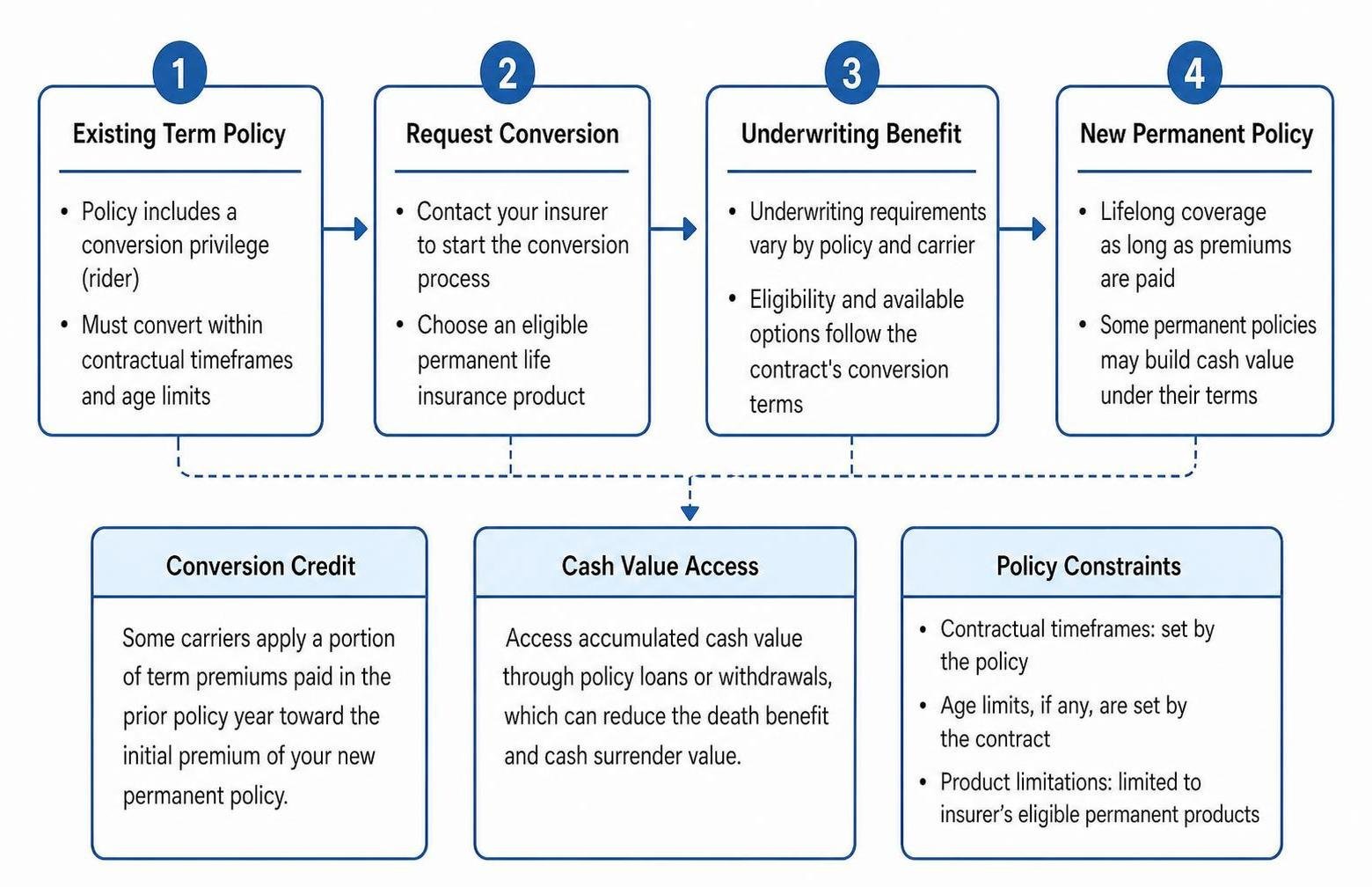
To convert term life to permanent life insurance, first check whether your current term policy includes a conversion rider or conversion privilege. Then confirm the deadline, choose the permanent policy offered by the insurer, request an illustration, and submit the required conversion form before your option expires. Many conversion privileges may allow a change without new full medical underwriting, but the process depends on the original policy and the insurer’s rules.
This can be useful if you want coverage that lasts for life or if your health has changed since you bought term insurance. Permanent coverage, such as whole life insurance, generally has higher premiums than term life, but it can provide a lifelong death benefit and may build cash value.
Before converting, review three details in your policy:
- Your conversion deadline: Conversion deadlines and age limits vary by insurer and contract.
- Your available choices: Available permanent products vary by insurer and policy.
- Your budget: You need to be able to keep up with the new premium over time. Some contracts may allow a partial conversion, subject to their terms and minimum coverage requirements.
Leo Truong is a licensed life insurance agent who helps individuals, families, and business owners understand and review available life insurance options. He helps buyers review the key questions to ask when they want to convert term life to permanent life insurance, including deadlines, coverage needs, and available policy choices.

Quick convert term life to permanent life insurance definitions:
- permanent life insurance overview
- term life vs permanent life insurance
- term vs whole life insurance
What Does It Mean to Convert Term Life to Permanent Life Insurance?
Converting a term life policy means changing eligible term coverage to an available permanent policy under the contract’s conversion terms. Underwriting requirements vary by policy and insurer. When you originally bought your term policy, the insurance company evaluated your health, medical history, family background, and lifestyle to determine your risk rating.
When your policy includes a conversion privilege, the policy may permit eligible coverage to be changed to an available permanent policy under the contract’s conversion terms. Many conversion privileges may not require new full medical underwriting, but the insurer can set the applicable eligibility, health-information, product, and rate rules in the contract.
How the Cash Value Component and Lifelong Coverage Function
Unlike term policies, which expire after a set duration (such as 10, 20, or 30 years), permanent coverage may remain in force for life if the policy’s requirements are met.
Some permanent policies, including certain whole life or universal life designs, may build cash value according to their policy design and terms. Cash-value features, growth, access, and charges vary by product.
Depending on the policy, owners may be able to access available cash value through loans or withdrawals, though doing so can reduce policy values or benefits. When evaluating these structural differences, term life vs whole life insurance highlights how permanent features diverge from simple temporary protection.
Understanding Conversion Credits and Policy Riders
A term policy may include a conversion privilege or rider, depending on the contract. Some carriers may offer conversion credits or other features, but availability and treatment vary by contract.
These provisions are policy-specific:
- Contractual Timeframes: The conversion period and any deadline are stated in the policy.
- Age Limits: Eligibility may be subject to an age limit set by the contract.
- Product Limitations: The insurer may limit conversion to particular permanent products available under its rules.
Key Benefits and Strategic Advantages of Converting
Choosing to transition from temporary coverage to permanent protection offers distinct structural advantages for long-term planning.

A primary advantage is long-term death benefit protection. Term insurance works well during high-liability years—such as when raising children or paying down a mortgage—but term policies eventually end. Permanent insurance is designed to provide long-term death benefit protection while the policy remains in force and required premiums are paid.
For an overview of how costs and protections align across coverage styles, see the definitive guide to term vs permanent life insurance costs and benefits.
How a Conversion Privilege May Affect New Underwriting
A conversion privilege may give an eligible policyholder a way to consider permanent coverage under an existing term contract. Some insurers may not require new full medical underwriting for a conversion, while others may request information or apply additional conditions. The contract and carrier rules determine the process, eligible products, and premium treatment.
Before proceeding, review the conversion provision or ask the insurer or agent about:
- Eligibility requirements: The policy’s conversion period, age limits, and other conditions.
- Available products: Which permanent policies are eligible for conversion.
- Premium and underwriting treatment: How the carrier determines premiums and whether any health information is required.
Partial Conversions for Flexibility and Cost Management
Policyholders do not always have to convert their entire death benefit. If you own a large term policy, converting the full face amount to whole life could result in a substantial premium increase.
Many carriers allow partial conversions. When a partial conversion is permitted, the policyholder changes only part of the term coverage to an eligible permanent policy while the remaining coverage stays subject to the original contract. Whether a partial conversion is available, and how it affects remaining coverage and premiums, depends on the policy terms.
Drawbacks, Costs, and Important Considerations
While conversion offers significant security, there are trade-offs to evaluate carefully.
Permanent life insurance premiums are often higher than term life premiums for a comparable death benefit, though pricing varies by product, age, underwriting, and policy design. If the higher premium strains your household cash flow, you risk policy lapse, which could leave you without any coverage.
| Factor | Converting Existing Term | Buying a Brand New Policy |
|---|---|---|
| Medical Underwriting | May involve a conversion process defined by the existing contract; requirements vary | May require new underwriting, medical questions, or an exam |
| Health Changes Impact | Treatment of health changes depends on the policy’s conversion terms | Health and other current underwriting factors may affect eligibility and premium treatment |
| Product Selection | Limited to permanent products available under the conversion provision | May offer different available products, subject to the new insurer’s underwriting rules |
| Premium Treatment | Depends on the policy, attained age, selected product, and carrier rules | Depends on current age, health, selected product, and underwriting results |
When to Convert Term Life to Permanent Life Insurance Based on Age and Timing
Timing your conversion requires balancing your current age and your financial goals. Premium treatment and eligibility depend on the policy, the insured’s age, the available conversion products, and the carrier’s rules.
A new policy application may offer different options and premium treatment, while a conversion follows the terms of the existing contract. Review the conversion deadline and available choices before the policy’s eligibility period ends.
How to Complete a Policy Conversion Step-by-Step

Executing a policy conversion involves a clear sequence of administrative steps:
- Locate Your Current Policy Contract: Find the section detailing the term conversion rider to identify your specific expiration date, product options, and eligible age limits.
- Contact Your Insurer or Agent: Request official conversion illustrations for the permanent products available under your contract.
- Compare Policy Structures: Review whole life, universal life, or other permanent illustrations to see how premium schedules and cash value projections align with your objectives.
- Determine the Conversion Amount: Decide whether a full conversion or a partial conversion makes the most sense for your coverage goals.
- Complete the Conversion Application: Follow the insurer’s conversion requirements and submit the designated forms and supporting information.
- Set Up Premium Payments: Establish your new payment schedule to ensure your permanent policy activates smoothly without a lapse in protection.
To explore the broader spectrum of available protection formats, you can review common life insurance options across the industry.
Frequently Asked Questions About Term Life Conversions
Can you convert only part of your term life coverage to permanent insurance?
Yes, many life insurance companies permit partial conversions, though rules vary by carrier. When you complete a partial conversion, your carrier splits the coverage: one portion transitions into a permanent policy, while the remainder continues as term insurance for the rest of its duration. Insurers may require both the converted permanent portion and the remaining term portion to meet their minimum face amount thresholds.
How should affordability factor into a term life conversion?
Permanent life insurance premiums may be higher than term premiums, so affordability is an important consideration. Review the illustration, payment schedule, policy features, and the effect of a full or partial conversion, if available, before deciding whether the option fits your coverage needs and budget.
How do insurers structure conversion provisions?
Conversion provisions are contract features that insurers structure around their product rules and risk assumptions. A policy may specify the conversion period, eligible permanent products, underwriting requirements, premium treatment, and other conditions.
Conclusion
A conversion privilege may allow eligible term coverage to be changed to an available permanent policy under the terms of the existing contract. Deadlines, age limits, available products, premium treatment, and underwriting requirements vary by insurer and policy, so review the conversion provision before making a decision.
Leo Truong is a licensed life insurance agent who provides educational guidance to help individuals and families understand and review available life insurance options. To discuss your policy provisions or available coverage options, contact Plan With Leo through the life insurance page.