
Can a Trust Own Life Insurance? Ownership and Beneficiary Basics
When new parents explore long-term protection for their growing family, a common question is whether a trust can legally own a policy on their lives. A trust may be able to own life insurance or receive policy proceeds, but the answer depends on the trust agreement, policy terms, applicable law, and the family’s circumstances. For families with minor beneficiaries, a trust can be one way for a trustee to manage proceeds according to the terms already in place.
Defining Insurable Interest and Trust Ownership
Insurable interest is an important insurance requirement that helps prevent speculative coverage on another person’s life. An individual generally has an insurable interest in their own life. When a trust is involved, the insurer may review the relationship among the insured person, the trust, and its beneficiaries, as well as the authority provided in the trust agreement.
Whether a particular trust meets an insurer’s and state’s requirements is fact-specific. Before applying for or changing ownership of coverage, families should review the arrangement with qualified legal and tax professionals and the insurance carrier.
When reviewing a trust-owned policy, the insurance carrier may consider:
- The relationship between the insured person and the beneficiaries.
- The trustee’s authority under the trust agreement.
- The policy terms and applicable state requirements.
Policy Owner vs. Beneficiary Designations
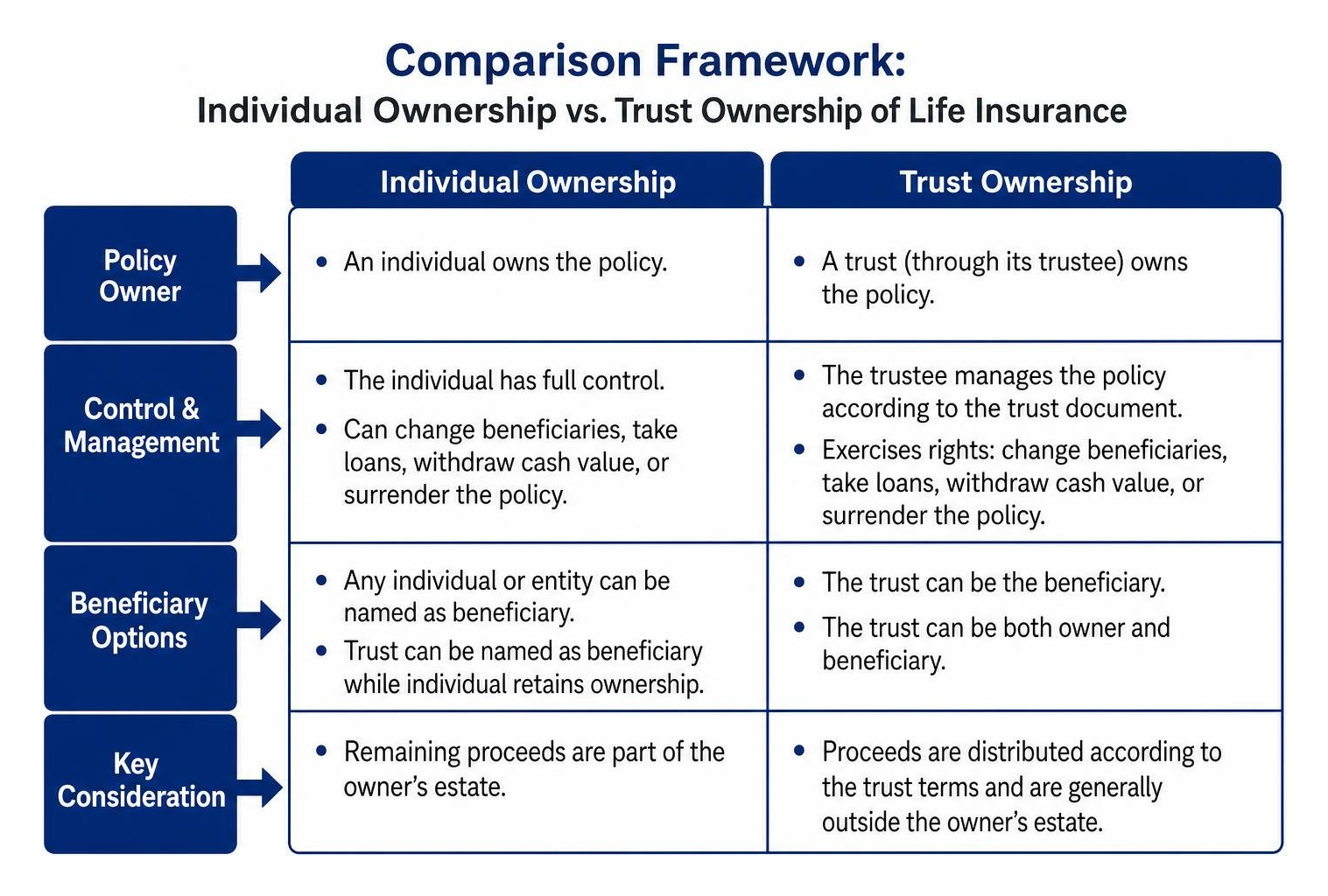
For new parents evaluating policy options, understanding trust-owned life insurance requires distinguishing between two roles: the policy owner and the beneficiary.
- The Policy Owner: Holds contractual rights under the policy, subject to its terms. When a trust owns the policy, the trustee may exercise rights granted by the trust agreement and policy.
- The Beneficiary: Is the person or entity named to receive the death benefit when the insured person dies.
A trust can sometimes be named as an owner, beneficiary, or both, depending on the family’s goals and the available policy arrangement. Reviewing guidelines on properly naming life insurance beneficiaries can help parents understand the insurance distinction between ownership and beneficiary designations.
Comparing Trust Structures for Life Insurance Policies
When new parents consider trust structures for family life insurance coverage, a revocable trust and an irrevocable life insurance trust, often called an ILIT, can involve different levels of flexibility and administration. The legal, tax, probate, creditor, and estate effects depend on the documents, policy, state law, and individual circumstances.
| Feature | Revocable Living Trust | Irrevocable Life Insurance Trust (ILIT) |
|---|---|---|
| Flexibility | May allow changes while the grantor is living, subject to the trust terms | Is generally designed to be less flexible after it is established |
| Policy ownership | May hold a policy if the trust and policy allow it | May be used to hold a policy when structured for that purpose |
| Administration | Often has a simpler structure | May involve more ongoing administration |
| Legal and tax considerations | Can have estate and probate implications that vary by circumstances | Can have significant estate, tax, and administrative implications that require professional review |
Irrevocable Life Insurance Trusts (ILITs)
An ILIT is a type of trust that may be used to hold life insurance. Because it is typically intended to be less flexible than a revocable trust, families should understand the trust terms, policy terms, and practical responsibilities before using one.
An ILIT may be considered when a family wants a trust to hold or receive life insurance proceeds. Its potential legal, tax, creditor, and estate effects are not automatic and should be reviewed with a qualified estate-planning attorney and tax professional.
Revocable Living Trusts
A revocable living trust may offer families more flexibility because its terms can often be changed during the grantor’s lifetime. It may be named in connection with a life insurance policy when the trust and policy allow it.
A revocable trust does not create the same outcome for every family. Questions about probate, trustee authority, taxes, and policy ownership should be reviewed with qualified legal and tax professionals before changes are made.
Tax and Legal Implications of Trust-Owned Policies
Trust-owned life insurance can involve important legacy-planning considerations and tax considerations. Rather than relying on a general rule, families should review the trust, policy, ownership arrangement, and their circumstances with qualified estate-planning and tax professionals before establishing, transferring, or changing a policy.
Ownership and Estate Considerations
Who owns a policy and who has authority to act under the policy can affect estate and tax treatment. The outcome may depend on the trust agreement, policy terms, timing of any changes, applicable law, and other facts unique to the family.
A licensed life insurance agent can help families understand how available policy options work, while qualified legal and tax professionals can advise on trust design, ownership, and estate consequences.
Transferring or Purchasing Coverage Through a Trust
Transferring an existing policy to a trust or having a trust apply for coverage can have significant estate and tax consequences. The appropriate approach depends on the existing policy, the trust, underwriting, and the family’s overall circumstances.
Before making an ownership change or applying for coverage through a trust, families should consult qualified estate-planning and tax professionals and confirm carrier requirements.
Planning for Life Insurance With a Trust
Using a trust in connection with family life insurance usually requires coordination among the family, the insurance carrier, and independent legal and tax professionals. For families with business-related coverage questions, business succession insurance planning may be a separate topic to discuss with independent advisors.

Questions Families Can Review
Before connecting a trust to a life insurance policy, families may want to discuss these questions with qualified legal and tax professionals:
- Does the trust permit the intended insurance arrangement?
- Who has authority to act for the trust under its terms?
- Does the policy support the intended ownership and beneficiary designations?
- What legal, tax, estate, and administrative considerations apply to the family?
Why Some Families Use Trusts for Minor Beneficiaries
Some families use a trust so a trustee can manage life insurance proceeds for beneficiaries, including minor children, according to the trust terms. How funds may be received, held, or distributed depends on the trust, applicable law, and the family’s circumstances.
Parents considering this approach should work with qualified legal professionals to determine whether a trust fits their family’s goals. A licensed life insurance agent can help explain and review available life insurance options and coordinate insurance questions with the family’s independent advisors.
Frequently Asked Questions About Trust-Owned Life Insurance
Can a trust own life insurance if the grantor is also the trustee?
A trust may be able to own life insurance when the arrangement is permitted by the trust agreement, policy terms, insurer requirements, and applicable law. Whether the grantor can also serve as trustee, and what authority that trustee may have, can create important legal and tax considerations. Families should review the arrangement with qualified legal and tax professionals before making changes.
What happens to the policy death benefit when paid to a trust?
If a trust is named to receive a death benefit, the insurer generally pays the proceeds according to the policy and claim requirements. The trustee’s authority and the way proceeds are managed depend on the trust agreement, applicable law, and the specific circumstances. Qualified legal and tax professionals can explain the implications for a particular family.
Can an existing life insurance policy be transferred into a trust?
An existing policy may sometimes be transferred to a trust, but the process and consequences can vary. A transfer can affect ownership, policy administration, estate considerations, and tax treatment. Families should consult qualified legal and tax professionals and confirm the insurer’s requirements before making an ownership change.
Conclusion
Understanding how a trust can own life insurance gives new parents a starting point for considering how policy ownership and beneficiary designations may fit into family protection goals. A trust may be able to own a policy or receive proceeds, but the legal, tax, probate, creditor, and estate implications depend on the trust, policy, applicable law, and individual circumstances.
At Plan With Leo, Leo Truong is a licensed life insurance agent who helps individuals and families understand and review available life insurance options. He can coordinate insurance questions with clients’ independent legal and tax advisors when a trust may be involved.
Families can contact Plan With Leo to speak with licensed life insurance agent Leo Truong about available life insurance options.
Plan With Leo is located at 10810 Warner Ave, Unit 9, Fountain Valley, CA 92708.