Smart Wealth Protection Strategies Every Family Should Consider

Smart Wealth Protection Strategies Every Family Should Consider
Start With Layers That Protect Your Growing Family
Implementing smart wealth protection strategies can become important when welcoming a new child, managing household debt, and building long-term financial security for your household. New parents often discover that daily living costs, mortgage payments, and future education needs create significant financial responsibilities. Practical wealth protection strategies help parents evaluate how life insurance may provide funds that can support income needs, immediate family expenses, and other financial responsibilities if a parent dies.
A sensible starting point for new parents choosing life insurance includes:
- Assessing income replacement needs, mortgage balances, childcare expenses, and future obligations like college funding.
- Selecting the right policy type and coverage term tailored to your family’s budget, ages, and long-term goals.
- Reviewing policy ownership and beneficiary designations so they reflect the family’s circumstances and policy terms.
- Coordinating coverage alongside an emergency fund to protect family assets from sudden financial disruption.
Life insurance policy terms, eligibility, premiums, and benefits vary by carrier and medical underwriting. A death benefit may provide funds that can help surviving family members address covered expenses and reduce financial pressure during a difficult time.
I’m Leo Truong, a licensed life insurance agent who helps buyers understand and review available life insurance options for family, income, final-expense, and business protection needs. In this guide, I’ll explain how new parents can evaluate life insurance options as part of foundational wealth protection strategies.
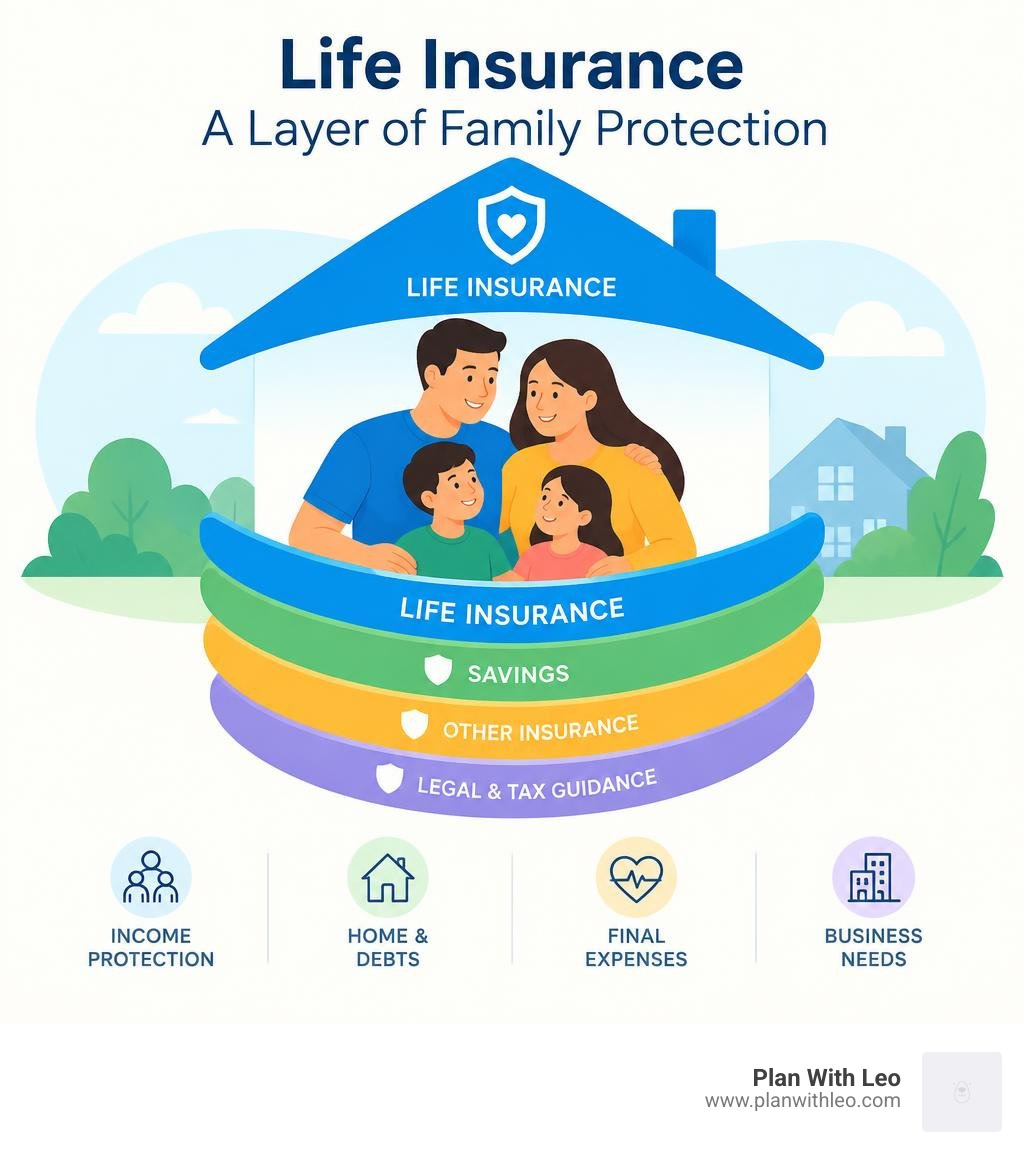
Foundational Life Insurance Protection Layers for New Parents
Helping new parents consider life insurance coverage begins with identifying the ongoing financial obligations that would remain if one or both parents were no longer there. Families must balance mortgage payments, daily living costs, and future childcare or education needs. A core part of planning is knowing if you have enough life insurance for your family so families can consider how a policy may support dependents if a parent dies.

When evaluating coverage for a growing household, couples often examine whether both parents need life insurance. Even if one spouse stays home with the children, replacing that vital childcare and domestic support could require substantial financial resources.
Assessing Life Insurance Coverage Needs for New Parents
Evaluating coverage for a young family requires a realistic review of short-term and long-term expenses:
- Income replacement: A death benefit may help provide funds that support ongoing household income needs, depending on the policy and coverage amount.
- Housing and debt obligations: A death benefit may help address mortgage balances, car loans, student loans, or personal debt, depending on the policy and coverage amount.
- Childcare and education costs: A death benefit may help provide funds for daycare, preschool, and future education costs, depending on the policy and coverage amount.
- Final expenses and medical bills: A death benefit may help address immediate end-of-life expenses and remaining medical costs, depending on the policy and coverage amount.
Because a growing family’s financial obligations evolve as children grow, periodic reviews can help families reassess whether their policy amount and terms still reflect changing household needs.
Life Insurance Policy Types for New Parents
New parents typically compare term vs permanent life insurance costs benefits to determine which structure matches their household budget and long-term priorities:
- Term Life Insurance: Provides coverage for a specific period, such as 10, 20, or 30 years, often matching child-rearing years and mortgage terms. Premiums, available coverage amounts, and eligibility vary by insurer, age, health, policy term, and underwriting.
- Whole Life Insurance: May provide permanent coverage, subject to policy terms, premium payments, and underwriting, and may include cash value features depending on the policy.
- Universal Life Insurance: May provide permanent death benefit protection with adjustable premiums and flexible cash value options, depending on policy terms and underwriting.
- Final Expense Whole Life Insurance: May provide a smaller permanent death benefit intended to help with funeral, burial, or other final expenses, subject to policy terms and underwriting.
Core Wealth Protection Strategies for Growing Families
| Coverage Type | Primary Purpose | Common Use Case for New Parents | Key Considerations |
|---|---|---|---|
| Term Life | Potential support for income needs and debt obligations | Supporting mortgage, household, and child-rearing needs | Costs and suitability vary by insurer, policy terms, age, health, and underwriting; coverage ends when the term expires unless renewed or converted, if available |
| Traditional Whole Life | Lifelong coverage with cash value accumulation | Establishing permanent family protection and building long-term policy value | Premiums and underwriting requirements vary by insurer, policy design, age, health, and state |
| Universal Life | Permanent protection with flexible premium options | Maintaining lifelong coverage with adjustable premium and death benefit structures | Cash value performance and premiums depend on policy design and performance |
| Final Expense Whole Life | Permanent modest death benefit protection | Covering immediate funeral costs and medical bills | Smaller face amounts; costs and suitability vary by insurer, policy design, age, health, and underwriting |
| Key-Person / Succession Life | Protecting a family-owned business | Supporting continuity planning when a parent owns or operates an enterprise | Depends on the agreement, policy structure, ownership, and business circumstances |
Business Considerations When a Parent Owns a Business
When a new parent owns a small business, their family finances and business assets are closely linked. If a business-owning parent passes away unexpectedly, surviving family members or business partners could face cash flow disruptions or forced asset sales. A formal business succession plan may use life insurance to provide funds that can support succession or continuity planning, depending on the agreement, business structure, and policy terms.
Beneficiary Designations and Surviving Family Members
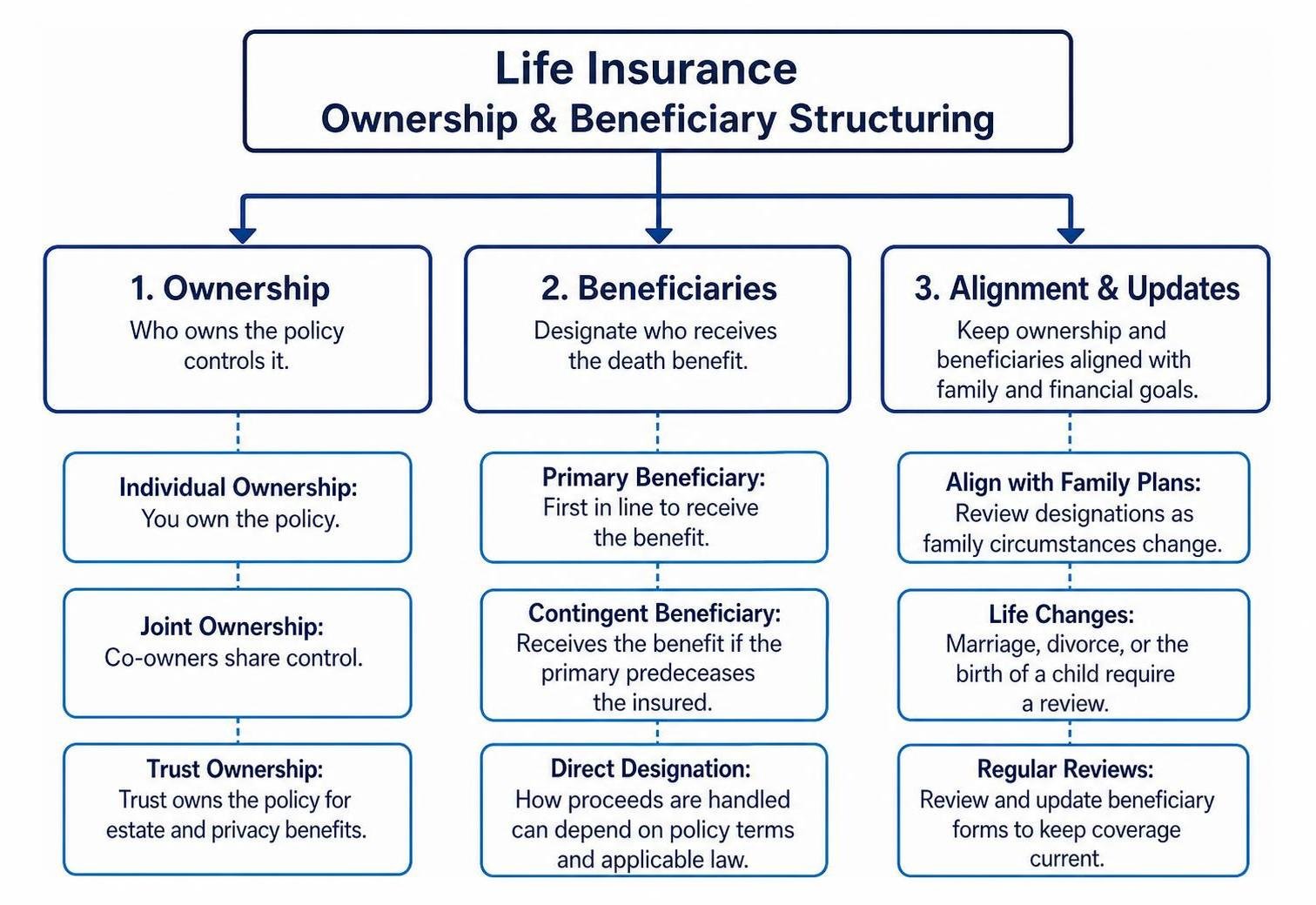
When new parents set up life insurance policies, proper structuring is essential:
- Naming Primary Beneficiaries: Parents often name a spouse or another trusted adult as a primary beneficiary, subject to the policy and their circumstances.
- Addressing Minor Beneficiaries: Naming minor children directly can create payment and administration complications. Families may want qualified legal guidance when considering beneficiary arrangements involving minors, guardians, or trusts.
- Updating Contingent Beneficiaries: Listing contingent beneficiaries can help document the family’s wishes if the primary beneficiary cannot receive proceeds, subject to policy terms and applicable law.
- Aligning Policy Ownership: Policy ownership and beneficiary designations should be reviewed carefully because their effects can vary by policy, insurer, and family circumstances.
Critical Timing Considerations and Common Pitfalls
Timing is critical when new parents apply for life insurance. Age and health can affect premiums, eligibility, and available policy options. Considering coverage earlier may be worthwhile for some families, but underwriting, rates, and available options vary by insurer and policy.
Navigating Application Timing and Underwriting for New Parents
Parents managing existing health conditions can still explore available coverage options, as underwriting guidelines vary across carriers. A licensed life insurance agent can help buyers understand policy options and insurer requirements, without guaranteeing eligibility or a particular rate.
If replacing an older policy, generally avoid canceling existing coverage until the replacement policy has been approved, issued, and confirmed in force.
Common Mistakes When Insuring Young Families
- Relying Only on Employer-Provided Coverage: Employer-sponsored coverage can differ substantially across plans in benefit amount, portability, conversion options, and continued availability. Families may want to review the specific plan before treating it as their only coverage.
- Insuring Only the Primary Earner: The death of a stay-at-home parent can create added childcare and household-support costs that a family may need to consider.
- Underestimating Coverage Needs: Selecting a policy amount without considering income needs, mortgage debt, and future education expenses may leave some household obligations unaddressed.
- Naming Minor Children Directly as Beneficiaries: Naming minor children directly can create complications. Families may want qualified legal guidance when considering beneficiary arrangements involving minors or trusts.
Integrating Life Insurance with Broader Family Protection
Life insurance can be one part of a broader family-protection approach for new parents. Depending on the policy, coverage amount, and beneficiary arrangements, it may help provide funds for income needs, debts, or other responsibilities after a parent dies. Families may also consider how coverage fits alongside their own emergency savings and legal documents.
Coordinating Coverage with Long-Term Family Needs
As your family grows and financial obligations evolve—such as purchasing a larger home, having additional children, or expanding a family business—periodically reviewing coverage can help determine whether the policy still reflects current needs. Any decision should account for the policy terms, insurer requirements, and the family’s circumstances.
Frequently Asked Questions About Wealth Protection Strategies
What factors can make timing relevant when new parents consider life insurance?
Age and health may affect premiums, eligibility, and available policy options. For some families, applying earlier may be worth considering, but rates and underwriting outcomes vary by insurer, policy, and individual circumstances.
In what ways might life insurance support family-focused wealth protection strategies?
Life insurance may be one part of a family-protection approach. Depending on the policy and coverage amount, a death benefit may help provide funds for income needs, mortgage payments, debts, or future living and education costs after a parent dies.
How can families assess a stay-at-home parent’s insurance needs?
A stay-at-home parent may have an insurable financial contribution because childcare, household support, and related responsibilities can carry replacement costs. Whether coverage is appropriate depends on the household’s needs, budget, policy options, and underwriting.
Conclusion
Life insurance can help new parents prepare for certain financial responsibilities if a parent dies. As part of family-focused wealth protection strategies, a policy may provide funds that can support income needs, mortgage obligations, childcare costs, or other covered expenses, depending on the policy, coverage amount, beneficiary arrangements, and family circumstances.
Plan With Leo provides educational guidance from Leo Truong, a licensed life insurance agent who helps buyers understand and review available life insurance options for families, income protection, and business needs. If you are ready to explore life insurance options for your family, visit our life insurance resource page to review available life insurance options.