Beginner’s Guide to Legacy Planning Basics

Beginner’s Guide to Legacy Planning Basics
What Is Legacy Planning and Why Does It Matter?
Legacy planning is a broad, personal process for documenting what matters to you and helping loved ones understand your wishes. It may include family values, stories, charitable intentions, important records, and conversations about responsibilities. Estate planning generally addresses the legal arrangements for property, decision-making authority, and asset transfers.
| Dimension | Estate Planning | Legacy Planning |
|---|---|---|
| Primary focus | Legal and asset-transfer arrangements | Personal values, communication, intentions, and long-term family goals |
| Common elements | Wills, trusts, powers of attorney, healthcare directives, and beneficiary designations | Family conversations, letters of instruction, personal histories, charitable intentions, and organized records |
| Family involvement | Varies by family and legal strategy | May include conversations that help loved ones understand wishes and responsibilities |
| Purpose | Helps document legal wishes and coordinate asset transfers | Adds context beyond legal documents by sharing what matters to the individual or family |
Neither approach guarantees a particular probate, tax, privacy, or family outcome. Court involvement, timing, costs, and the way assets transfer can depend on the estate, ownership arrangements, beneficiary designations, applicable law, and individual circumstances.
A practical starting point is to organize key information and make sure the right people know where to find it. For families with dependents, reviewing available life insurance options for families and parents can also be part of a broader conversation about financial support if a household member dies.
Bringing the Pieces Together
Legacy planning does not need to be a complex wealth-management exercise. Many people begin with three straightforward areas:
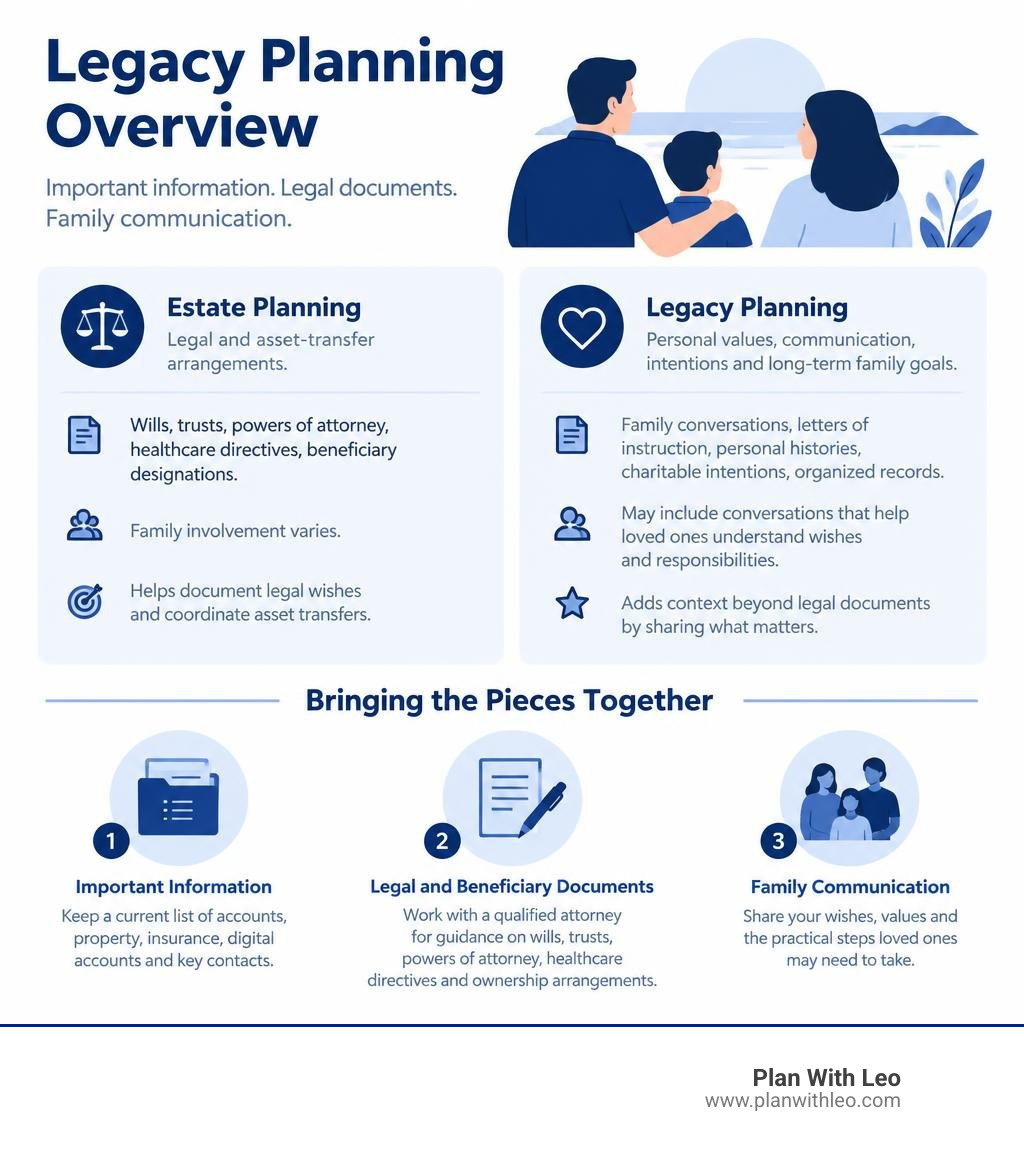
- Important information: Keep a current list of major accounts, property, insurance policies, digital accounts, and key contacts.
- Legal and beneficiary documents: Work with a qualified estate-planning attorney when you need advice about wills, trusts, powers of attorney, healthcare directives, or ownership arrangements.
- Family communication: Share appropriate information about your wishes, values, and the practical steps loved ones may need to take during a difficult time.
Why Legacy Planning Can Be Helpful at Many Life Stages
Legacy planning is not limited to one income or asset level. Parents, homeowners, business owners, and adults with digital accounts or meaningful personal belongings may all benefit from clearer records and conversations.
Probate and estate administration can be more or less involved depending on how assets are owned, whether beneficiary designations are current, the documents in place, and state law. Clear organization does not eliminate every challenge, but it can make it easier for loved ones to locate information and understand next steps. Reviewing legacy considerations alongside broader retirement planning resources may help households identify questions to discuss with the appropriate legal, tax, or insurance professional.
Core Components of a Comprehensive Legacy Strategy
A useful legacy-planning overview often begins with an organized inventory of important information:
- Financial accounts and insurance: Checking and savings accounts, retirement accounts, brokerage accounts, and life insurance policies.
- Real and personal property: Homes, vehicles, business interests, and personal items with financial or sentimental significance.
- Digital information: Online accounts, password-management arrangements, email addresses, cloud storage, and digital photos.
- Outstanding obligations: Mortgages, loans, business obligations, and other debts that may need attention.
Core Pillars of Legacy Planning
Beyond an inventory, many families choose to document the people, values, and practical responsibilities connected to their plans:
- Family narratives and letters: Non-legal letters, recordings, or messages can share family history, values, and life lessons. They are not substitutes for legal documents.
- Charitable intentions: Some people want to record the causes they care about and discuss possible charitable giving with the appropriate legal or tax professional.
- Business continuity conversations: Business owners may want to identify who should be contacted and what information successors may need. The essential role of insurance in your business succession plan explains how insurance may be considered within a business-continuity discussion.
The Potential Role of Life Insurance in Legacy Planning
Life insurance can be one part of a legacy-planning conversation because a death benefit may provide funds when a covered person dies. Depending on the policy, beneficiary designations, underwriting, and the family’s circumstances, life insurance may help with:
- Liquidity needs: Proceeds may help beneficiaries address final expenses, debts, or other immediate financial needs without needing to sell certain assets quickly.
- Support for dependents: Coverage may provide financial support for a surviving spouse, children, or other dependents.
- Inheritance equalization: When one beneficiary receives an illiquid asset, such as a home or business interest, life insurance proceeds may be considered as one way to help balance distributions among other beneficiaries.
- Business continuity: Coverage may be used in connection with a buy-sell agreement or other business-continuity arrangement, depending on the agreement and policy terms.
Death benefits are generally received free of federal income tax in many circumstances, but exceptions and tax consequences can apply. Individual tax questions should be reviewed with a qualified tax professional.
Legal Tools, Trusts, and Tax Considerations
Legal documents and ownership arrangements can affect how property passes at death or during incapacity. Common tools may include beneficiary designations, joint ownership arrangements, wills, trusts, powers of attorney, and healthcare directives. The right combination, if any, depends on a person’s family, assets, state law, and goals, so legal-document decisions should be reviewed with a qualified estate-planning attorney.

Tax and Transfer Considerations
Estate, gift, and income-tax rules can affect a legacy plan, and the rules may change over time. Questions about taxes, gifts, trust taxation, business transfers, or the treatment of inherited property should be discussed with a qualified tax professional or estate-planning attorney.
For life insurance, policy ownership, beneficiary designations, premium payments, and the intended use of proceeds can all matter. A licensed life insurance agent can help explain available policy features and beneficiary options, while legal and tax professionals can advise on legal documents and tax treatment.
Common Documents to Discuss With an Attorney
Not every family needs every document, but an estate-planning attorney may discuss tools such as:
- Last will and testament: Can state wishes for property distribution, name an executor, and nominate guardians for minor children.
- Trusts: May be appropriate in some situations and can set instructions for assets held by the trust.
- Durable financial power of attorney: Can authorize a trusted person to handle financial matters if someone cannot act for themselves.
- Healthcare directives: Can document healthcare preferences and identify a person to make medical decisions when permitted by law.
- Beneficiary designations: Can identify who is intended to receive proceeds from life insurance and certain financial accounts.
These tools have different legal effects and should be tailored by a qualified attorney rather than treated as a universal checklist.
Preparing Your Heirs and Navigating Family Wealth Conversations
Family conversations can be an important part of legacy planning, especially when loved ones may need to locate documents, contact professionals, or understand personal wishes. The level of detail to share is personal. Some families focus on values and practical information first, while others decide to discuss financial details more directly.

Encouraging Productive Family Conversations
Avoiding the subject can leave family members uncertain about where to begin during a stressful time. Thoughtful conversations do not guarantee agreement or prevent disputes, but they may help clarify expectations and identify questions that need professional guidance.
To support constructive discussions:
- Start with values: Talk about family history, responsibilities, charitable interests, and what matters most before focusing on dollar amounts.
- Share practical information appropriately: Let trusted people know where essential documents, contact details, and policy information are stored.
- Clarify life insurance details: Review policy ownership and beneficiary designations periodically, and ask a licensed life insurance agent about available coverage questions or policy features.
- Use professionals for specialized questions: Bring legal, tax, or business-transition questions to qualified professionals in those fields.
Establishing an Ongoing Review Cadence
A legacy plan may need updates as families, assets, laws, and priorities change. It can be helpful to review key documents, beneficiary designations, insurance coverage, and contact information periodically and after major life events, such as a marriage, divorce, birth, death, move, business change, or significant change in assets.
Store original legal documents and a current list of accounts in a secure, accessible location. Designated fiduciaries or trusted contacts should know how to locate the information when needed.
Frequently Asked Questions About Legacy Planning
What is the main difference between an estate plan and a legacy plan?
An estate plan generally addresses legal documents, ownership arrangements, and the transfer of assets or decision-making authority. A legacy plan may include those legal arrangements while also addressing personal values, family stories, charitable intentions, communication, and long-term family goals.
Do beneficiary designations override instructions written in a will?
Life insurance and many accounts with beneficiary designations are generally paid according to the designation on file. However, the result can depend on the account, policy, state law, beneficiary status, and other circumstances. Conflicts, outdated designations, or disputes may require legal review, so it is important to keep designations current and discuss legal questions with an estate-planning attorney.
How can life insurance help equalize an inheritance among multiple children?
When a large share of an estate is tied up in an asset such as a home or closely held business, life insurance proceeds may be considered as a source of funds for other beneficiaries. Whether this approach is appropriate depends on the policy, beneficiaries, family goals, and legal and tax considerations.
Conclusion
A thoughtful legacy-planning approach can help you organize important information, communicate personal values, and identify questions for the right professionals. Legal documents such as wills and trusts address legal matters, while life insurance may provide a source of funds for dependents, final expenses, debts, business-continuity needs, or other family priorities depending on the policy and circumstances.
Plan With Leo helps individuals and families understand and review available life insurance options. Leo Truong is a licensed life insurance agent who can explain coverage choices and help you consider how life insurance may fit into your family’s broader legacy-planning conversation. To learn more, review our educational resources on Financial Strategies & Estate Planning or contact our office at 10810 Warner Ave, Unit 9, Fountain Valley, CA 92708.